
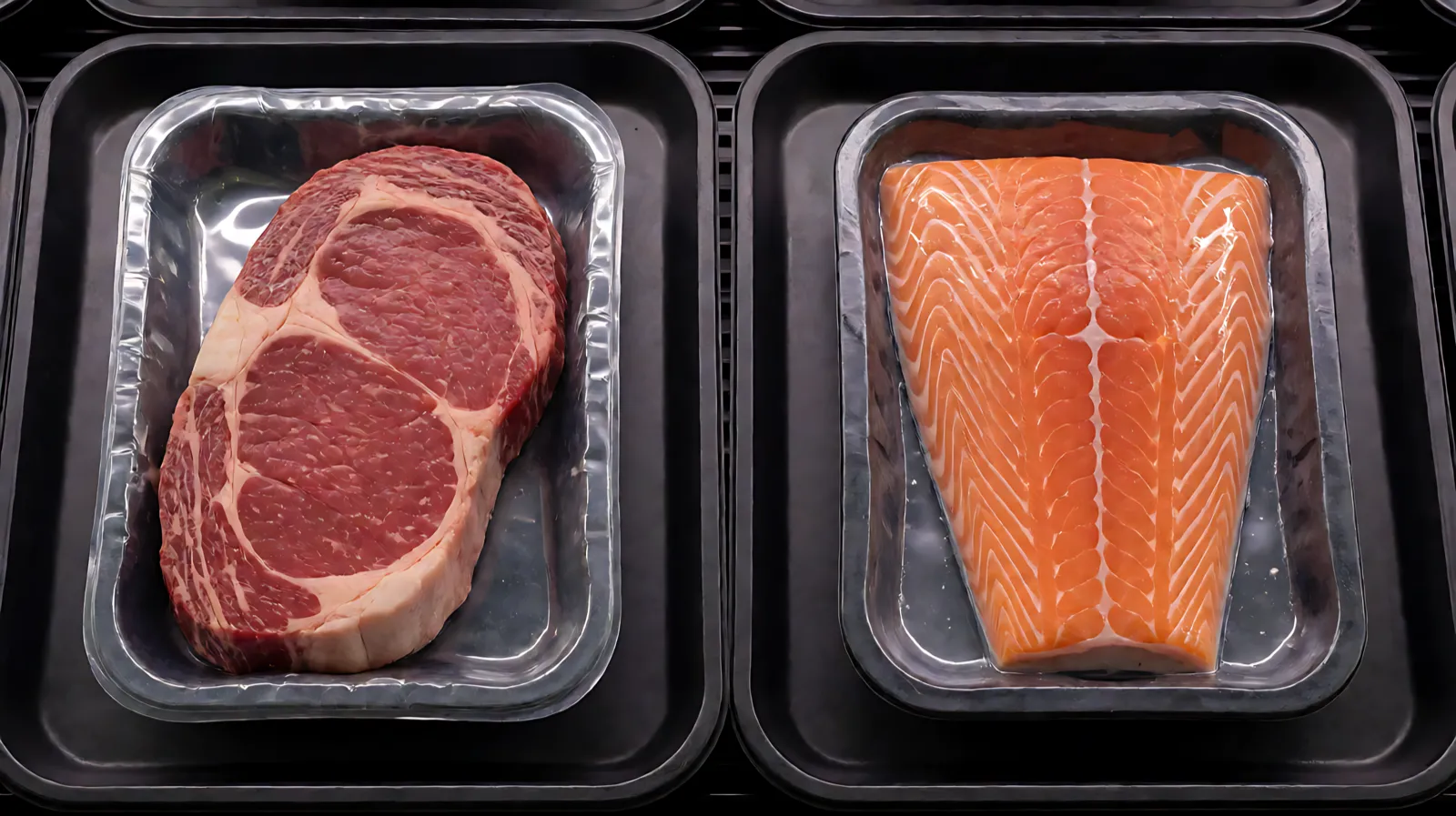
Vacuum Skin Packaging (VSP) vs MAP: Fresh Food Shelf Life Guide
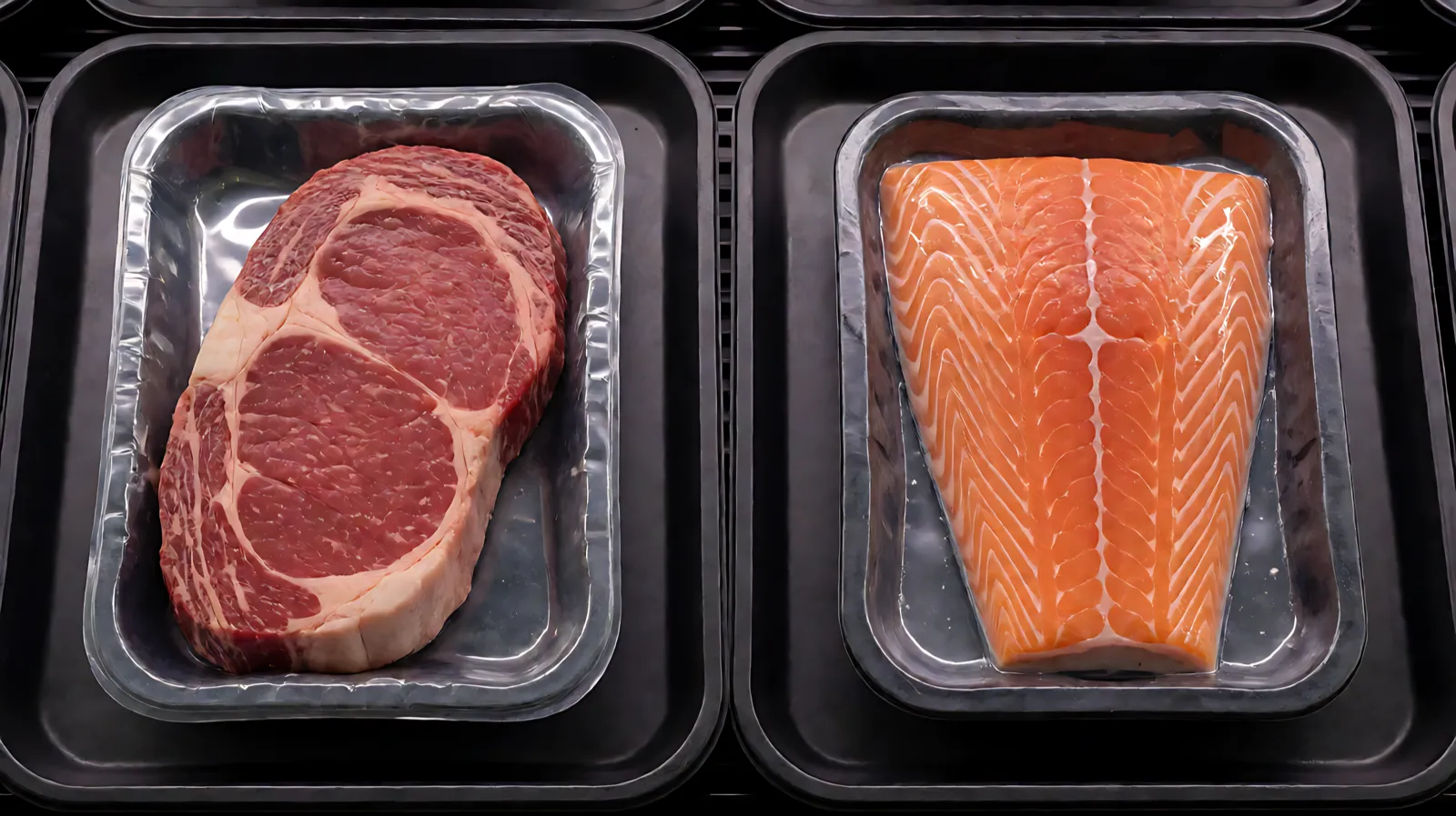
In retail meat, poultry, seafood, and ready-to-eat deli distribution, preserving product color, microbial stability, and visual presentation is the primary engineering challenge. Two primary case-ready packaging architectures dominate the cold chain: Vacuum Skin Packaging (VSP) and Modified Atmosphere Packaging (MAP).
While both technologies eliminate atmospheric oxygen to inhibit aerobic spoilage organisms (Pseudomonas spp.), their physical mechanics, gas transmission physics, purge liquid management, and retail merchandising differ substantially.
Selecting the wrong format leads to premature browning, liquid drip leakage, shortened shelf life, or excessive shipping volume. This technical guide evaluates polymer film barrier properties, shelf life performance across protein types, equipment footprint, and cost economics.
1. Quick Engineering Benchmark Matrix
| Engineering Metric | Vacuum Skin Packaging (VSP) | Modified Atmosphere Packaging (MAP) | Traditional Overwrap (PVC / Stretch) |
|---|---|---|---|
| Protective Mechanism | Complete mechanical atmospheric evacuation | Gas flushing (typically 70–80% O₂ / 20–30% CO₂ or N₂/CO₂) | Barrier-free breathable wrap |
| Top Web Film Chemistry | Multilayer Ionomer (Surlyn) / EVOH / PE | Anti-fog BOPET / EVOH / PE or OPA / EVOH / PE | Plasticized PVC single layer |
| Purge (Drip) Suppression | Superior (Skin locks juices inside cells) | Moderate (Juices pool in bottom absorbent pad) | Poor (Uncontrolled purge leakage) |
| Fresh Beef Shelf Life | 21 to 28 days (at 0°C to 2°C) | 10 to 14 days (High-oxygen MAP) | 3 to 5 days |
| Display Presentation | 3D contour adhesion; vertical rack hanging | Pillow-pack headspace; flat horizontal stacking | Flat horizontal display |
| Freezer Burn Resistance | 100% immune (Zero air headspace) | Moderate (Moisture sublimates into gas void) | Poor (Severe ice crystal growth) |
| Tray Headspace Volume | Zero headspace (Reduces pack volume by 40%) | 1:1 to 2:1 Gas-to-meat ratio required | Minimal headspace |
| Film Thickness (Top Web) | 75µm to 150µm (High puncture resistance) | 35µm to 60µm barrier lidding | 12µm to 18µm cling film |
Explore compatible barrier flexible pouch architectures in our Stand-Up Pouches Category and protective Food Service Bags Category.
2. Structural Mechanics & Film Physics
The critical physical difference between VSP and MAP lies in the management of headspace:
┌────────────────────────────────────────────────────────────────────────┐
│                   VSP VS MAP CROSS-SECTIONAL MECHANICS                 │
├───────────────────────────────────┬────────────────────────────────────┤
│   VACUUM SKIN PACKAGING (VSP)     │  MODIFIED ATMOSPHERE (MAP)         │
├───────────────────────────────────┼────────────────────────────────────┤
│                                   │       ┌──────────────────────┐     │
│       Top Web (Surlyn/EVOH)       │       │ Gas Headspace (CO2)  │     │
│     ╭───────────────────────╮     │   ════╧══════════════════════╧══   │
│    │     Fresh Protein       │    │     Anti-Fog Barrier Lid Film      │
│    │     (Locked In Situ)    │    │                                    │
│   ═╧═════════════════════════╧═   │   [ Fresh Meat ]   [ Liquid Purge ]│
│   Rigid / Semi-Rigid Barrier Tray │   ════════════════════════════════ │
│                                   │   Barrier Tray + Absorbent Pad     │
│   • Top film heated & draped      │   • Headspace gas preserves bloom  │
│   • Vacuum removes 100% of air    │   • Purge drains into absorbent pad│
│   • Zero headspace = No drip pool │   • High volume shipping footprint │
│   • Vertical gravity hanging      │   • Must remain laid horizontally  │
└───────────────────────────────────┴────────────────────────────────────┘
Vacuum Skin Packaging (VSP) Mechanics
In VSP, the top web is preheated in a vacuum dome until the polymer softens to its glass transition point. Once the chamber reaches high vacuum (< 5 mbar), the film is draped directly over the contours of the meat. Atmospheric pressure is reintroduced above the film, forcing it tightly against every crevice of the meat and heat-sealing it across the entire flat perimeter of the tray.
Because the ionomer/EVOH film adheres directly to the meat surface, capillary action is prevented. Muscle juices cannot escape from cut muscle fibers, eliminating unsightly blood purge pooling in the package.
Modified Atmosphere Packaging (MAP) Mechanics
MAP replaces the air surrounding the meat with a tailored gas blend before applying a perimeter heat seal:
- Red Meat (Beef, Lamb): Blends of 70%–80% Oxygen (O₂) and 20%–30% Carbon Dioxide (CO₂). High oxygen binds with deoxymyoglobin to form bright cherry-red oxymyoglobin (“retail bloom”), while CO₂ inhibits gram-negative psychrotrophic bacteria.
- Poultry & Pork: Blends of 60%–70% Nitrogen (N₂) and 30%–40% Carbon Dioxide (CO₂) to avoid lipid oxidation while maintaining antimicrobial suppression.
For related vacuum technology insights, review our comparative analysis on High-Barrier Vacuum Pouches vs Gas Flushing.
3. Protein Shelf Life & Myoglobin Chemistry
The Color Trade-Off: Oxymyoglobin vs. Deoxymyoglobin
The primary consumer decision factor at retail meat counters is color:
- In High-Oxygen MAP, beef displays the bright cherry-red oxymyoglobin color consumers intuitively associate with freshness. However, this high oxygen concentration accelerates lipid oxidation, leading to warmed-over flavor (WOF) and rancidity by day 10–14.
- In VSP, the complete absence of oxygen causes myoglobin to remain in its purplish-red deoxymyoglobin state. While European consumers recognize deep purple meat as vacuum-aged quality, North American buyers sometimes misinterpret purple meat as aged. However, within 15–20 minutes of peeling open the VSP skin pack at home, atmospheric oxygen instantly blooms the beef to bright cherry red.
Shelf Life by Protein Type (Storage at 1°C to 3°C):
──────────────────────────────────────────────────────────────────────────
Protein Type         Traditional Wrap       High-O2 MAP         VSP
──────────────────────────────────────────────────────────────────────────
Prime Beef Steaks    3 to 4 Days            10 to 12 Days       21 to 28 Days
Pork Loins           4 to 5 Days            8 to 10 Days        18 to 21 Days
Poultry Fillets      3 to 5 Days            10 to 14 Days       14 to 18 Days
Atlantic Salmon      2 to 3 Days            6 to 8 Days         12 to 16 Days
Smoked / Cured Ham   7 to 10 Days           21 to 30 Days       45 to 60 Days
──────────────────────────────────────────────────────────────────────────
4. Cold Chain & Logistics Cost Economics
Shipping Cube & Secondary Packaging Density
MAP trays require substantial gas headspace (typically a 1.5:1 or 2:1 gas-to-product volume ratio) to ensure adequate CO₂ dissolution into meat moisture. This headspace makes MAP trays tall (45mm to 65mm deep).
In contrast, VSP trays require zero headspace. The tray depth needs only to support the bottom portion of the cut, with protruding cuts (such as bone-in T-bone steaks or whole lobster tails) extending 20mm to 35mm above the tray flange under high-protrusion VSP films.
- Warehouse & Reefer Truck Cube Utilization: VSP delivers a 35% to 42% reduction in shipping volume compared to MAP, significantly lowering refrigerated freight costs per kilogram.
- Leak Rates in Distribution: MAP packages subjected to rough transit or altitude changes during air freight can suffer burst seals due to internal gas expansion. VSP packs have zero internal gas expansion pressure, reducing retail leaker rates from 3.5% down to under 0.4%.
5. Decision Framework for Meat & Seafood Processors
                       PROTEIN PACKAGING SELECTION
                                    │
               Is bright red "case bloom" mandatory
               at instant point-of-sale display?
                             /             \
                           YES              NO
                           /                 \
                  High-O2 MAP Tray       Is maximum shelf life (>21 days)
                  (10-14 day life,        or vertical hanging required?
                   absorbent pad)                     /            \
                                                    YES             NO
                                                    /                \
                                           Vacuum Skin (VSP)     Barrier Pouch
                                           (Ionomer Top Web,     (Vacuum Bag /
                                            Zero Purge Drip)      Shrink Bag)
For customized barrier films, multi-layer coextruded rollstock, and recyclable mono-material trays, contact our technical team through the CraftPack Global Contact Portal or submit a quotation request for high-barrier packaging systems.