
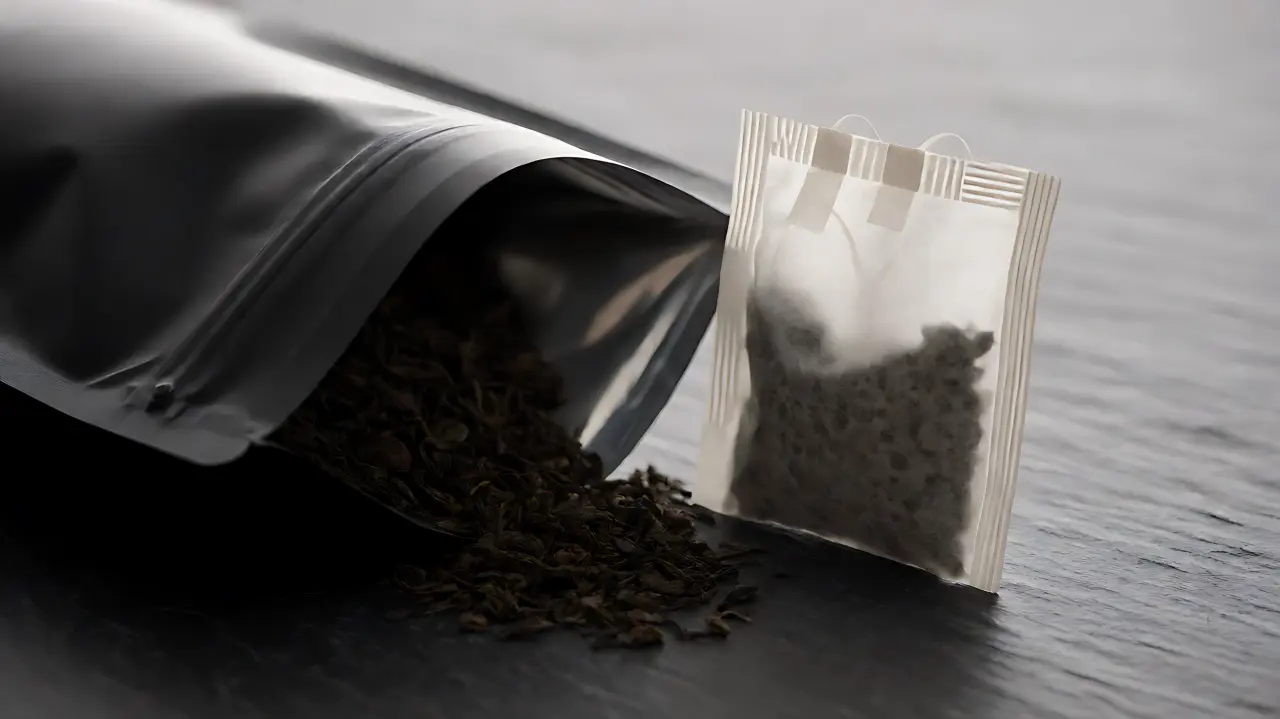
Two-Way Humidity Control Packs: Moisture Regulation in Barrier Pouches
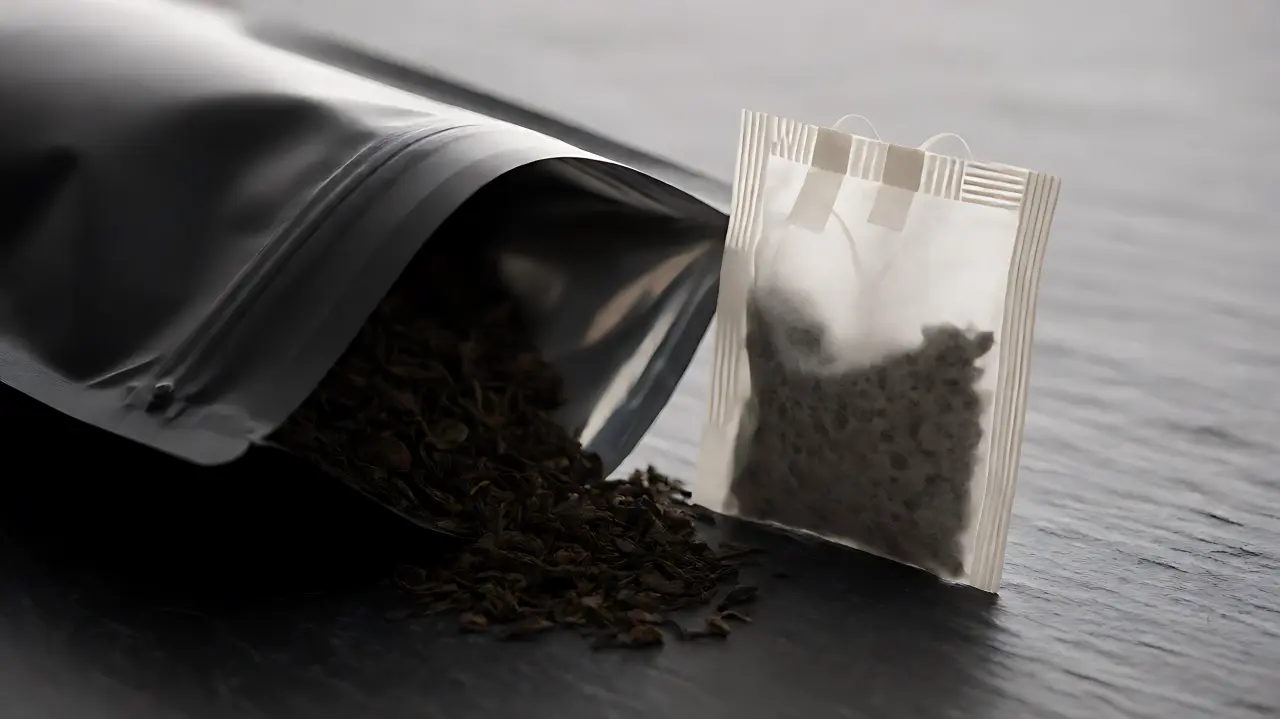
In the packaging of moisture-critical agricultural products, herbal botanicals, cured tea leaves, premium cigars, and freeze-dried gourmet foods, the preservation of volatile aromatic terpenes, crispness, and bio-active potency depends entirely on Equilibrium Relative Humidity (ERH) inside the sealed container.
Traditional passive desiccant packs (such as silica gel or bentonite clay) are unidirectional: they continuously adsorb moisture until completely saturated. If placed inside a pouch containing botanicals or artisanal tobacco, desiccants over-dry the product, degrading aromatic essential oils, making leaves brittle, and reducing saleable packaged weight.
To resolve this, modern packaging engineers specify Two-Way Humidity Control Packs.
Unlike simple desiccants, two-way packs dynamically add or remove water vapor through a semi-permeable reverse-osmosis membrane to lock headspace relative humidity at precise target values (e.g., 58%, 62%, or 69% RH).
This guide provides an engineering evaluation of two-way humidity control technology, moisture sorption isotherms, water activity ($a_w$) stabilization, pouch barrier synergy, and sizing calculations for flexible packaging applications.
1. Technical Matrix: 2-Way Humidity Packs vs. Traditional Desiccants
| Specification Metric | Saturated Salt 2-Way Pack (58% / 62% RH) | Glycerin / Plant Gel 2-Way Pack | Silica Gel Desiccant (Unidirectional) | Clay Desiccant (Montmorillonite) |
|---|---|---|---|---|
| Operational Mechanism | Saturated saline solution vapor equilibrium | Polyol humectant vapor exchange | Capillary physical adsorption | Clay crystal layer adsorption |
| Moisture Vapor Dynamics | Bidirectional (Adsorbs & Desorbs freely) | Bidirectional (Slow release/capture) | Unidirectional (Adsorbs only — Over-dries) | Unidirectional (Adsorbs only) |
| RH Target Accuracy | Extremely Precise (±1.0% to ±1.5% RH) | Precise (±2.0% to ±3.0% RH) | Uncontrolled (Pulls RH down to <10%) | Uncontrolled (Pulls RH to <15%) |
| Target Equilibrium Range | 58%, 62%, 65%, 69%, 72% RH | 55%, 62% RH | 0% to 20% RH | 0% to 20% RH |
| Vapor Permeable Membrane | Microporous Tyvek / PTFE Reverse Osmosis | Kraft-laminated breathable paper | Perforated PE or Non-woven paper | Porous non-woven fabric |
| Liquid Leakage Risk | Zero (Dry vapor only, gelled salt core) | Zero (Viscous polymer matrix) | Zero (Solid granular beads) | Zero (Solid clay minerals) |
| Terpene & Flavor Preservation | 100% Volatiles Preserved (Monolayer lock) | High preservation | Destroys terpenes via over-desiccation | Destroys terpenes via drying |
| Exhaustion Indicator | Soft gel turns into hard, crunchy solid | Rigid puck hardening | Color-changing cobalt salts | None |
To discover high-barrier pouches optimized for long-term humidity retention, explore our Stand-up Pouches Category and Flat Bottom Bags Category.
2. Water Activity ($a_w$) & The Terpene Monolayer Shield
The primary scientific objective of maintaining a precise headspace RH is regulating Water Activity ($a_w$):
$$a_w = \frac{\text{Equilibrium Relative Humidity (ERH)}}{100}$$
Water Activity ($a_w$) Stability Zones in Botanical Packaging:
0.0          0.30         0.55       0.65         0.80           1.0 a_w
├─────────────┼────────────┼──────────┼────────────┼──────────────┤
 Over-Dried    Terpene     Optimal    Mold Growth  Bacterial Spoilage
 Trichomes     Vaporizes   Potency    Zone         Zone
 Shatter       & Degrades  (58-62% RH)
(Protected)- The Over-Drying Hazard ($a_w < 0.50$):
- When ambient relative humidity drops below 55%, moisture evaporates from plant glandular trichomes.
- Without a protective monolayer of moisture molecules shielding cell walls, volatile terpenes (such as myrcene, limonene, and caryophyllene) evaporate rapidly into the pouch headspace and oxidize, resulting in severe loss of sensory aroma and medicinal efficacy within weeks.
- The Microbial Hazard ($a_w > 0.65$):
- Conversely, if humidity inside the pouch exceeds 65% RH ($a_w > 0.65$), ambient conditions enter the threshold for xerophilic fungal germination (Aspergillus, Penicillium).
- The 58% vs. 62% RH Equilibrium Sweet Spot:
- Operating in the 58% to 62% RH window keeps water activity tightly locked at 0.58–0.62 $a_w$. At this exact equilibrium, water vapor forms an ultra-thin protective liquid shield around trichome structures, completely arresting terpene sublimation without permitting mold spores to hydrate.
3. Reverse Osmosis Vapor Membrane Physics
Two-way humidity packs rely on chemical solution equilibria enclosed within advanced membrane materials:
Two-Way Vapor Transmission Mechanics:
┌────────────────────────────────────────────────────────┐
│  High-Barrier Outer Pouch Headspace (Ambient Air)      │
│            ▲                              │            │
│  Water     │ Desorption (If RH < 62%)     │ Adsorption │
│  Vapor     │                              │ (If RH > 62%)
│  Flow      │                              ▼            │
├────────────────────────────────────────────────────────┤
│  Reverse-Osmosis Micro-Porosity Membrane (Tyvek)       │
├────────────────────────────────────────────────────────┤
│  Internal Saturated Salt + Purified Water Gelled Core  │
│  (Locks Vapor Pressure at Constant Raoult Value)       │
└────────────────────────────────────────────────────────┘- Raoult’s Law Solution Chemistry: Inside the pack, a saturated solution of food-grade salts (such as potassium citrate or sodium chloride) mixed with natural food-grade thickeners creates a stable vapor pressure. When ambient moisture exceeds the target, water vapor migrates inward across the membrane and dilutes the solution; when the ambient air dries out, the solution releases pure water vapor outward.
- Selective Vapor Permeability: The exterior membrane (typically medical-grade spunbonded olefin DuPont™ Tyvek®) is engineered with sub-micron pore diameters. Water molecules in gaseous phase ($H_2O$ vapor, diameter $\approx 0.28\text{ nm}$) pass freely through the pores, while liquid droplets and salt ions cannot escape, preventing corrosive salt contact with packaged products.
4. Barrier Pouch Synergy: Preventing Pack Depletion
A two-way humidity pack can only function effectively if the outer flexible packaging provides an exceptional moisture barrier:
$$\text{Pack Lifespan} \propto \frac{\text{Internal Pack Moisture Capacity (g)}}{\text{Film WVTR } (\text{g/m}^2/\text{day}) \times \text{Pouch Surface Area } (\text{m}^2)}$$
Two-Way Pack Lifespan in Different Pouch Laminates (at 38°C, 90% RH):
Pouch Substrate Structure      ASTM F1249 WVTR (g/m²/day)   Pack Operational Life
──────────────────────────────────────────────────────────────────────────────────
Low-Barrier Polyethylene (PE)  ~8.0 to 12.0                 14 to 28 Days (Fails)
Standard PET / LLDPE (2-Ply)   ~3.5 to 5.0                  45 to 60 Days
High-Barrier PET / EVOH / PE   ~0.8 to 1.5                  6 to 9 Months
Ultra-Barrier PET / VMPET / PE ~0.3 to 0.6                  12 to 18 Months
Hermetic Foil (PET/AL/PE) < 0.01 24+ Months (Peak)- If an herbal brand packages product in a cheap 2-ply polyethylene pouch, atmospheric humidity continuously penetrates the film walls. The 2-way pack will absorb water until its internal reservoir is fully exhausted, swelling and eventually failing to control moisture.
- Engineering Rule: Always pair two-way humidity packs with a pouch laminate achieving an ASTM F1249 WVTR $\le 0.5\text{ g/m}^2/\text{day}$ (such as
MDO-PE / EVOH / PE,PET / VMPET / PE, orKRAFT / AL / PE).
5. Pack Sizing Calculation Formula for B2B Packaging
To determine the required pack grammage for a retail pouch, use the standard botanical packaging mass ratio:
$$\text{Required Pack Weight (grams)} = \text{Product Net Weight (grams)} \times 0.125$$
| Pack Size | Target Headspace Volume | Net Botanical Payload | Typical Packaging Format |
|---|---|---|---|
| 1 Gram Pack | Up to 150 cm³ Headspace | 3.5 grams (1/8 oz) | Small child-resistant barrier pouch |
| 4 Gram Pack | Up to 450 cm³ Headspace | 14 grams (1/2 oz) | Medium stand-up barrier pouch |
| 8 Gram Pack | Up to 900 cm³ Headspace | 28 grams (1 oz) | Standard 1oz stand-up pouch |
| 67 Gram Pack | Up to 4,500 cm³ Headspace | 450 grams (1 lb) | Bulk flat bottom box pouch or bucket |
| 320 Gram Pack | Up to 25,000 cm³ Headspace | 2.5 kg (5 lbs) | Commercial storage tote or master carton |
Best-Practice Handling Protocol:
- Insert Immediately Before Thermal Sealing: Operators must insert the humidity pack into the pouch and immediately engage the hermetic top seal bars to prevent the pack from depleting moisture into open factory ambient air.
- Avoid Direct Light Exposure: For products containing photosensitive compounds, specify solid opaque foil or high-opacity matte white barriers to prevent ultraviolet breakdown of both the product and the humidity pack core.
Consult CraftPack Global’s materials engineering team to configure high-barrier, custom-printed pouch structures matched to your exact humidity regulation targets via our Stand-up Pouches Division.