
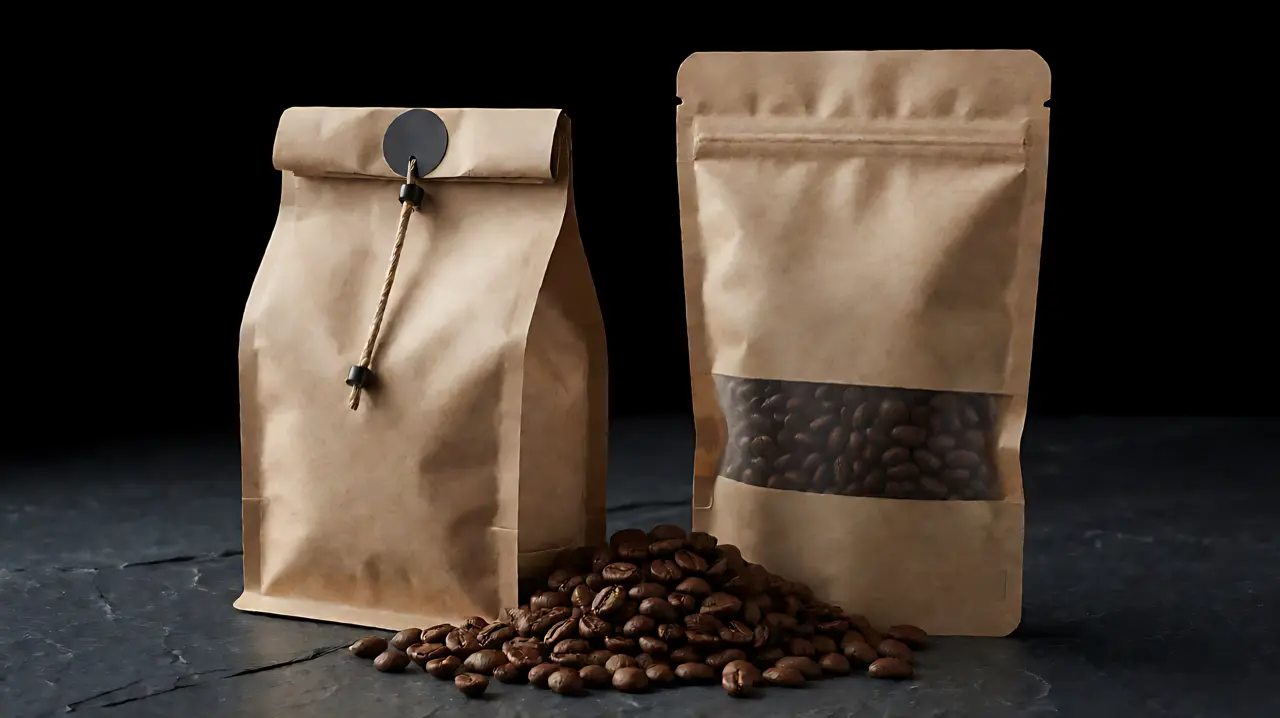
Tin-Tie Paper Bags vs Pocket Zippers: Coffee Reclosure Guide
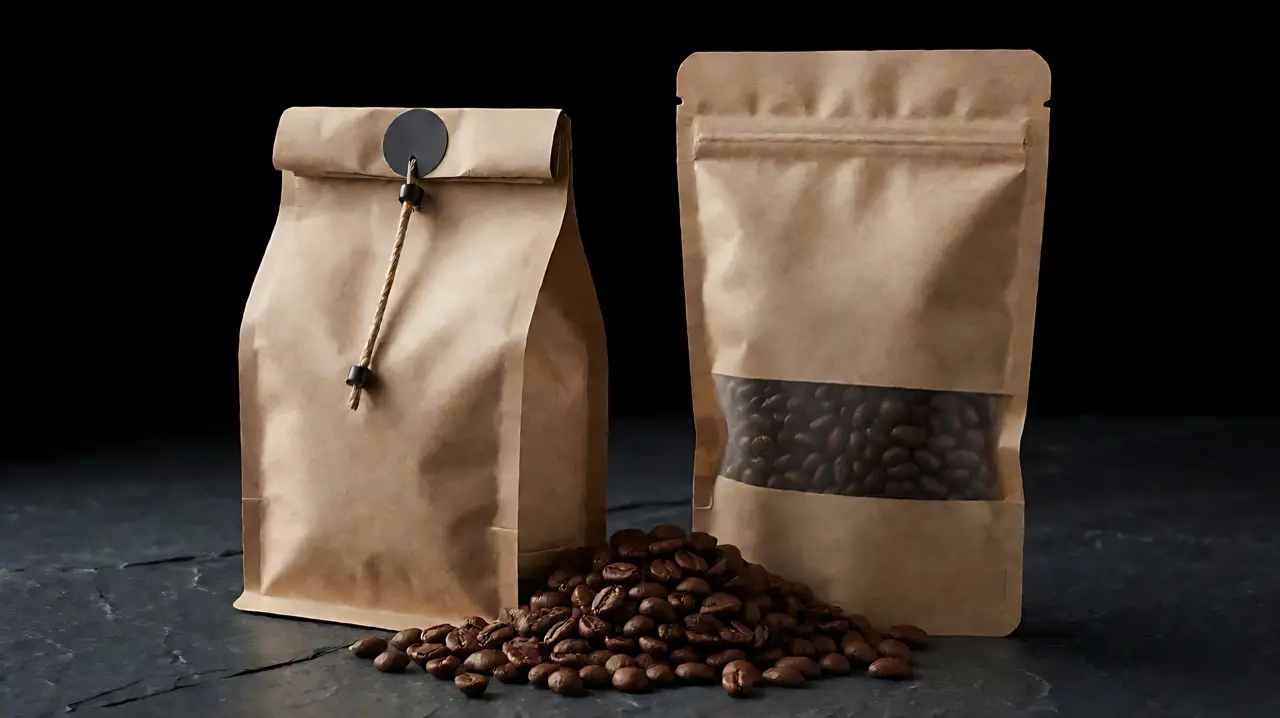
In specialty coffee roasting, premium tea blending, artisanal granola merchandising, and dry bakery ingredient packaging, the reclosure mechanism serves two crucial roles: it provides convenient repeat access for the consumer while preserving volatile aromas and moisture protection after the initial seal is broken.
For decades, the tin-tie closure—a flexible double-wire metal core encapsulated in kraft paper or poly tape adhered across the top of side-gusset bags—served as the iconic visual hallmark of traditional European and American coffee roasters.
However, the rapid development of pull-tab pocket zippers (also known as tear-strip front zippers) on 8-side seal flat bottom box pouches has triggered a massive industry shift. Pocket zippers integrate airtight hermetic reclosability while dramatically simplifying high-speed automated filling lines.
This technical guide evaluates the engineering trade-offs between tin-tie closures and pocket zippers across hermetic barrier performance, packaging machine filling efficiency, tamper-evident security, and circular recycling compatibility.
1. Engineering Comparison: Tin-Tie Closures vs. Pocket Zippers
| Technical Parameter | Traditional Metal-Wire Tin-Tie | Pull-Tab Pocket Zipper (Front Zipper) | Standard Press-to-Close Flange Zipper |
|---|---|---|---|
| Mechanical Structure | Dual galvanized iron wires inside paper/plastic strip | Hermetic tear-strip with integrated interlocking track | Standard dual-rib profile welded to top hem |
| Pouch Compatibility | Side Gusset Bags & SOS Flat Bottom Bags | Flat Bottom Box Pouches (8-Side Seal) & Quad Seal | Stand-up pouches (Doyen / K-seal) |
| Airtight Moisture Resealability | Low (Folded roll-down seal; not airtight) | High (Continuous interlocking polymer tracks) | High (Continuous interlocking polymer tracks) |
| Aroma Loss After Opening (Coffee) | Moderate (Volatile esters escape through folds) | Minimal (Hermetic mechanical interlocking) | Minimal (Hermetic mechanical interlocking) |
| Automated Filling Line Speed | Slower (Requires mechanical folding & tamping arms) | Fast (Full top opening mouth: 40–70 bags/min) | Slower (Filling funnels can snag zipper profile) |
| Tamper-Evident Security | Requires separate peel-off tape or fold-over label | Built-in (Laser-scored pull-tab tear strip) | Requires tear notch above heat seal |
| Mono-Material Recyclability | Poor (Metal wire must be torn off manually) | 100% Recyclable (Mono-PE or Mono-PP compatible) | 100% Recyclable |
| Aesthetic / Consumer Perception | Nostalgic, artisanal, boutique roaster aesthetic | Modern, premium, high-tech convenience | Standard supermarket commodity profile |
For coordinating structural pouch styles, explore our Flat Bottom Bags Category and Side Gusset Bags.
2. Filling Line Engineering: The Open-Mouth Filling Advantage
On automated packaging lines (such as rotary pouch fill-and-seal machines), the geometry of the bag opening dictates operational throughput and product spillage:
Automated Filling Line Clearance Comparison:
Standard Pre-Applied Zipper:                 Pocket Zipper (Full Wide-Mouth Opening):
┌───────────────────────────┐                ┌───────────────────────────┐
│ [Zipper Track Snags Beans]│                │ [100% Unobstructed Chute] │
│          ▼                │                │             ▼             │
│ Narrow Insertion Funnel   │                │ Wide Funnel Free-Drop     │
│ Risk of bean jamming      │                │ Fast, clean gravity drop  │
└───────────────────────────┘ └───────────────────────────┘- Why Pocket Zippers Speed Up Packing:
In conventional zipper pouches, the zipper profile is pre-welded inside the top opening. Filling augers or multi-head weigher funnels must penetrate between the narrow zipper tracks. Coffee beans, protein powders, or dried herbs frequently collide with the zipper teeth, trapping particles in the profile that cause micro-leakage and false rejects.
- The Pocket Zipper Breakthrough: In a pocket zipper flat bottom pouch, the zipper mechanism is welded only to the front face panel, leaving the entire top perimeter completely wide and open like a hollow tube. Products drop cleanly into the pouch at speeds up to 60+ bags per minute. Once filled, a simple horizontal heat seal bar seals the top above the zipper.
- Tin-Tie Machine Overhead: Automating tin-tie application requires specialized high-maintenance equipment: the bag must be folded down twice, the metal wire fed from a spool, adhesive applied, and mechanical tamping fingers folded around the gusset edges. Any variance in paper humidity leads to misaligned folds or peeling wire tabs.
3. Barrier Retention & Volatile Aroma Physics Post-Broaching
Whole bean and ground coffee release carbon dioxide while continuously off-gassing delicate aromatic volatiles (pyrazines, aldehydes, and floral terpenes):
Headspace Gas Exchange After Reclosure:
Rolled Tin-Tie Bag (Folded Over):         Pocket Zipper Sealed Tracks:
   [Air Escapes via Loose Folds]              [Hermetic Mechanical Lock]
   Ambient O₂ Ingress: ~8% - 15%              Ambient O₂ Ingress: <0.5%
   Rapid staling within 7–10 days             Aroma preserved for 30–45 days
1. The Roll-Down Limitation of Tin-Ties
When a consumer rolls down a tin-tie bag and bends the metal tabs, the seal relies solely on physical folding compression. Ambient room air containing 20.9% oxygen freely diffuses through the micro-gaps at the gusset corners. Within 7 to 10 days of home use, coffee beans lose up to 50% of their peak aromatic crema intensity.
2. Pocket Zipper Hermetic Lock
The pocket zipper features precision interlocking male and female polyolefin hooks. When pressed shut, the tracks form an airtight mechanical barrier that halts air exchange. Combined with a one-way degassing valve welded to the pouch body, the coffee package continuously vents positive $CO_2$ pressure while blocking atmospheric oxygen ingress.
4. Circular Economy & Recycling Regulations (CEFLEX & PPWR)
With global packaging regulations penalizing mixed-material packaging, end-of-life sorting has become a major commercial liability:
- The Multi-Material Tin-Tie Problem: Tin-ties consist of steel iron wires embedded within plastic-laminated kraft tape. In municipal paper and plastic recycling facilities, these metal wires cannot be automatically separated. If sent into paper hydropulpers, metal wires damage centrifuge impellers and contaminate recycled paper pulp. Consequently, consumers must manually cut off the tin-tie with scissors—a step fewer than 5% of consumers perform.
- The Pocket Zipper Mono-Material Solution: Pocket zippers are manufactured from 100% low-density polyethylene (LDPE) or polypropylene (PP). When welded to Mono-PE or Mono-PP recyclable barrier laminates (such as
MDO-PE / PE-EVOH), the entire package qualifies as a mono-material structure under CEFLEX and APR design guides, earning highest-tier recyclability scores across European sorting facilities.
5. Tamper-Evident Security & Consumer Unboxing Experience
For supermarket retail shelves, tamper evidence protects brands against in-store product tampering and consumer liability:
- Integrated Tear-Tab Tamper Evidence: A pocket zipper incorporates an integrated pull-tab strip with laser-scored micro-perforations. The consumer pulls the tab horizontally across the front panel, peeling off the tear strip to access the zipper track beneath. This provides unambiguous, irreversible visual evidence that the bag has never been opened on the retail shelf.
- Tin-Tie Tamper Risk: Standard tin-tie bags can be unbent, opened, and retied without leaving any visible evidence of tampering, requiring roasters to apply supplementary adhesive tamper-evident paper seals or tape across the top fold.
6. Sourcing & Roaster Specification Checklist
When choosing reclosure systems for your coffee or dry food packaging line, evaluate:
- Packaging Machinery Alignment: Verify whether your facility operates automated fill-and-seal lines (pocket zipper recommended) or manual hand-packing stations (tin-tie compatible).
- Target Product Shelf Life: For ground coffee or high-fat nuts where post-opening freshness beyond 14 days is critical, mandate airtight pocket zippers.
- Recyclability SLA: Confirm with packaging suppliers that zipper profiles match the resin family of the sealant layer (e.g., 100% PE zipper on Mono-PE laminates).
- Degassing Valve Integration: Ensure the one-way degassing valve is installed at least 25mm below the pocket zipper mechanism to prevent mechanical interference during filling.
To design custom-printed flat bottom coffee bags featuring high-speed pocket zippers or artisanal tin-ties, connect with the CraftPack Global packaging engineering team.