
Tamper-Evident Shrink Bands vs Tear Rings: Container Closure
In over-the-counter pharmaceuticals, nutraceutical gummies, premium spirits, and gourmet sauces, package closures must visually and irreversibly signal to consumers if a container has been opened, compromised, or pilfered. Following the landmark 1982 Tylenol incident, the United States Food and Drug Administration established strict tamper-evident packaging requirements under FDA 21 CFR § 211.132, mandating one or more distinctive barriers to entry that provide visible evidence of tampering.
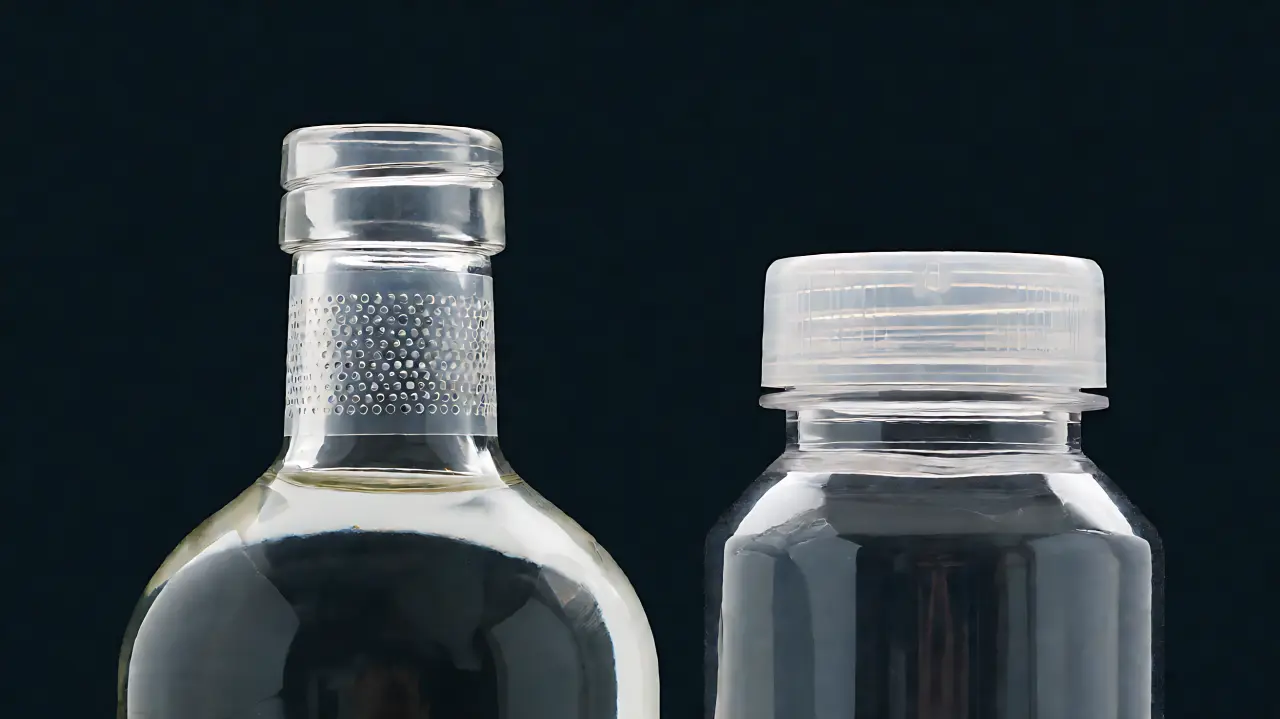
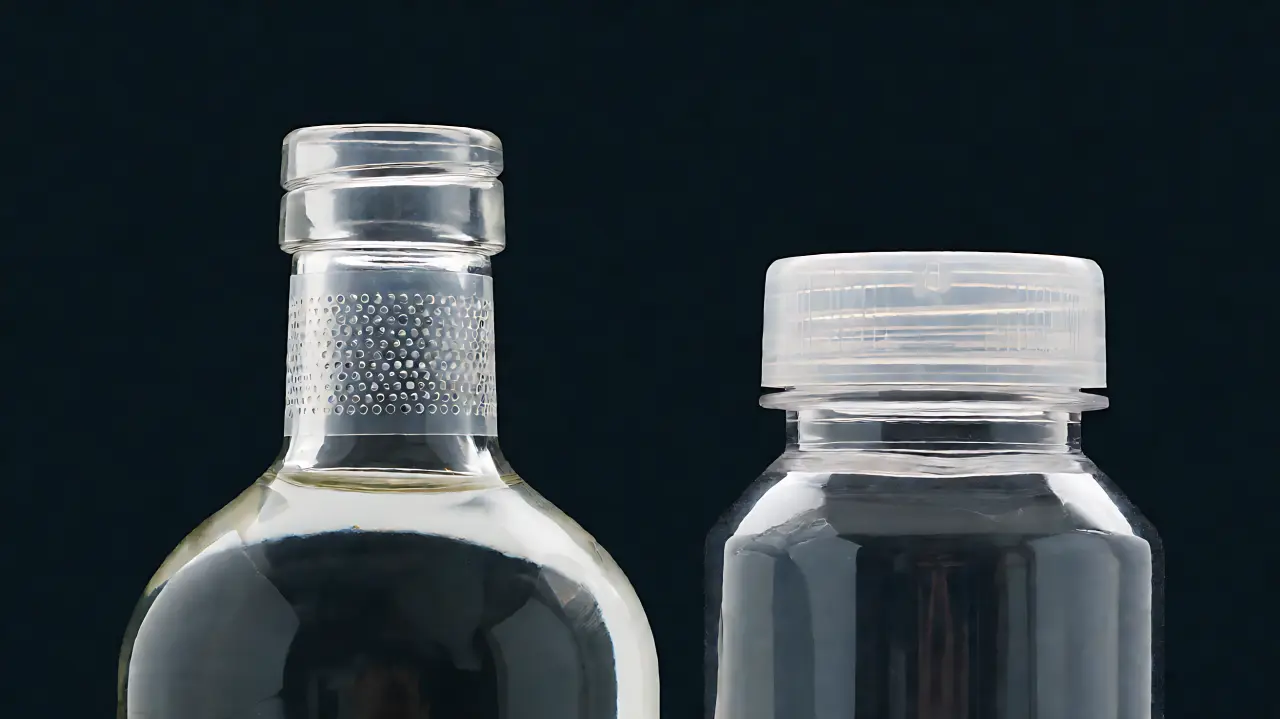
Brand engineers and bottling operations evaluate two primary mechanical architectures: Perforated Heat-Shrink Neck Bands versus Injection-Molded Mechanical Tear Rings (Ratchet Break-Away Closures).
Mechanical Closure Architectures
Perforated Heat-Shrink Neck Band             Molded Ratchet Tear-Off Ring
┌──────────────────────────────────────┐     ┌──────────────────────────────────────┐
│ Clear/Printed PETG Band (40-50 µm)   │     │ Threaded Polypropylene Screw Cap     │
├──────────────────────────────────────┤     ├──────────────────────────────────────┤
│ Horizontal & Vertical Micro-Perfs    │     │ Molded Connecting Bridges (Flutes)   │
├──────────────────────────────────────┤     ├──────────────────────────────────────┤
│ Form-fits across Cap and Glass Neck  │     │ Ratchet Teeth engaging Bottle Retainer
└──────────────────────────────────────┘     └──────────────────────────────────────┘
                 ▼                                              ▼
   Dual-action shrink: 360° visual seal;       Single-step capping: bridges fracture
   Shrinks via radiant tunnel onto cap.        audibly when cap is twisted counter-CW!
1. Perforated Heat-Shrink Neck Bands
- Substrate Physics: Extruded oriented polymer sleeves (PETG, PVC, or PLA) with high transverse direction shrinkage ($50% - 65%$).
- Application Method: Pre-cut bands are mechanically placed over the capped container neck by an automated sleeving applicator and shrunk tightly in a radiant heat or steam tunnel ($110^\circ\text{C} - 150^\circ\text{C}$).
- Tamper Evidence: Feature engineered vertical and horizontal micro-perforations. Once torn, the shrink band splits irreversibly and cannot be re-applied or re-shrunk, providing immediate visual verification.
2. Injection-Molded Mechanical Tear Rings
- Substrate Physics: High-density polyethylene (HDPE) or polypropylene (PP) single-piece closures incorporating an integral lower retaining ring.
- Application Method: Applied during standard rotational capping. Downward axial capping pressure pushes the angled internal ratchet teeth over a continuous bead molded onto the bottle neck finish.
- Fracture Mechanics: When the cap is unscrewed counter-clockwise, the ratchet teeth jam against the container neck stops. Torsional shear fractures delicate molded bridging links ($0.3 - 0.6\text{mm}$ thick), dropping the detached plastic ring onto the bottle neck collar with an audible plastic “snap.”
Engineering Comparison: Shrink Bands vs. Molded Rings
| Technical Metric | Perforated Shrink Neck Band | Molded Ratchet Break-Away Ring | Regulatory Standard |
|---|---|---|---|
| Tamper Detection Mode | Visual tearing of clear/printed band | Visual drop of ring + Audible snap | FDA 21 CFR § 211.132 |
| Packaging Machinery Required | Capper + Sleeve Applicator + Tunnel | Standard Rotary Capping Chuck Only | Line Footprint & CapEx |
| Line Speed Capability | $120 - 450\text{ bottles/minute}$ | Up to $1,200+\text{ bottles/minute}$ | Packaging Line OEE |
| Container Geometry Flexibility | Universal (Adapts to any neck shape) | Strict (Requires matching neck bead) | Tooling Specification |
| Dust & Moisture Ingress Defense | High (360° physical barrier over cap) | Moderate (Cap-to-rim gasket seal only) | Ambient Hygiene |
| Consumer Opening Torque | Low (Tear tab unzips band effortlessly) | Moderate ($1.2 - 2.8\text{ N}\cdot\text{m}$ to break bridges) | ASTM D2063 / ASTM D3198 |
| Material Recycling Impact | Must be discarded separately | Cap and ring match container polymer | APR Design Guidance |
Fracture Energy & Opening Torque Equations
For molded break-away closures, calibration of bridge thickness is a critical engineering balance:
- If bridges are too thick, elderly consumers cannot generate sufficient manual opening torque (failing ISO 8317 usability standards).
- If bridges are too thin, vibrational transit shocks during truck transport cause premature bridge fracture before retail delivery.
The required unscrewing break-away torque ($\tau_{\text{break}}$) is calculated as:
$$\tau_{\text{break}} = n \cdot A_{\text{bridge}} \cdot \tau_{\text{shear}} \cdot r_{\text{cap}} + \mu_{\text{thread}} \cdot F_{\text{axial}} \cdot r_{\text{thread}}$$
Where:
- $n$: Number of molded connecting bridges ($6\text{ to }12$).
- $A_{\text{bridge}}$: Cross-sectional shear area of each molded bridge ($\text{mm}^2$).
- $\tau_{\text{shear}}$: Ultimate shear strength of the molded polymer (PP $\approx 25 - 35\text{ MPa}$).
- $r_{\text{cap}}$: Pitch radius of the tamper-evident band.
- $\mu_{\text{thread}}$: Friction coefficient between bottle and cap threads.
Target removal torque for a standard 38mm beverage closure is calibrated between $1.4\text{ and }2.2\text{ N}\cdot\text{m}$, providing a decisive, crisp tactile break without requiring excessive consumer hand grip strength.
Application Recommendations
- Specify Perforated Shrink Bands: For boutique spirits, artisanal olive oils, cosmetic dropper bottles, and jars with non-standard custom neck geometries where retrofitting custom injection tooling is financially prohibitive.
- Specify Molded Ratchet Tear Rings: For high-volume carbonated soft drinks, dairy jugs, sports nutrition tubs, and commercial OTC pharmaceutical bottles requiring maximum line speeds ($> 600\text{ bpm}$) and lowest per-unit component cost.
For complementary tamper-evident e-commerce packaging, explore our tamper-evident void security tape guide and premium paper shopping bags. Contact CraftPack Global to engineer certified tamper-evident closures matched to your automated bottling equipment.