
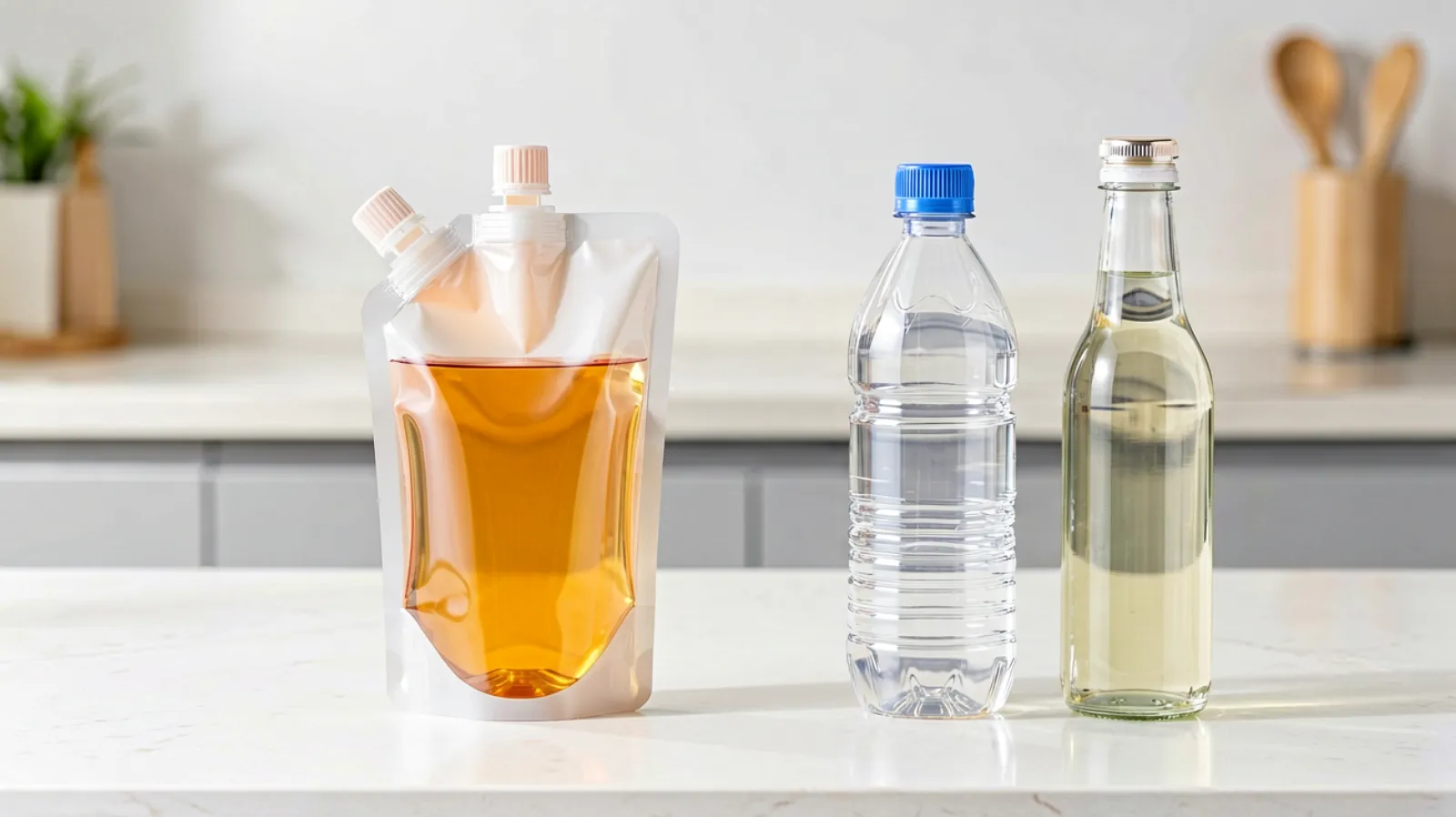
Spout Pouches vs Rigid Bottles: Liquid Packaging Cost Guide
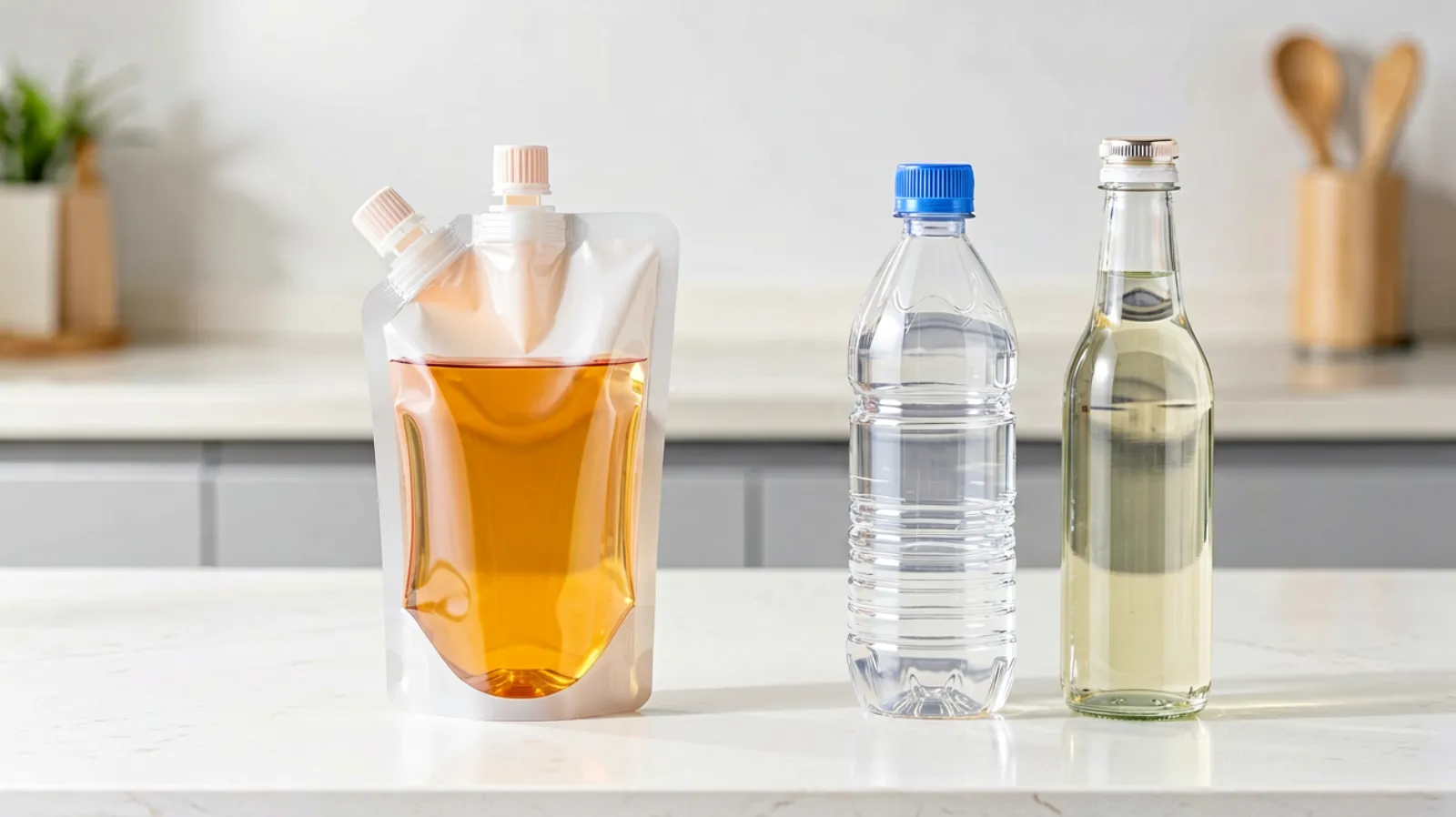
In the beverage, liquid food, personal care, and household chemical sectors, packaging design has historically been dominated by rigid plastic (PET/HDPE) jugs and glass bottles. While rigid bottles provide familiarity, they carry significant supply chain inefficiencies: excessive empty space during inbound shipping, heavy tare weight, and high risk of transit shattering.
In response, forward-thinking brands are switching to flexible spout pouches (also known as fitment pouches). By combining high-barrier laminated films with molded plastic spouts and tamper-evident caps, spout pouches match the dosing precision of rigid bottles while radically slashing freight, warehouse storage, and raw material mass.
This guide compares spout pouches with rigid containers across freight costs, product evacuation, carbon footprints, and filling operations.
The Inbound Logistics Advantage: 95% Less Truckload Space
The most immediate operational saving of flexible spouted pouches occurs before a single drop of liquid is filled:
- Rigid Bottles & Jugs: A standard 53-foot ocean container or tractor-trailer transports mostly empty air when shipping empty blow-molded bottles from bottle blowers to filling plants. A standard truckload holds approximately 15,000 to 20,000 empty 1-liter plastic bottles.
- Spout Pouches: Shipped flat on pallets, the same 53-foot trailer accommodates over 200,000 to 300,000 empty spout pouches.
This 10:1 to 15:1 inbound volume reduction directly reduces transportation freight costs, carbon emissions from truck traffic, and warehouse pallet racking requirements.
Comparison: Spout Pouches vs Rigid Plastic & Glass Bottles
| Key Operational Parameter | Flexible Spout Pouches | Rigid Plastic Bottles (PET / HDPE) | Glass Bottles & Jars |
|---|---|---|---|
| Tare Packaging Weight | Extremely Low (10–18g for 500ml) | Moderate (35–55g for 500ml) | Extremely High (250–450g for 500ml) |
| Inbound Empty Storage | Compact flat stacks on pallets | Requires massive warehouse square footage | Extremely bulky and heavy |
| Product Evacuation Rate | Up to 98%–99.5% (can be squeezed) | 85%–90% (viscous liquids stick to walls) | 80%–88% (high residual product waste) |
| Transit Shatter Hazard | Zero; absorbs impact and flexes | Low; potential crack along weld lines | High; requires excessive bubble and foam |
| Printable Surface Area | 100% full-surface rotogravure print | Limited to applied paper/plastic labels | Limited to applied paper or sleeve labels |
| Life Cycle Carbon Impact | Lowest material and transport emissions | Moderate carbon intensity | Highest thermal manufacturing footprint |
Higher Product Evacuation: Why Consumers Love Spout Pouches
For high-viscosity liquids such as culinary sauces, honey, condiments, lotions, and detergent concentrates, rigid bottles create consumer frustration. Because rigid walls cannot collapse, atmospheric vacuum traps remaining product against inner walls, leaving up to 10% to 15% of product trapped and discarded.
Flexible spout pouches allow consumers to squeeze the pouch completely flat, achieving product evacuation rates exceeding 99%. For food service operations, refilling dispensers from flexible pouches drastically reduces food waste and disposal volume.
Spout Configurations and Filling Methods
Spout pouches offer customizable fitments tailored to different liquid viscosities and dispensing requirements:
- Center Top Spout vs Corner Spout:
- Corner Spouts (45-degree angle): Ergonomically angled for smooth, glug-free pouring of beverages, edible oils, and motor fluids.
- Center Top Spouts: Ideal for baby purees, energy gels, smoothies, and symmetrical display on retail shelves.
- Cap & Closure Options:
- Tamper-Evident Screw Caps: Ring separates upon first opening, verifying food safety.
- Anti-Choke Caps: Oversized, slotted diameter caps specifically required for infant nutrition products.
- Flip-Top & Push-Pull Valves: Convenient for active sports drinks, dish soap, and personal care shampoos.
- Filling Techniques:
- Filling Through the Spout: The pouch is pre-sealed on all sides at the factory; liquid is injected directly through the open spout before automated capping.
- Top-Fill and Seal: The spout is capped at the factory; product is filled through an unsealed top opening on a pouch packing machine, which then heat-seals the top seam.
Barrier Formulations for Liquid Shelf Life
Liquids require robust seal integrity and impermeable barriers to prevent leakage, delamination, and organoleptic changes:
- Food & Beverages (Juices, Purees, Cocktails): Multi-layer laminates such as PET / NY / AL / PE or PET / EVOH-PE prevent oxygen penetration and preserve natural flavor compounds without refrigeration.
- Household Chemicals & Detergents: Surfactants can degrade ordinary polyethylene films. Specialty chemically inert co-polymers (like chemically resistant LLDPE and nylon reinforcement) prevent stress cracking and seam failure.
Explore complementary barrier packaging formats in our stand-up pouches and flat bottom bags collections.
Partner with CraftPack Global for Liquid Packaging Innovation
Whether you are formulating refill pouches for household cleaners or launching a premium beverage brand, the CraftPack Global Team provides custom spout pouch dielines, fitment sourcing, seal testing, and export-ready rotogravure printing.