
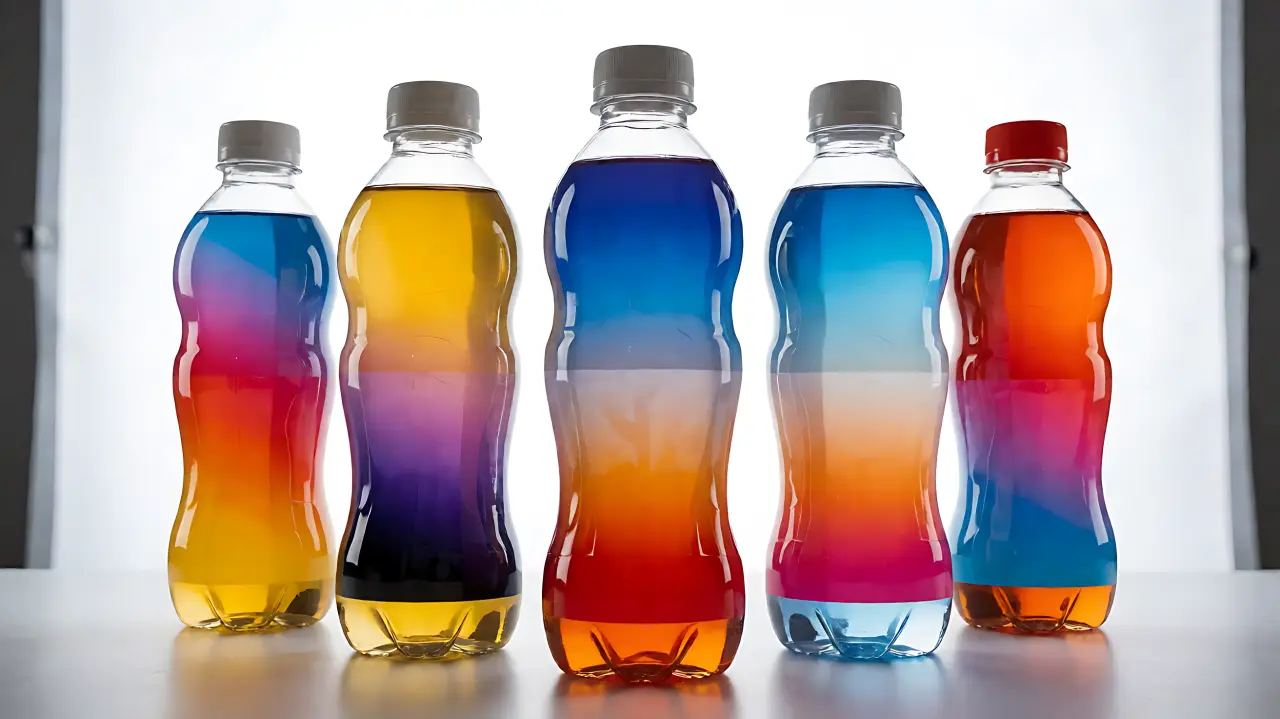
Shrink Sleeve Labels: PETG vs OPS vs PVC Shrink Curve Guide
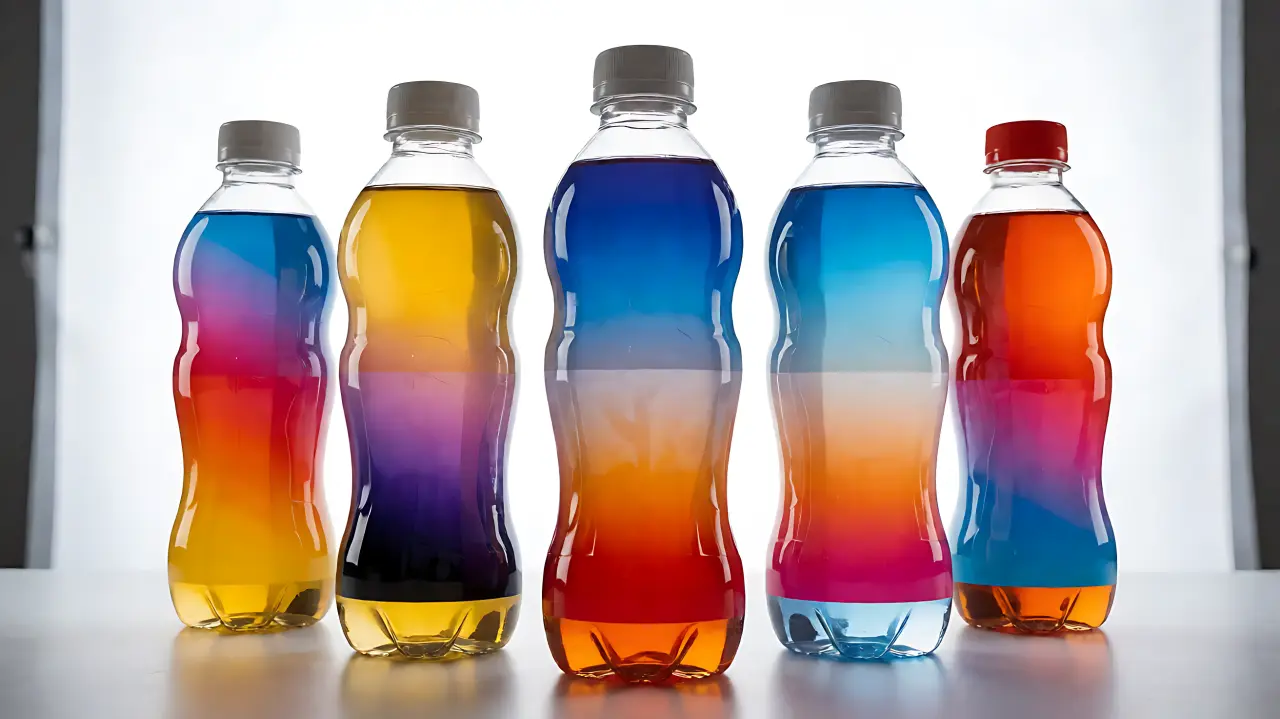
Full-body shrink sleeve labels deliver 360-degree graphics, tamper-evident neck bands, and complex geometry conformity across glass, metal, and plastic containers. However, mismatching substrate shrink dynamics with container curves leads to wrinkling, dog-earing, graphic distortion, or “smiling” (uneven horizontal banding at the waist).
Packaging engineers must evaluate three primary oriented polymer substrates—Polyethylene Terephthalate Glycol (PETG), Oriented Polystyrene (OPS), and Polyvinyl Chloride (PVC)—alongside emerging circular recycling guidelines defined by the Association of Plastic Recyclers (APR).
Shrinkage Mechanics & Thermal Curves
Shrink films are manufactured via extrusion followed by transverse-direction (TD) mechanical orientation (stretching). When exposed to heat in a shrink tunnel, frozen entropic stresses in the polymer chains relax, causing rapid contraction in the transverse direction while remaining dimensionally stable in the machine direction (MD).
Transverse Shrinkage (% Contraction) vs. Tunnel Temperature (°C)
75% ┼                                                PETG (Max ~78%)
    │                                          ╭─────────────
65% ┼                                   ╭──────╯     OPS (Max ~70%)
    │                            ╭──────╯     PVC (Max ~65%)
50% ┼                     ╭──────╯
    │              ╭──────╯
30% ┼       ╭──────╯
    │╭──────╯
 0% ┼┴──────────────┴──────────────┴──────────────┴──────────────►
   60°C            75°C           90°C           105°C          Temp
1. PETG (Polyethylene Terephthalate Glycol)
- Ultimate Shrinkage: Highest commercially available shrinkage (up to $75% - 78%$).
- Application Profile: Essential for deeply contoured containers with extreme shoulder-to-neck diameter transitions (such as hourglass spray bottles or trigger pumps).
- Thermal Behavior: High shrink force. If cooled improperly or exposed to excessive heat, high tension can squeeze thin-walled HDPE or lightweight PET bottles, inducing container collapse.
2. OPS (Oriented Polystyrene)
- Ultimate Shrinkage: Moderate to high ($65% - 72%$).
- Low Shrink Tension: OPS possesses a gentler shrink curve and the lowest contractive force of all shrink polymers.
- Squeeze Bottle Memory: OPS exhibits low stiffness and high flexibility, making it the premier choice for squeezable cosmetic tubes, mayonnaise bottles, and lightweight dairy containers where it bounces back without creasing.
- Density Advantage: Low specific gravity ($\rho \approx 1.02\text{ g/cm}^3$ vs. $1.32\text{ g/cm}^3$ for PETG), yielding approximately 25% higher film area per kilogram.
3. PVC (Polyvinyl Chloride)
- Ultimate Shrinkage: Moderate ($55% - 65%$).
- Cost & Processing: Excellent thermal window and ease of shrink in simple hot-air tunnels.
- Sustainability Decline: Heavily restricted across Europe and North America due to chlorine content, dioxin emissions during incineration, and severe contamination of PET recycling streams.
Technical Substrate Comparison
| Parameter | PETG | OPS | PVC | Testing Standard |
|---|---|---|---|---|
| Max TD Shrinkage | $75% - 78%$ | $68% - 73%$ | $58% - 66%$ | ASTM D2732 ($100^\circ\text{C}$ water) |
| MD Shrinkage (Distortion) | $< 3%$ | $< 5%$ | $< 4%$ | ASTM D2732 |
| Specific Gravity | $1.32\text{ g/cm}^3$ | $1.02\text{ g/cm}^3$ | $1.36\text{ g/cm}^3$ | ASTM D792 |
| Tensile Modulus (MD) | $2,200\text{ MPa}$ | $1,800\text{ MPa}$ | $2,000\text{ MPa}$ | ASTM D882 |
| Haze / Clarity | Ultra-High ($< 3.5%$) | High ($< 4.5%$) | High ($< 4.0%$) | ASTM D1003 |
| Shrink Tension Peak | High ($12 - 16\text{ MPa}$) | Low ($4 - 7\text{ MPa}$) | Moderate ($8 - 11\text{ MPa}$) | Internal Transducer |
| APR Recycling Compatibility | Compatible with Washable Inks | Floats in Sink-Float ($\approx 1.0$) | Incompatible (Contaminant) | APR Critical Guidance |
Steam vs. Radiant Hot Air Tunnel Thermodynamics
Achieving blemish-free 360-degree graphics requires matching film kinetics with tunnel heat transfer mechanisms:
- Steam Tunnels:
- Heat Transfer Coefficient: Water vapor possesses high latent heat. Condensing steam transfers thermal energy evenly across complex curves up to 10 times faster than dry air.
- Result: Eliminates localized hot spots, seam puckering, and air bubbles. Steam is required for PETG high-shrink applications on liquid-filled bottles.
- Hot Air (Convection) Tunnels:
- Air Velocity Dynamics: Relies on blowing heated dry air ($110^\circ\text{C} - 160^\circ\text{C}$) through directional nozzles.
- Limitations: Prone to thermal shadowing where container shoulders heat faster than recessed waists, causing uneven shrinkage. Hot air is best suited for simple cylindrical shapes or tamper-evident cap bands.
Circular Economy: Design for Recycling (APR Guidelines)
In modern automated material recovery facilities (MRFs), shrink sleeves on PET bottles can cause sorting errors:
- Optical Sorter Confusion: A non-crystallizable PETG sleeve wrapped around a standard PET container can mislead near-infrared (NIR) optical sorters into rejecting the bottle.
- De-Seaming & Wash-Off Adhesives: Leading sustainability standards require micro-perforated zip-tear features, low-density floating polyolefin sleeves ($\rho < 0.95\text{ g/cm}^3$), or caustic-washable printing inks that release during hot caustic washing ($85^\circ\text{C}$, $1%,\text{NaOH}$) without staining rPET flake.
For premium rigid and flexible branding solutions, discover our custom printed gift bags and folding carton packaging. Reach out to CraftPack Global for custom pre-distorted artwork prepress and high-yield shrink sleeve production.