
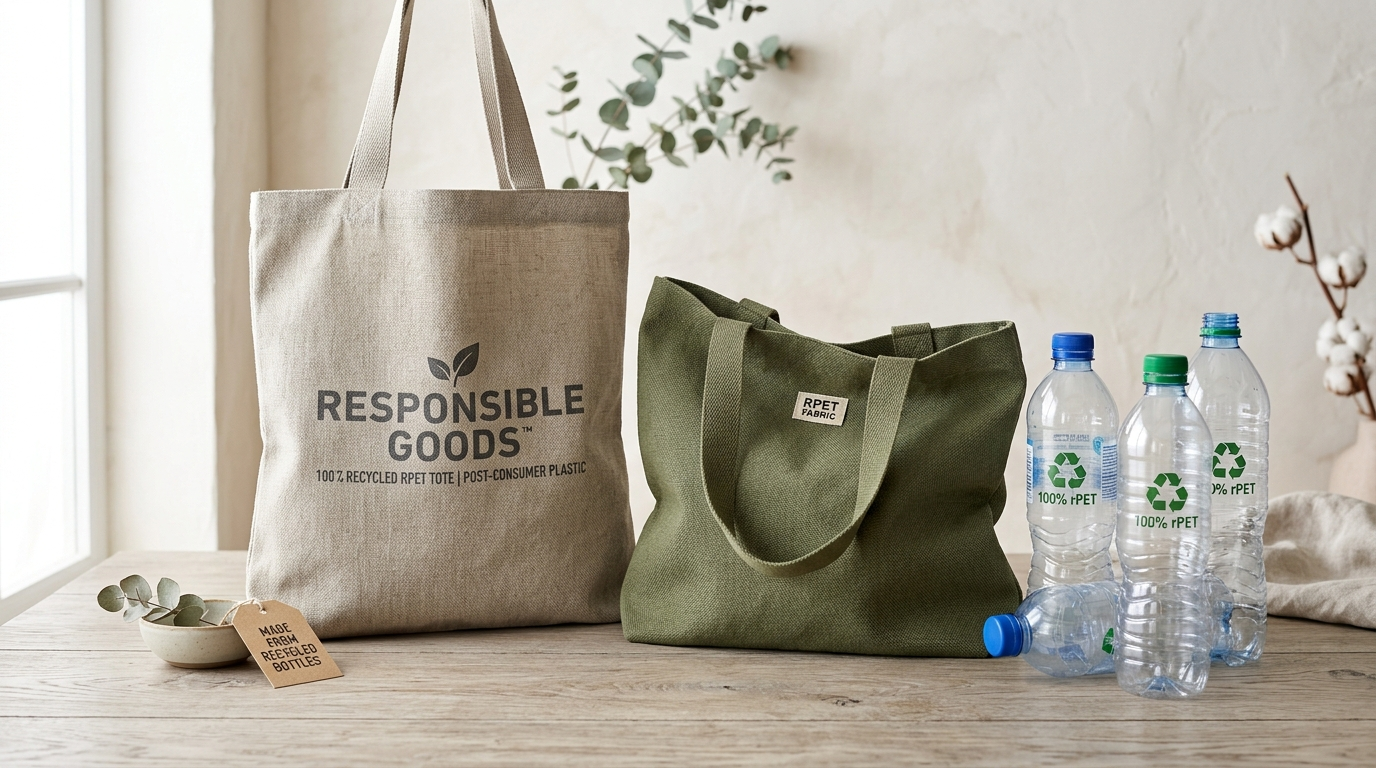
RPET Recycled Tote Bags: A Sustainable Retail Guide
As retail consumers and regulatory bodies worldwide reject single-use plastic carrier bags, retail brands, fashion boutiques, and corporate events are rethinking their carrying solutions. While traditional cotton canvas bags have long served as the default reusable option, their environmental footprint—requiring thousands of liters of fresh water and intense agricultural pesticides per kilogram of virgin cotton—has prompted brands to seek lower-impact alternatives.
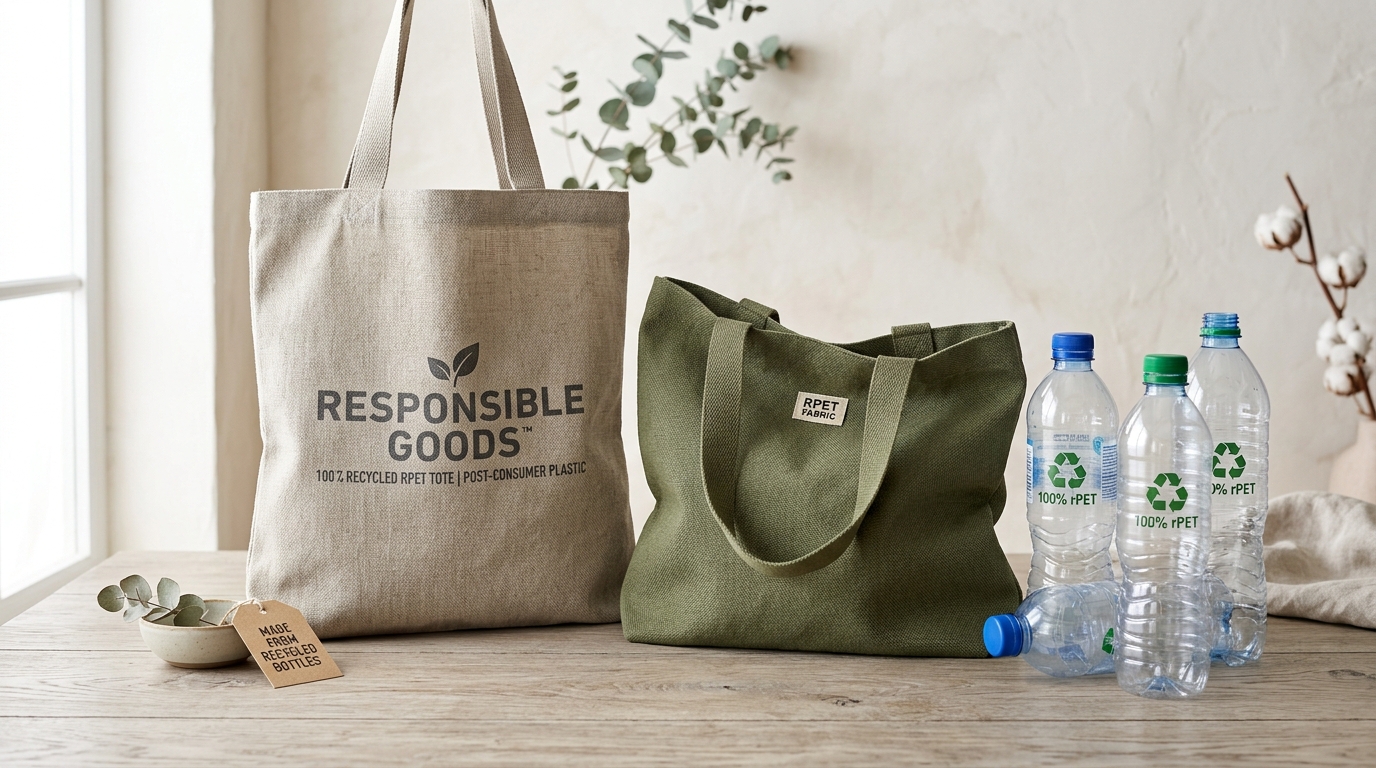
Enter RPET (Recycled Polyethylene Terephthalate) fabric: a high-strength, durable textile manufactured directly from post-consumer recycled PET bottles.
For retail apparel, cosmetics, groceries, and promotional merchandise, custom RPET shopping bags offer an authentic circular story, substantial carbon savings, and exceptional durability.
This guide explores the manufacturing lifecycle, fabric weights, printing methods, and brand benefits of RPET shopping bags.
From Discarded Water Bottles to High-Performance Fabric
The transformation of plastic waste into durable tote bags follows a closed-loop mechanical recycling workflow:
- Collection & Sorting: Post-consumer PET plastic bottles are collected through deposit-return systems and municipal recycling streams, sorted by color, and de-labeled.
- Flaking & Decontamination: Bottles are shredded into uniform flakes, sanitized in intensive hot-wash baths to remove residues, and dried.
- Extrusion & Pelletizing: Clean flakes are melted, filtered under high pressure, and extruded into standardized RPET polymer granules.
- Spinning into Yarn: The melted polymer is extruded through microscopic spinneret nozzles into continuous filament fibers, drawn, crimped, and spun into RPET yarn.
- Weaving & Bag Stitching: The yarn is woven into high-density oxford or canvas textiles (such as 300D or 600D RPET), dyed with eco-friendly pigments, cut to custom dielines, and stitched with reinforced handles.
On average, producing a standard reusable grocery tote diverts 4 to 6 post-consumer 500ml plastic bottles from oceans and landfills.
Why RPET Outperforms Traditional Bag Materials
| Sustainability & Performance Factor | Recycled RPET Fabric | Virgin Cotton Canvas | Non-Woven PP Fabric |
|---|---|---|---|
| Material Feedstock | 100% Post-Consumer Plastic Bottles | Agricultural Virgin Cotton Crop | Fossil-Fuel Derived Virgin Polypropylene |
| Water Consumption | Low (closed-loop wash cycles) | Very High (requires irrigation) | Very Low |
| Carbon Footprint | Approx. 70% lower than virgin PET | Moderate to High (farming/ginning) | Moderate |
| Tensile & Tear Strength | High tensile strength; resists fraying | High, but prone to moisture shrinkage | Moderate; can tear along puncture points |
| Water & Stain Resistance | Naturally hydrophobic and quick-drying | Absorbs water and stains quickly | Water resistant |
| Lifespan / Reuse Cycles | 200+ reuse cycles | 200+ reuse cycles | 30–50 reuse cycles |
Common RPET Fabric Weaves and Specifications
When specifying custom RPET bags for retail or corporate giveaways, brands can choose from several distinct textile weights and tactile finishes:
1. 210D to 300D Lightweight Ripstop RPET
- Characteristics: Silky, ultra-lightweight, and easily foldable into a built-in pouch or pocket.
- Best Suited For: Packable shopping totes, branded event giveaways, and compact travel pouches.
2. 600D Heavy-Duty Oxford RPET
- Characteristics: Thick, rigid weave with a structured canvas-like hand feel. Highly resistant to scuffs and heavy loads.
- Best Suited For: Department store shopping bags, insulated grocery tote shells, and premium lifestyle merchandise.
3. RPET Non-Woven Stitch-Bonded Fabric
- Characteristics: Needle-punched or thermally bonded recycled polyester fibers offering high volume efficiency at lower unit costs.
- Best Suited For: Supermarket checkout bags, trade show gift packs, and high-volume promotional distributions.
Explore related durable options in our reusable bags category and custom PP non-woven bags.
Custom Branding & Printing Techniques on RPET
RPET fabric provides a receptive surface for various high-precision decorative finishes:
- Silk Screen Printing: Delivers vibrant, opaque Pantone spot colors, ideal for clean corporate logos and typographic brand statements.
- Thermal Dye Sublimation: Penetrates polyester fibers at high temperature, enabling photographic full-coverage, edge-to-edge color graphics without altering the soft hand feel of the fabric.
- Woven Brand Labels & Silicone Badges: Elevates the perceived retail value with subtle stitched damask labels highlighting the “100% Recycled Bottle” credential.
Chain of Custody & GRS Certification
To prevent greenwashing and comply with international advertising standards, brands should ensure their RPET suppliers maintain Global Recycled Standard (GRS) certification. GRS verification tracks recycled content from feedstock processing to final stitching, providing documented Transaction Certificates (TC) that prove authentic post-consumer origins.
Engineer Sustainable Retail Packaging with CraftPack Global
Transitioning your carrying solutions to certified recycled materials strengthens brand loyalty and environmental leadership. From custom RPET shopping bags to FSC-certified paper shopping bags, the CraftPack Global Team provides end-to-end design, GRS-certified sourcing, and export logistics.