
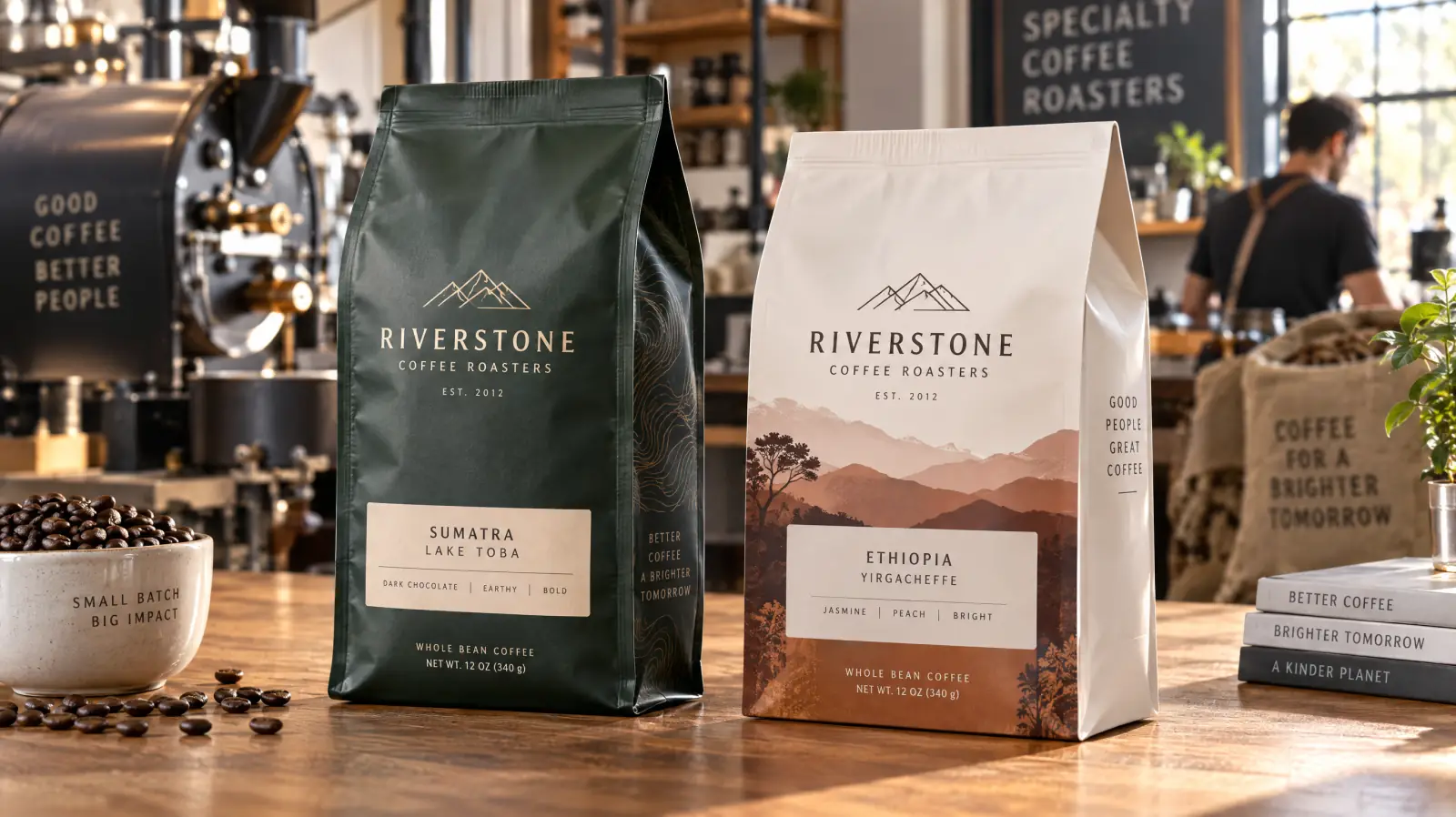
Quad Seal vs 8-Side Seal Flat Bottom Pouches: Structural Guide
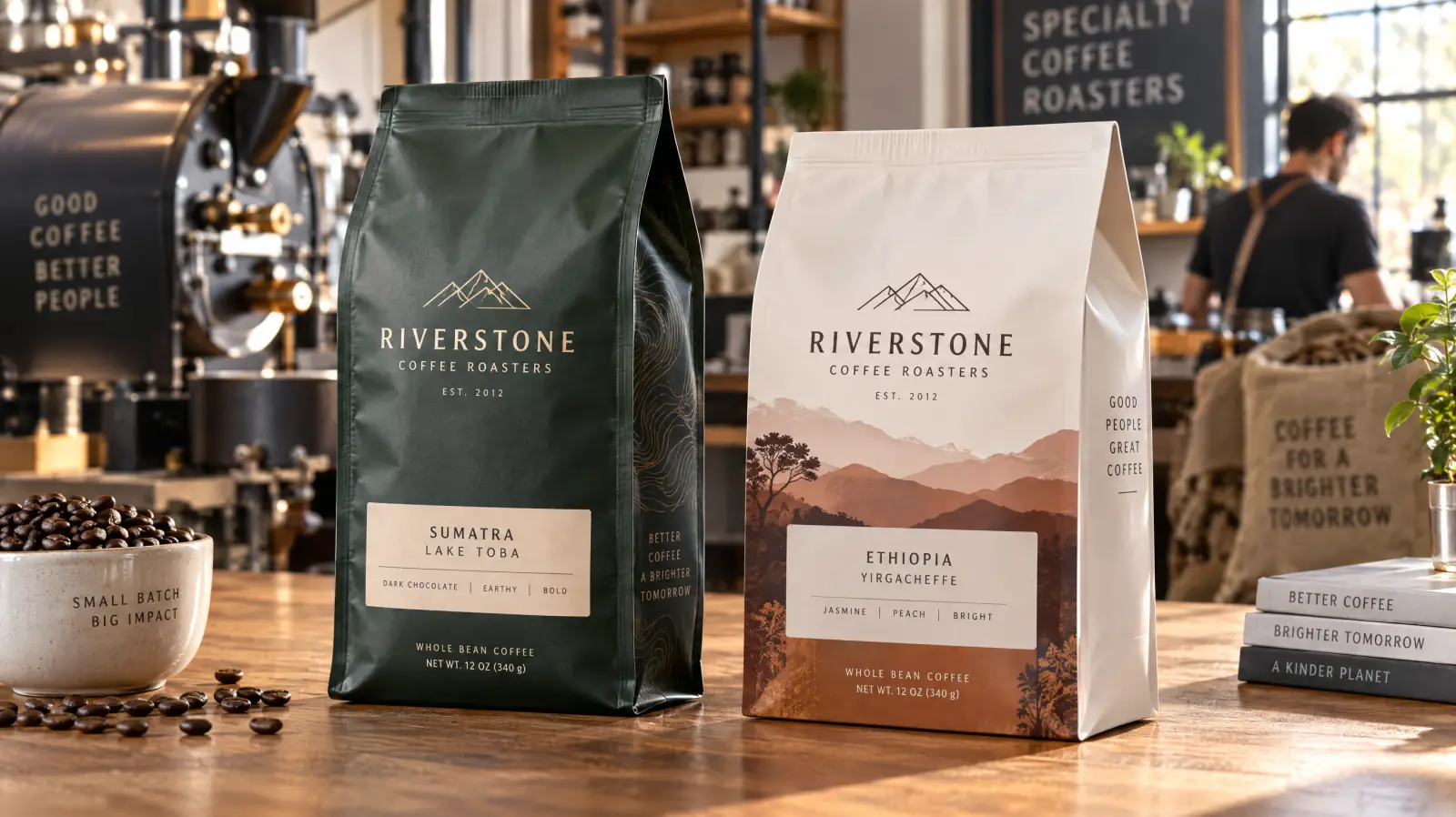
In premium retail packaging—especially within specialty coffee, premium pet nutrition, artisanal granola, and bulk confectioneries—the structural presence of a package on the shelf directly dictates consumer perception of value. While classic oval-bottom stand-up pouches dominate entry-level CPG, higher fill volumes (500g to 5kg) demand rigid, vertical, high-capacity formats.
The two preeminent contenders for heavy-duty retail shelf dominance are Quad Seal (Four-Corner Seal) Bags and 8-Side Seal Flat Bottom Box Pouches.
While both formats utilize side gussets to expand internal cubic capacity, their structural physics, base geometry, web converting mechanics, and branding surfaces differ fundamentally.
This engineering guide compares quad seal and 8-side seal flat bottom pouches across structural rigidity, dieline architecture, pallet cubic efficiency, and converting economics.
1. Quick Engineering Benchmark Matrix
| Structural Parameter | Quad Seal (4-Corner Gusset) Pouch | 8-Side Seal Flat Bottom Box Pouch |
|---|---|---|
| Base Architecture | Fold-over bottom seam or tucked K-seal | True independent rectangular flat base |
| Web Converting Process | Single continuous printed film web | Three separate synchronized web feeds |
| Freestanding Stability (Empty) | Unstable (tips over easily before filling) | 100% self-standing erect even when empty |
| Printable Display Panels | 4 Panels (Front, Back, Left, Right Gusset) | 5 Panels (Front, Back, Left, Right, Bottom Base) |
| Bottom Barcode Placement | Difficult (distorted by bottom fold) | Flawless (100% flat bottom scanning plane) |
| Zipper Integration Type | Standard press-to-close or tin-tie | Front pull-tab pocket zipper or de-flaker |
| Cubic Freight Density in Cartons | Moderate (bulges slightly at sides) | Maximum (strict rectangular brick geometry) |
| Pouch Making Machine CapEx | Moderate (Standard side-weld or VFFS) | High (Specialized multi-web box pouch lines) |
Explore formats in our Flat Bottom Pouches Category and Side Gusset Category.
2. Dieline Architecture & Structural Geometry
The fundamental mechanical difference lies in how the base of the bag is formed:
┌────────────────────────────────────────────────────────────────────────┐
│                   BASE STRUCTURAL ARCHITECTURE                         │
├───────────────────────────────────┬────────────────────────────────────┤
│     QUAD SEAL (4-CORNER SEAL)     │    8-SIDE SEAL FLAT BOTTOM POUCH   │
├───────────────────────────────────┼────────────────────────────────────┤
│                                   │                                    │
│             ┌──────┐              │             ┌──────┐               │
│            /│      │\             │            /│      │\              │
│           │ │      │ │            │           │ │      │ │             │
│           │ │      │ │            │           │ │      │ │             │
│            \│      │/             │            \│      │/              │
│             └──┬───┘              │          ┌──┴──────┴──┐            │
│                ▼                  │          │ FLAT BASE  │            │
│           FOLDED SEAM             │          │ (3rd Web)  │            │
│          (Requires weight         │          └────────────┘            │
│           to spread base)         │                                    │
│                                   │                                    │
│   • 4 vertical corner welds       │   • 4 corner seals + 4 base seals  │
│   • Pillow-like base deformation  │   • True geometric rectangular box │
│   • Prone to tilting on shelves   │   • Completely flat footprint      │
│                                   │                                    │
└───────────────────────────────────┴────────────────────────────────────┘
Quad Seal Mechanics
A quad seal bag is formed from a single printed web folded into a tube:
- Heat seals are applied along all four outer corners of the side gussets. These vertical seals provide column strength, preventing the bag from slumping under weight.
- However, the bottom is closed using a conventional fin seal or folded tuck. Until heavy product (such as 1 kg of whole bean coffee) presses down on the base, the bottom remains convex, creating a wobble effect on retail shelves.
8-Side Seal Box Pouch Mechanics
The 8-side seal box pouch (also known as a block bottom bag) is an engineering marvel in flexible converting:
- It integrates three distinct webs: one continuous web for the front and back panels, two webs for the side gussets, and an entirely separate web for the bottom plate.
- These components are fused using eight perimeter heat seals. The resulting structure mimics a rigid folding carton with crisp 90-degree corners, standing completely vertical regardless of fill weight.
3. The 5th Display Panel: Maximizing Brand Real Estate
In modern CPG retail, shelf space is exceptionally constrained. The 8-side seal pouch unlocks a hidden commercial advantage: the flat bottom panel:
┌────────────────────────────────────────────────────────────────────────┐
│                   5-PANEL BRANDING ARCHITECTURE                        │
├────────────────────────────────────────────────────────────────────────┤
│                                                                        │
│   Panel 1: FRONT     ──► Hero brand graphics & product flavor name     │
│   Panel 2: BACK      ──► Brand story, brewing instructions, certified  │
│   Panel 3: LEFT      ──► Origin details, roast profile, flavor notes   │
│   Panel 4: RIGHT     ──► Nutritional facts, ingredient deck, allergens │
│   Panel 5: BOTTOM    ──► UPC Barcode, GS1 DataMatrix, Batch & Expiry   │
│                                                                        │
│   RESULT: Moving legal barcodes and batch codes to the bottom plate   │
│   frees up 100% of the four vertical panels for pristine marketing.   │
│                                                                        │
└────────────────────────────────────────────────────────────────────────┘
In quad seal bags, printing barcodes on the folded bottom results in wrinkled, unreadable UPC scans at checkout registers, forcing brands to crowd nutritional tables onto side panels.
4. Cubic Volume & Master Shipper Freight Efficiency
For international shipping, space optimization directly translates into margin:
CARTON PACKING DENSITY COMPARISON
┌──────────────────────────────────────────────┐
│  QUAD SEAL BULGE (Pillow Effect)             │
│  ( ) ( ) ( ) ( ) ◄── Wasted dead air voids   │
│  ( ) ( ) ( ) ( )     between bulging sides   │
└──────────────────────────────────────────────┘

┌──────────────────────────────────────────────┐
│  8-SIDE SEAL BRICK PACK (Zero Waste)         │
│  [█][█][█][█][█] ◄── 100% solid brick fill   │
│  [█][█][█][█][█]     20% more units per skid │
└──────────────────────────────────────────────┘
Because 8-side seal box pouches maintain crisp 90-degree square dimensions, they pack together in corrugated master cartons like solid bricks. Packaging audits demonstrate that switching from quad seal bags to flat bottom box pouches increases pallet shipping density by 15% to 22%, drastically lowering ocean container freight costs per unit.
For bulk pet food and sack comparisons, see our Pet Food Packaging: Flat Bottom vs Woven Sacks Guide.
5. Closure Options: The Front Pocket Zipper Advantage
One of the greatest operational friction points in quad seal packaging is filling through a pre-applied zipper:
- The Quad Seal Dilemma: In standard zippered bags, product must be filled through the narrow open zipper jaws at the top, risking food particulates contaminating the zipper teeth.
- The 8-Side Seal Pocket Zipper: Modern box pouches incorporate a front pull-tab zipper (pocket zipper) welded exclusively to the front interior panel:
- The top mouth of the pouch remains 100% completely open across its full width for lightning-fast automated filling without powder dust hitting the zipper track.
- After top heat-sealing, the consumer opens the package by pulling an exterior plastic tear ribbon across the front panel, revealing a pristine, uncontaminated resealable zipper.
Review zipper tooth profiles in our Flexible Pouch Zipper Engineering Guide.
6. Procurement & Conversion Specification Checklist
When sourcing between quad seal and 8-side seal pouches:
- Define Retail Price Point: For mid-tier volume products, quad seal offers lower unit cost; for ultra-premium specialty SKUs, 8-side seal delivers maximum consumer perceived value.
- Specify Barrier Layers: For coffee and sensitive foods, ensure aluminum foil (PET/AL/PE) or EVOH barrier cores deliver OTR < 0.5 cc/m²/day.
- Check Degassing Valve Location: If packaging freshly roasted whole bean coffee, ensure the one-way degassing valve is positioned centered on the front panel above the fill line.
- Determine Top Closure: Choose between tin-tie closures, heat-seal flat headers, or front pull-tab pocket zippers.
Build Premium Shelf Impact with CraftPack Global
CraftPack Global engineers industry-leading 8-side seal flat bottom box pouches and quad seal bags featuring rotogravure reverse printing, precision laser scoring, and certified barrier protection.
Contact Our Packaging Specialists to request flat bottom dielines, samples, and factory-direct volume pricing.