
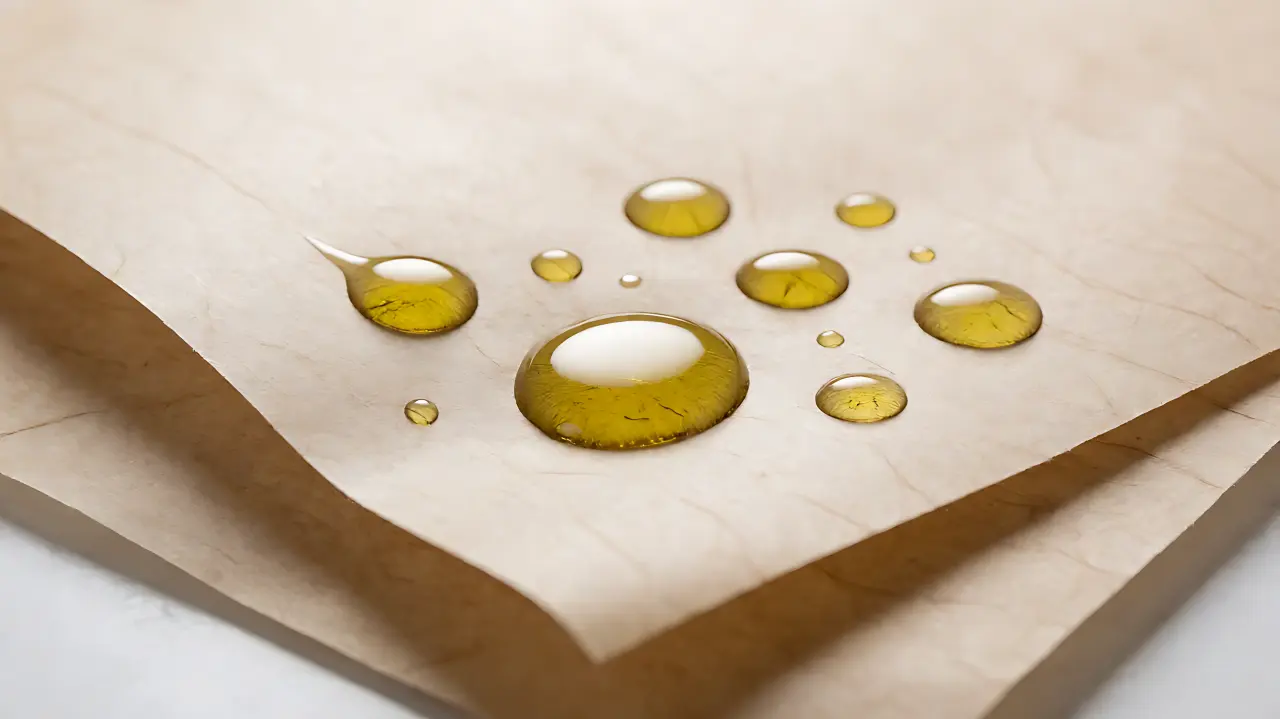
PFAS-Free Paper Coatings: Aqueous vs. Nanocellulose Guide
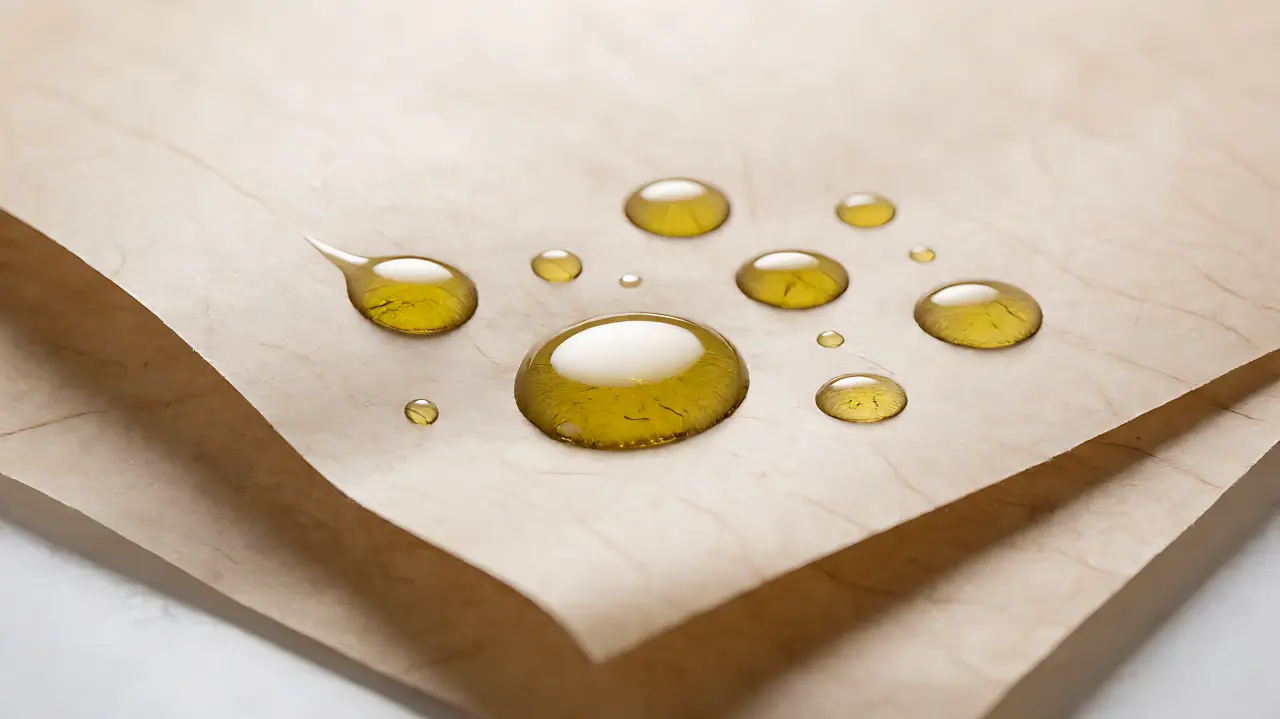
In the food service packaging and quick-service restaurant (QSR) sectors, legislative prohibitions against Per- and Polyfluoroalkyl Substances (PFAS) have fundamentally disrupted paper barrier chemistry. Historically, fluorochemical surfactants provided effortless grease resistance: by lowering the surface energy of paper fibers below $18\text{ dynes/cm}$, fluorinated papers repelled molten burger grease, hot cooking oils, and acidic dressings.
However, global health regulations—including the US FDA phase-out, European PPWR restrictions, and state-level bans across North America—have banned fluorinated “forever chemicals.”
To maintain oil holdout on burger wraps, bakery bags, and takeaway food containers without reverting to non-recyclable polyethylene (PE) or wax coatings, paper chemical engineers have commercialized two next-generation barrier technologies: Aqueous Fluorine-Free Barrier Coatings (AFBC) and Cellulose Nanofibrils (CNF / Nanocellulose).
This technical guide provides an engineering evaluation of Aqueous Dispersions vs. Nanocellulose Coatings, analyzing TAPPI T559 Kit ratings, Cobb 60 water absorption, repulpability under PTS protocols, heat sealability, and high-volume converting economics.
1. Technical Matrix: Aqueous Dispersions vs. Nanocellulose Coatings
| Technical Metric | Aqueous Barrier Dispersion (AFBC) | Cellulose Nanofibrils (CNF Coating) | Extruded Polyethylene (PE Extrusion) | Legacy Fluorochemical (PFAS Treated) |
|---|---|---|---|---|
| Chemical Basis | Styrene-acrylate / bio-wax synthetic latex | 100% Regenerated crystalline nano-cellulose | Low-Density Polyethylene polymer | Perfluoroalkyl phosphate esters |
| Grease Resistance (TAPPI T559) | Kit 7 to Kit 11 (High Oil Holdout) | Kit 8 to Kit 12 (Extreme Oil Holdout) | Kit 12 (Plastic barrier) | Kit 10 to Kit 12 (Fluorine repellant) |
| Water Resistance (Cobb 60 Test) | $< 20\text{ g/m}^2$ (Excellent water block) | Moderate to High ($35\text{ to }60\text{ g/m}^2$) | $< 5\text{ g/m}^2$ (Waterproof) | Poor water holdout ($> 80\text{ g/m}^2$) |
| Hot Oil Holdout (100°C – 120°C) | Stable up to 110°C (Bio-wax softening) | Thermal stability up to 180°C | Softens at 95°C – 105°C | Thermal stability > 150°C |
| Curbside Paper Repulpability (CEPI) | $> 95%$ Fiber Yield (No microplastics) | 100% Repulpable (Cellulose on cellulose) | Poor ($< 75%$ yield; plastic rejects) | Repulpable but environmental toxin |
| Biodegradability & Composting | Industrial compostable / biodegradable | 100% Home & Industrial Compostable | Non-biodegradable (Landfill) | Non-biodegradable (Persistent) |
| Heat Sealability (Form-Fill-Seal) | Heat sealable at 120°C – 140°C | Non-thermoplastic (Requires glue) | Heat sealable at 115°C – 130°C | Non-sealable |
| Relative Material Cost Index | Baseline (1.0× — Commercial Standard) | 1.8× to 2.8× Baseline (Emerging) | 0.85× Baseline | 0.90× Baseline (Phase-out) |
To inspect our certified sustainable food service wraps and bags, explore our Food Service Bags Category and Paper Shopping Bags Category.
2. Microstructure & Barrier Mechanism: Polymer Lattice vs. Tortuous Fibrils
Understanding why these coatings resist non-polar oils without fluorine requires analyzing their molecular deposition:
Microscopic Barrier Mechanisms:
Aqueous Dispersion Coating (AFBC):             Cellulose Nanofibrils (CNF Coating):
┌──────────────────────────────────────┐        ┌──────────────────────────────────────┐
│  Oil Droplet (Kit 9 Hydrocarbon)     │        │  Oil Droplet (Kit 11 Aggressive Oil) │
│       ▼                              │        │       ▼                              │
│  ┌────────────────────────────────┐  │        │  ┌────────────────────────────────┐  │
│  │ Polymer Latex Film Coating     │  │        │  │ Dense, Crystalline Entangled   │  │
│  │ (Sub-micron styrene/acrylic)   │  │        │  │ Cellulose Nanofibril Web       │  │
│  ├────────────────────────────────┤  │        │  ├────────────────────────────────┤  │
│  │ Base Kraft Cellulose Fibers    │  │        │  │ Base Kraft Cellulose Fibers    │  │
│  └────────────────────────────────┘  │        │  └────────────────────────────────┘  │
│  Forms continuous pinhole-free film;  │        │  Sub-nanometer pore diameters create │
│  oil cannot wet or penetrate surface. │        │  impassable tortuous diffusion path. │
└──────────────────────────────────────┘ └──────────────────────────────────────┘-
Aqueous Fluorine-Free Barrier Coatings (AFBC):
- Formulated as water-borne dispersions of synthetic styrene-acrylate lattices, bio-based polymers (polyesters or polyhydroxyalkanoates), and mineral pigments (kaolin clay or talc).
- Applied via standard blade, rod, or flexographic coating stations at coat weights of 4 to 8 g/m².
- As water evaporates in drying tunnels, the emulsion polymer droplets coalesce into a continuous, pinhole-free hydrophobic film that seals fiber pores. The mineral platelets orient horizontally, creating a physical barrier that prevents non-polar lipid oils from reaching the hydrophilic cellulose fibers below.
-
Cellulose Nanofibrils (CNF / Microfibrillated Cellulose):
- Produced by mechanical homogenization or enzymatic pre-treatment of wood pulp, breaking fibers down into nanoscale crystalline strands (diameter 5 to 30 nm, length $> 1 \mu\text{m}$).
- When coated onto paper at 2 to 5 g/m², the nanofibrils form a dense, hydrogen-bonded crystalline web with interstitial pore diameters smaller than 0.5 nanometers.
- Because oil molecules are large hydrocarbon complexes, they cannot physically diffuse through the crystalline lattice, achieving extraordinary grease holdout (TAPPI Kit 11 to 12) with zero synthetic polymers or petrochemicals.
3. Grease vs. Water: The Cobb 60 Dilemma
In restaurant takeaways, paper wraps encounter both hot animal fats (grease) and boiling steam/condensed water:
- The CNF Hydrophilicity Vulnerability: Cellulose nanofibrils consist of pure cellulose rich in hydroxyl ($-OH$) groups. While they repel oils effortlessly, they are naturally hygroscopic. Exposed to condensed water droplets from steaming fried foods, unprotected CNF coatings absorb moisture, swell, and experience a rise in Cobb 60 water absorption ($> 50\text{ g/m}^2$), softening the paper wrap over prolonged delivery times.
- The Aqueous Dispersion Synergy: Aqueous dispersions blend hydrophobic wax emulsions and polymers that resist both liquid water and grease simultaneously, achieving Cobb 60 values $< 18\text{ g/m}^2$ while maintaining high vapor breathability ($WVTR \approx 120\text{ to }180\text{ g/m}^2/\text{day}$) to prevent bun sogginess.
4. End-of-Life Repulpability: PTS-RH 021/97 & CEPI Verification
The primary regulatory differentiator between aqueous coatings and traditional PE-laminated paper is curbside repulpability:
Industrial Repulping & Fiber Recovery:
Polyethylene Extruded Paper (Fails Repulp):      Aqueous Barrier Coated Paper (CEPI Pass):
┌──────────────────────────────────────┐        ┌──────────────────────────────────────┐
│  Hydropulper Agitation (45°C)        │        │  Hydropulper Agitation (45°C)        │
│  - PE plastic film does not dissolve │        │  - Aqueous coating disintegrates     │
│  - Forms rubbery sticky flakes       │        │    into sub-micron inert particles   │
│  - Clogs fine reject screens         │        │  - 96%+ Clean wood fibers recovered │
│  - Fiber Yield: < 75% (Rejected)     │        │  - Fiber Yield: > 95% (Accepted)     │
└──────────────────────────────────────┘ └──────────────────────────────────────┘- Under standardized testing (PTS-RH 021/97 or CEPI European Recyclability Guidelines), aqueous dispersion coatings disperse cleanly during standard ambient paper mill hydropulping.
- The mineral and latex particles separate from the cellulose pulp without creating macro-stickies, enabling fiber recovery rates exceeding 95%, qualifying finished bags for single-stream municipal paper recycling.
5. Food Service Procurement Selection Framework
                    What food product is being wrapped or packaged?
                                     │
                     ┌───────────────┴───────────────┐
          High-Fat Hot Foods & Takeaway         Dry / Moderate Bakery & Sandwiches
         (Burgers, Fried Chicken, Fries)             (Artisanal Bread, Bagels, Panini)
                     │                               │
        Does the product release high steam     Do you require thermal heat sealing
         and condensed water droplets?           for automated form-fill-seal lines?
                     │                               │
        ┌────────────┴────────────┐             ┌────┴──────────────────────────┐
       YES                        NO            │ Deploy AFBC Heat-Sealable:    │
        │                          │            │ - Heat-sealable cookie bags   │
  Deploy Dual-Barrier AFBC:        │            │ - Bakery window bags          │
  - Water-based dispersion         │            │ - Granola & nut wrappers      │
  - Cobb 60 < 20 g/m²              │            └───────────────────────────────┘
  - TAPPI Kit 8 to 10 holdout      │
  - Breathable anti-soggy WVTR     │
  - 100% Curbside recyclable       └──────────> Deploy Pure Nanocellulose (CNF)
                                                for 100% Bio-Plastic-Free Wraps
Essential Technical Specifications for Purchase Orders:
- Mandate Total Organic Fluorine (TOF) Testing: Require accredited laboratory certification (e.g., DIN EN 14582) proving Total Fluorine $< 50\text{ ppm}$, guaranteeing compliance with US state and EU PFAS restrictions.
- Specify TAPPI T559 Kit Rating by Application: Specify Kit 7 to 8 for standard sandwich and burger wraps; mandate Kit 10 to 11 for deep-fried chicken and buttery pastries.
- Verify FDA 21 CFR 176.170 Compliance: Confirm that all coating components meet FDA direct food contact compliance under aqueous and fatty food conditions.
To receive certified PFAS-free paper wrap swatches and production samples, contact our technical specialists through our Food Service Packaging Division.