
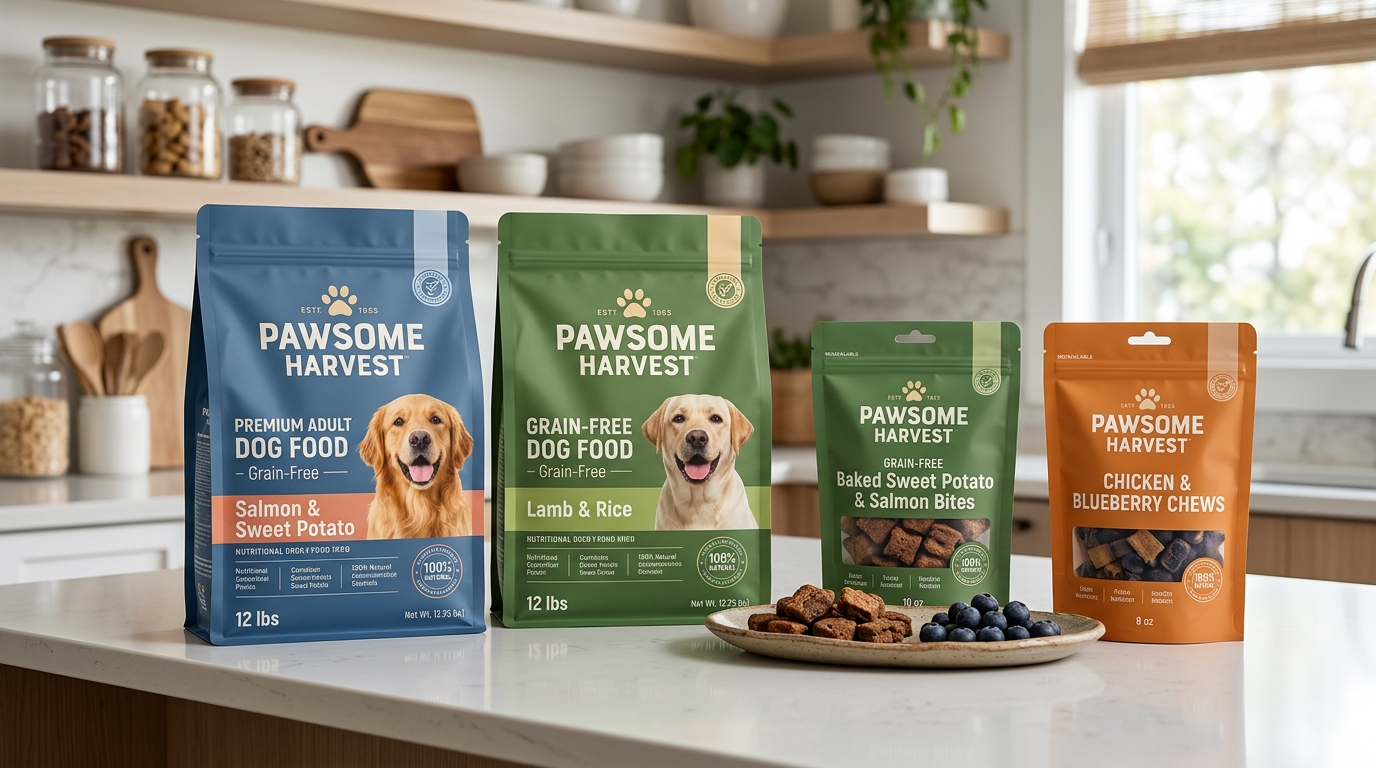
Pet Food Packaging Guide: Flat Bottom vs Quad Seal Pouches
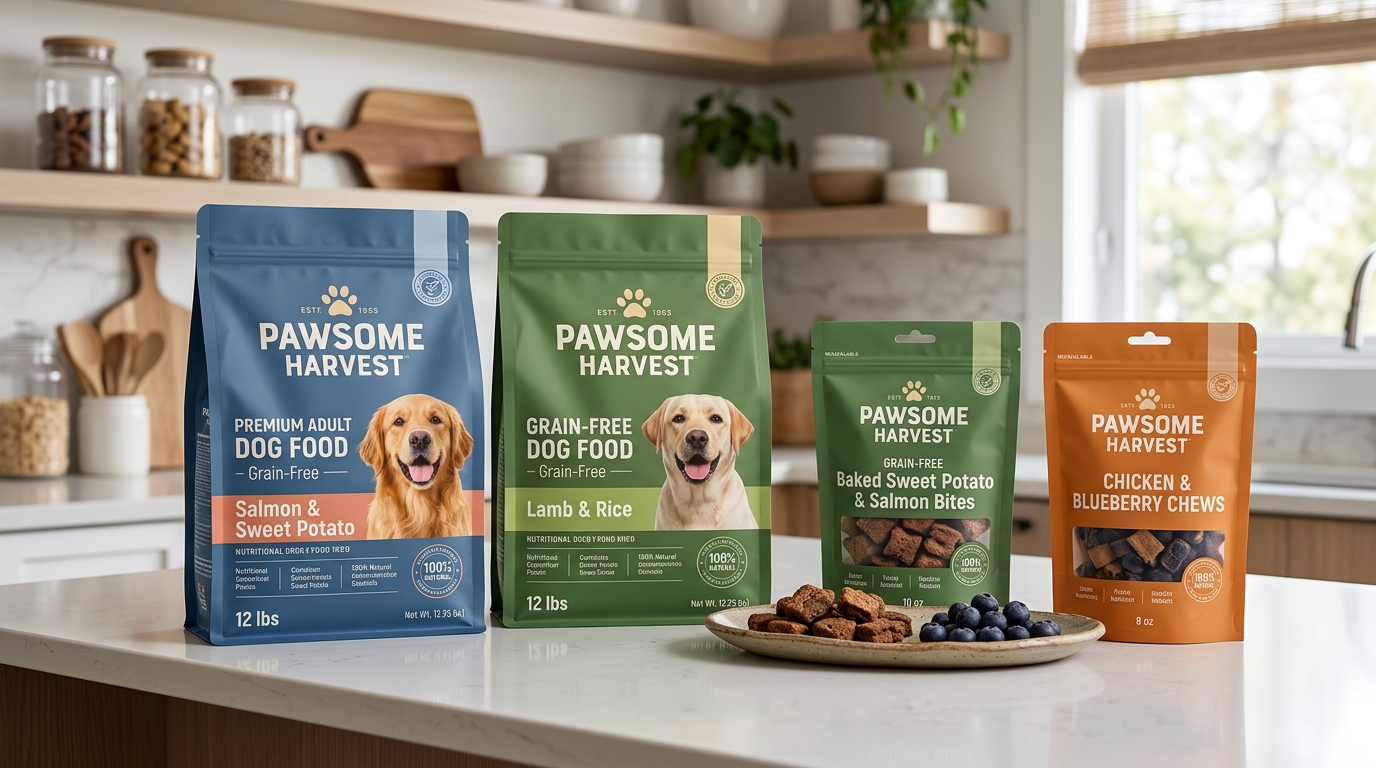
The global pet care market has experienced massive premiumization. Pet parents increasingly demand human-grade kibble, freeze-dried raw bites, and organic treats rich in natural oils, proteins, and active nutrients.
However, formulating nutrient-dense pet nutrition creates severe packaging challenges. Animal fats and fish oils are exceptionally vulnerable to rancidity when exposed to ambient oxygen. Furthermore, bulk kibble bags (ranging from 2 kg to 15 kg) must withstand significant puncture hazards from sharp kibble edges, resist bottom drops, and remain completely grease-proof throughout distribution.
For pet food manufacturers and private-label brands, choosing between flat bottom (box pouches) and quad seal side gusset bags defines both shelf visibility and product shelf life.
This guide provides a comprehensive comparison of pet food packaging formats, barrier laminates, and closure systems.
Key Packaging Challenges in Pet Food & Treats
- Lipid Oxidation & Rancidity: Dry kibble and freeze-dried meats contain high concentrations of unsaturated fatty acids. Contact with oxygen triggers oxidative rancidity, destroying vitamins and generating off-putting odors that pets will reject.
- Grease Migration: Without an impermeable barrier layer, animal oils migrate through porous inner films, causing unsightly exterior staining, ink delamination, or seal weakness.
- Puncture & Abrasion from Sharp Pellets: Extruded dry kibble creates jagged, abrasive contact points that can cause micro-pinholing in lightweight polymer films during shipping vibration.
- Moisture Vapor Transmission: Moisture ingress causes dry kibble to soften and fosters mold growth, while moisture loss turns chewy treats brittle.
Format Comparison: Flat Bottom vs Quad Seal Bags
Pet nutrition packaging generally relies on two dominant multi-panel bag geometries:
| Comparison Metric | Flat Bottom Bags (Box Pouch) | Side Gusset Bags (Quad Seal) |
|---|---|---|
| Base Structure | Completely flat, rectangular block bottom | Folded or pinch bottom; narrower standing footprint |
| Shelf Stability | Maximum; stands upright independently even when half-empty | Good when full; can lean or slump as contents decrease |
| Printable Panels | 5 distinct graphic panels (Front, Back, 2 Sides, Bottom) | 4 graphic panels (Front, Back, 2 Side Gussets) |
| Capacity Sweet Spot | 500g to 5 kg (Ideal for treats & premium kibble) | 3 kg to 15 kg+ (Industry standard for heavy bulk kibble) |
| Closure Compatibility | Front pocket zippers, slider zippers, Velcro press-lok | Top fold, tin-ties, or heavy-duty top press zippers |
| Unit Packaging Cost | Higher due to complex 8-corner forming tooling | Lower material and converting costs for high volumes |
Engineering Multi-Layer Barrier Laminates for Pet Nutrition
To guarantee freshness across an 18-to-24-month retail shelf life, pet food bags must integrate high-performance multi-layer barrier films:
1. High-Barrier Foil Triplex (PET / AL / PE)
- Layer Construction: 12µm Matte PET (Outer print) + 7µm Aluminum Foil (Zero-permeability barrier) + 100–140µm Heavy-Duty Linear Low-Density Polyethylene (LLDPE).
- Benefits: Absolute barrier against light, oxygen (OTR < 0.1), and moisture (WVTR < 0.1). Impervious to oil migration.
- Recommended For: High-fat puppy food, salmon-oil recipes, and export shipments crossing equatorial shipping lanes.
2. Metallized Cost-Efficient Laminates (PET / VMPET / PE)
- Layer Construction: PET + Vacuum Metallized PET (VMPET) + Metallocene LLDPE.
- Benefits: Exceptional puncture and flex-crack resistance with high barrier performance at a lighter tare weight than solid aluminum.
- Recommended For: Standard dry adult kibble and large-volume regional distribution.
3. Recyclable Mono-Material Solutions (MDO-PE / PE)
- Layer Construction: Machine Direction Oriented Polyethylene (MDO-PE) + EVOH barrier + Low-temperature seal PE.
- Benefits: 100% recyclable in the PE stream, enabling brands to meet strict European circular packaging targets without sacrificing oxygen protection.
For single-serve snacks and smaller training treats, consider agile retail formats in our stand-up pouches category.
Essential Closure & Handling Features for Pet Food Brands
- Pocket Zippers & Velcro Press-Lok: Standard press-to-close zippers often clog with kibble crumbs and powder dust. Pocket zippers keep the track protected during filling, while Velcro closures click shut effortlessly despite dust contamination.
- Reinforced Punch Handles: Heavy bags (over 5 kg) require ergonomic three-hole or die-cut oval handles reinforced with heat-sealed internal tape to facilitate easy consumer transport.
- De-aeration Valves (One-Way Air Release): Large kibble bags trap substantial air during high-speed vertical form fill sealing (VFFS). Without de-aeration channels, pallets balloon and slide during stacking. Micro-perforated maze vents or one-way valves release excess air while preventing oxygen re-entry.
Custom Pet Food Packaging with CraftPack Global
Whether you are launching a premium organic treat line in flat bottom bags or updating bulk kibble lines with high-strength side gusset bags, the CraftPack Global Team provides custom barrier formulation, food-grade certifications, dieline prototyping, and rotogravure print execution.