
PCR Recycled Plastic Carrier Bags: EU PPWR Compliance Guide
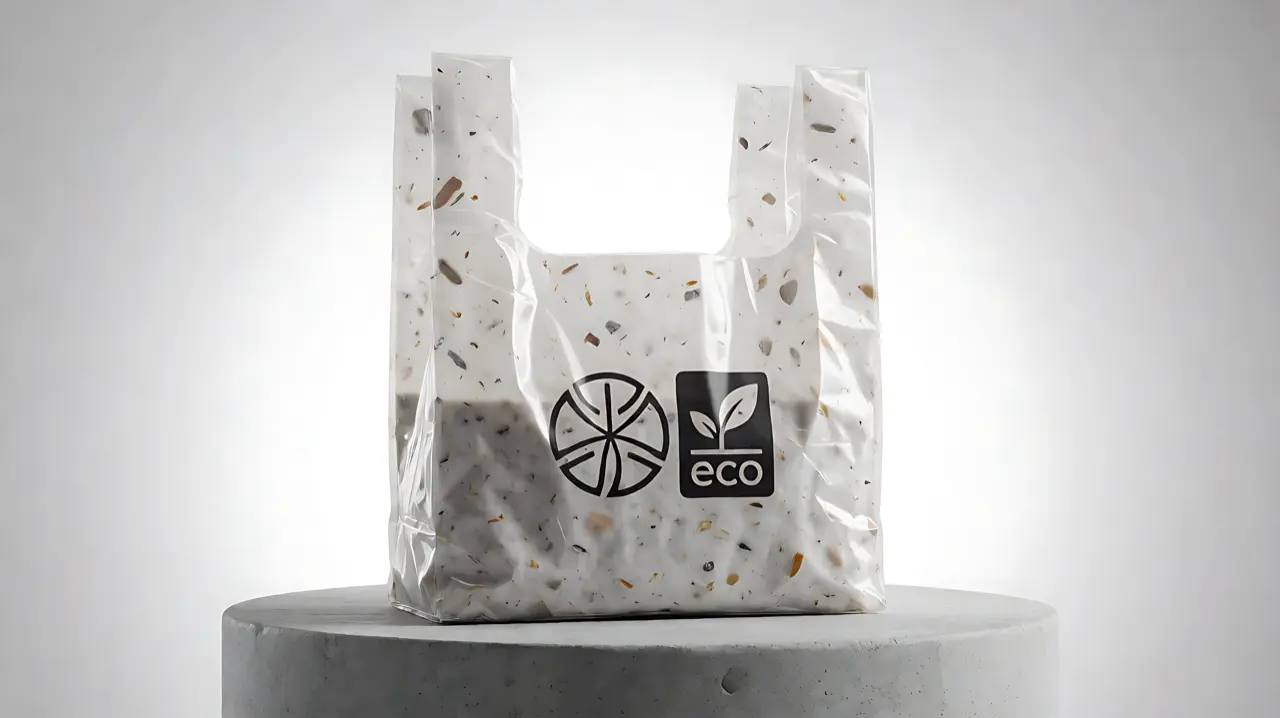
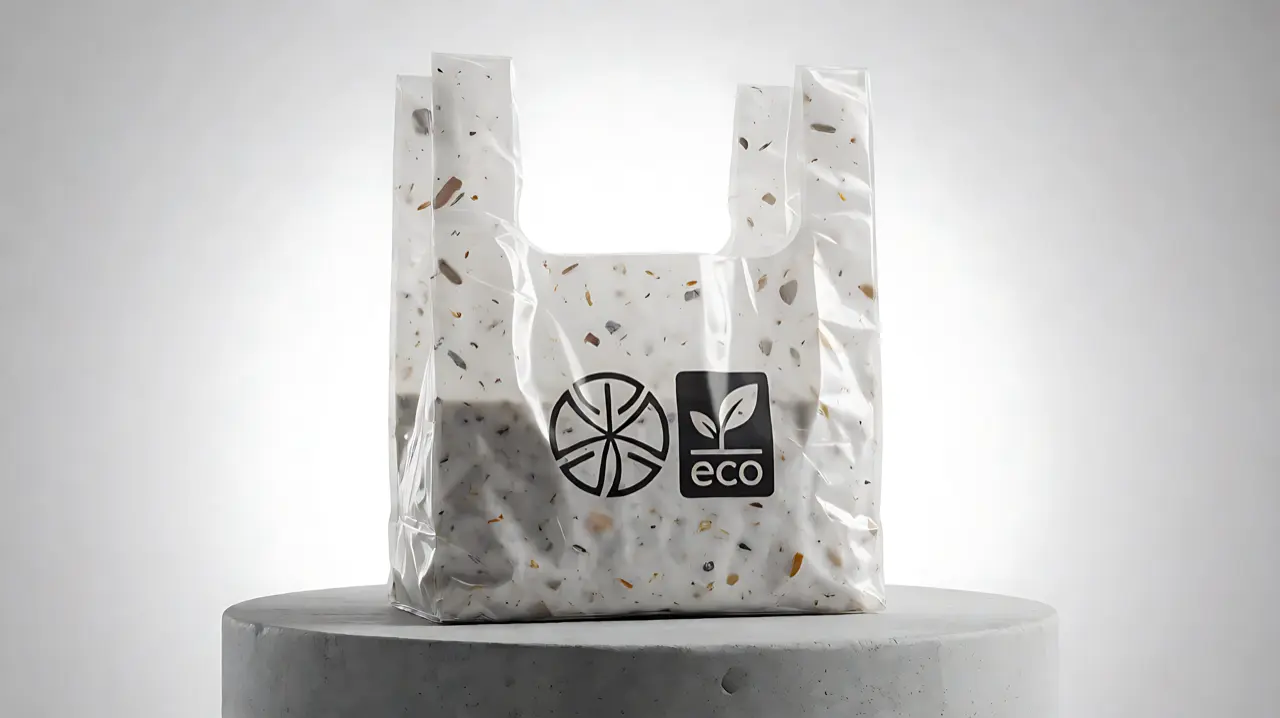
In commercial retail, fashion apparel, supermarket merchandising, and promotional distribution, plastic carrier bags remain the most cost-effective and waterproof carrying solution. However, single-use carrier bags manufactured from 100% virgin fossil-fuel polymers face unprecedented legislative bans and environmental taxation across Europe, North America, and Australasia.
Under the landmark European Union Packaging and Packaging Waste Regulation (PPWR) and national plastics pacts globally, retail carrier bags must incorporate mandatory percentages of Post-Consumer Recycled (PCR) plastic—ramping from 35% by 2030 up to 65% by 2040—or face punitive eco-modulation penalty fees and market bans.
However, blending mechanically recycled post-consumer polyethylene into flexible blown film extruders is an intense polymer engineering challenge. PCR resins contain molecular chain degradation, thermal history fractures, cross-contamination gels, and volatile odor compounds that threaten bag tensile strength and handle shear resistance.
This technical guide analyzes how to specify PCR content (30%, 50%, 70%) in High-Density Polyethylene (HDPE) and Low-Density Polyethylene (LDPE) carrier bags while maintaining ASTM mechanical performance and Global Recycled Standard (GRS) chain-of-custody compliance.
1. Polymer Performance Matrix: Virgin PE vs. PCR Blends
| Technical Metric | 100% Virgin HDPE / LDPE | 30% PCR + 70% Virgin Blend | 50% PCR + 50% Virgin Blend | 70% to 80% High-PCR Blend |
|---|---|---|---|---|
| Primary Polymer Structure | Pure virgin ethylene monomer chains | Linear virgin polymer backbone + sorted PCR pellets | Balanced co-extrusion matrix | High-fraction PCR; requires compatibilizers |
| Dart Drop Impact (ASTM D1709) | 320 g to 450 g (High toughness) | 280 g to 360 g | 220 g to 280 g | 160 g to 210 g (Requires +5µm film caliper) |
| Tensile Elongation at Break (MD) | 550% to 650% | 450% to 520% | 350% to 420% | 240% to 310% (Lower stretch resilience) |
| Optical Clarity & Haze | Crystal clear (LDPE) or bright milk white | Slight natural tint / minor specks | Slight grey/hazel hue; easily masked with color | Visible carbon flecks / greyish undertone |
| Polymer Gel Count (<0.5mm) | Near zero (< 5 gels/m²) | Low (15–30 gels/m²) | Moderate (40–80 gels/m²) | High (Requires fine 120-mesh extruder screens) |
| Volatile Organic Odor | Completely odorless | Near odorless (Modern hot-wash PCR) | Faint polymer odor | Requires vacuum degassing during compounding |
| EU PPWR Mandate Status | Exempt from bans only if >50µm multi-use | Meets 2030 Baseline Targets | Exceeds 2030 PPWR Threshold | Qualifies for Tier-1 Eco-modulation Tax Rebates |
To explore our full range of custom-printed commercial retail carrier bags, browse our Plastic Carrier Bags Category and reusable shopping bags.
2. Molecular Degradation & The Extrusion Physics of PCR
Why does adding recycled plastic reduce tensile strength? The answer lies in the mechanical recycling lifecycle:
Polymer Chain Degradation Cycle:
Virgin Polyethylene:     [════════════════════════════════════] Continuous long molecular chains
                                      │ (Mechanical sorting, shredding, re-melting)
1st Heat History:        [═════════════]   [══════════════════] Chain scission into shorter oligomers
                                      │ (Oxidative aging during consumer use)
Degraded PCR Pellet: [══════] [══════] [══] [═════] [════] Reduced entanglements -> Brittle failure- Chain Scission: When post-consumer plastic containers or agricultural films are washed, shredded, and re-extruded through recycling pelletizers, thermal and mechanical shear forces break high-molecular-weight polyethylene chains into shorter fragments. Shorter chains possess fewer intermolecular entanglements, lowering ultimate tensile break strength.
- Cross-Contamination Gels: Even optical sorting systems cannot separate 100% of foreign polymers. Minute fractions of polypropylene (PP), PET flakes, or residual hot-melt labels remain in the melt. Because PE and PP are thermodynamically immiscible, unblended PP droplets form micro-scale gels that act as stress concentration notches where cracks initiate during handle lifting.
3. Engineering Countermeasures: How to Run 50%+ PCR Without Bag Failure
To manufacture 50% to 70% PCR carrier bags that carry 15 kg grocery loads without tearing, packaging converters employ three vital technologies:
3-Layer Co-Extrusion (A/B/A) Film Architecture:
Layer A (Outer): [ 20% Virgin HDPE + Slip Masterbatch ]  <-- Smooth Print Surface & High Gloss
Layer B (Core):  [ 60% Heavy PCR Pellet + Compatibilizer] <-- Bulk Volume Recycled Content
Layer A (Inner): [ 20% Virgin Metallocene LLDPE Blend   ]  <-- High Dart Impact & Sealing Integrity
1. 3-Layer Co-Extrusion (A/B/A Die Technology)
Instead of running a monolayer blend where degraded PCR resin sits on the bag surface, 3-layer co-extrusion sandwiches the PCR content in the core layer (Layer B), flanked by virgin polymer skin layers (Layers A).
- The Core Benefit: The core encapsulates 60% to 70% PCR content, while the virgin outer skins provide a pristine, gel-free exterior for high-definition flexographic printing and hermetic heat sealing at the bottom seam.
2. Metallocene Polyethylene (mLLDPE) Reinforcement
Adding 15% to 25% virgin metallocene LLDPE (mLLDPE) to the polymer blend acts as a molecular “bridge.” Metallocene polymers feature ultra-narrow molecular weight distribution and long-chain branching that weave between short PCR chains, restoring Dart Drop impact resistance back above 300 grams.
3. Maleic Anhydride Compatibilizers
Polymer formulators add maleic anhydride grafted polyethylene (PE-g-MAH) compatibilizers during extrusion. These functional additives chemically link polar contaminants and disparate polymer fractions, preventing micro-phase separation and eliminating weak points along die-cut handles.
4. Visual Aesthetics & Color Masking Strategies
One major commercial hurdle for luxury boutiques and fashion retailers is the greyish or yellowish undertone inherent to recycled pellets:
- Color Masterbatch Masking: Instead of attempting pure optical transparency (which reveals minor PCR carbon flecks), brands formulate custom opaque pastel or deep hues:
- Charcoal, Matte Black, & Slate Grey: Naturally absorbs PCR color variance, projecting an industrial, premium aesthetic.
- Sage Green, Earth Brown, & Ochre: Reinforces eco-conscious brand identities while completely masking underlying resin tint.
- High-Caliper Thickness Strategy: In jurisdictions regulating single-use plastics by film gauge (such as the EU threshold mandating reusable bags be $\ge 50\text{µm}$), increasing film caliper from 35µm to 55µm (2.2 Mil) compensates entirely for PCR tensile loss, allowing bags to survive over 100 reuse cycles per EN 13429.
5. Certification & Traceability: GRS 4.0 & RecyClass
Regulators and customs authorities require rigorous third-party chain-of-custody documentation to prove claimed recycled percentages:
- Global Recycled Standard (GRS 4.0): Tracks recycled material from the recycling collection facility through to the finished bag roll, certifying not only physical mass-balance percentages but also chemical compliance and fair labor practices.
- RecyClass & EuCertPlast: The European verification benchmarks auditing post-consumer origin, ensuring pellets derive from genuine municipal household waste rather than industrial clean scrap (pre-consumer/PIR).
- Transaction Certificates (TCs): Every commercial shipment must be accompanied by an official GRS Transaction Certificate linking specific purchase order numbers to verified batch recycling inputs.
6. Retail Sourcing & Specification Checklist
When transitioning store carrier bags to compliant PCR formulations, specify the following parameters:
- Target PCR Percentage: Select 30% for cost-neutral compliance, 50% for standard PPWR alignment, or 70%+ for zero plastic tax exposure.
- Handle Structural Reinforcement: For die-cut handle bags, mandate an internal heat-welded patch handle (65µm patch reinforcement) to prevent handle stretching under 10+ kg loads.
- Film Caliper (Microns / Mil): Verify minimum thickness ($\ge 50\text{µm}$ for reusable classification in Europe).
- Tear and Drop Performance SLA: Require minimum Dart Drop impact $>250\text{ g}$ (ASTM D1709) and bottom seal peel strength $>18\text{ N/15mm}$ (ASTM F88).
To configure custom-branded PCR recycled plastic carrier bags certified under GRS 4.0, consult CraftPack Global’s polymer engineering group.