
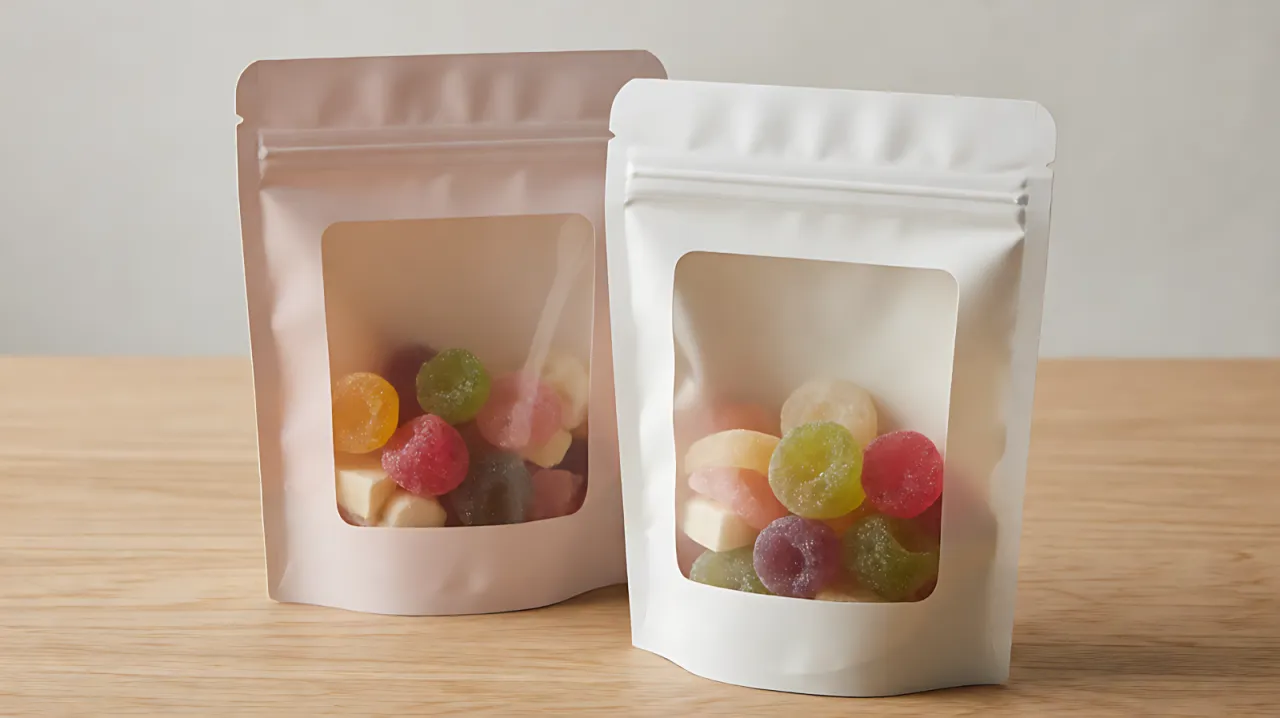
Packaging Candy in Flat Bottom Bags: Barrier Science & Shelf Life
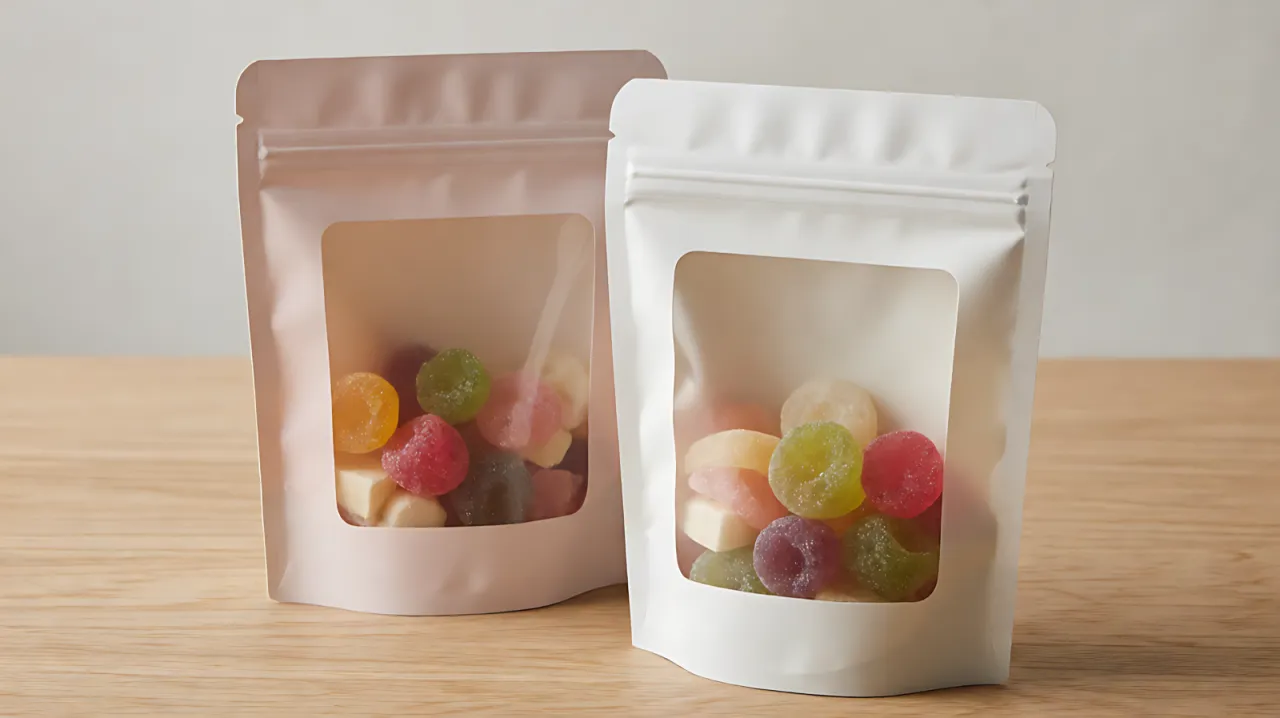
For confectionery brands, candy roasters, and snack manufacturers, packaging is far more than an aesthetic wrapper—it is a micro-climate preservation chamber.
Whether marketing premium chocolate bonbons, gummy bears, sour belts, or artisanal hard candies, confectionery products possess volatile chemical formulations. They are exceptionally sensitive to ambient relative humidity, light exposure, temperature shifts, and oxygen ingress.
In European and international confectionery markets—frequently searched by retail converters under terms like snoep verpakken in flat bottom bag or Blockbodenbeutel für Süßwaren—the flat bottom pouch (also designated as a box pouch or eight-side seal bag) has rapidly superseded traditional pillow bags and standard quad-seal bags.
This guide delivers an in-depth packaging engineering analysis of confectionery preservation: moisture sorption isotherms, sugar bloom prevention, barrier film laminations, zipper mechanics, and recyclable mono-material compliance under the EU Packaging and Packaging Waste Regulation (PPWR).
1. The Food Science of Confectionery Spoilage
Confectionery treats degrade through distinctly different physicochemical pathways depending on their internal Water Activity ($a_w$) relative to the ambient atmosphere.
Confectionery Spoilage Mechanisms:
┌───────────────────────────────┬───────────────────────────────┬───────────────────────────────┐
│ Confectionery Type            │ Critical Threat               │ Physicochemical Failure       │
├───────────────────────────────┼───────────────────────────────┼───────────────────────────────┤
│ Hard Boiled Candies & Drops   │ Moisture Ingress ($RH > 30\%$)│ Hygroscopic Deliquescence     │
│ (Water Activity $a_w < 0.20$) │ Ambient water vapor absorption│ Amorphous to crystalline shift│
│                               │                               │ Candies stick, turn gummy/soft│
├───────────────────────────────┼───────────────────────────────┼───────────────────────────────┤
│ Gelatin / Pectin Gummies      │ Moisture Egress ($RH < 50\%$) │ Water Desorption & Hardening  │
│ (Water Activity $a_w = 0.55$) │ Dry ambient air extraction    │ Loss of elastomeric chewiness │
│                               │                               │ Tough, dry, unpalatable texture│
├───────────────────────────────┼───────────────────────────────┼───────────────────────────────┤
│ Fine Chocolates & Pralines    │ Condensation & Temp Fluctuation│ Sugar Bloom & Fat Bloom       │
│ ($a_w \approx 0.35 - 0.45$)   │ Light & oxygen auto-oxidation │ Cocoa butter polymorphic drift│
│                               │                               │ Dull grey haze, rancid lipids │
└───────────────────────────────┴───────────────────────────────┴───────────────────────────────┘
A. Hygroscopic Deliquescence in Low-$a_w$ Hard Candies
Hard candies, lollipops, and mints are produced in a meta-stable, non-crystalline amorphous glass state with water activity ($a_w$) typically below $0.20$. Because their equilibrium relative humidity is under 20%, they are aggressively hygroscopic.
When exposed to standard retail humidity (50% to 65% RH) through inadequate packaging barriers:
- Ambient moisture penetrates the film.
- The outer candy surface dissolves into a localized saturated sugar solution.
- The dissolved sucrose recrystallizes into grainy crystals, causing candies to fuse together into an unmarketable solid brick.
Preventing this failure demands ultra-low Water Vapor Transmission Rates (WVTR) governed by ASTM F1249 ($< 0.5\text{ g/m}^2/\text{24h}$).
B. Moisture Desorption in High-Moisture Gummies
Conversely, soft confections—such as gelatin gummies, pectin sweets, and starch-molded jellies—contain an equilibrium water activity between $0.50$ and $0.65$. When packed in dry seasonal environments or air-conditioned retail aisles, moisture diffuses outward through permeable barrier films:
- The gummy matrix collapses as free water evaporates.
- The chew texture turns brittle, leathery, and rubbery.
- Coated sour acid crystals (malic and citric acid) draw residual water and hydrolyze surface sugars.
C. Fat Bloom vs. Sugar Bloom in Chocolate Confectionery
Premium chocolate-coated confections suffer two distinct surface defects caused by environmental mismanagement:
- Fat Bloom: Occurs when cocoa butter polymorphs transition from the stable Form V ($\beta$) crystal state to the unappealing, high-melting Form VI ($\beta_1$) state due to thermal cycling. While non-toxic, it creates an unappetizing whitish film and gritty mouthfeel.
- Sugar Bloom: Occurs when cold packages are transported into warmer ambient air without moisture-tight barriers. Dew-point condensation forms on the chocolate surface, dissolving microscopic surface sugars. Once the water evaporates, a coarse, permanently white crust of recrystallized sucrose remains.
To counter both bloom phenomena, chocolate confectionery packaging requires multi-layer barrier laminates with high thermal stability and zero moisture condensation permeability.
2. Why the Flat Bottom Box Pouch Dominates Confectionery Shelves
Historically, commercial sweets were packed in inexpensive lay-flat pillow bags or gusseted pouches displayed on wire peg-hooks. However, leading global brands and boutique confectioners have decisively transitioned to flat bottom bags (also known across Dutch and German manufacturing hubs as Blokbodemzakken or Blockbodenbeutel).
Flat Bottom Box Pouch Architecture:
┌──────────────────────────────────────────────┐ ◄─ Top Header
│  Pocket Pull-Tab Zipper / Laser Score        │
├──────────────────────────────────────────────┤ ◄─ Hermetic Resealable Channel
│                                              │
│                                              │
│       Front Panel: 100% Flat Display         │
│          (Matte / Gloss Contrast)            │
│          (Optional Barrier Window)           │
│                                              │
│                                              │
├──────────────────────────────────────────────┤
│ ◄- Gusset -►                    ◄- Gusset -► │ ◄─ Left & Right Side Panels:
│  Brand Story                     Nutrition   │    Nutritional Facts, EAN Barcodes
├──────────────────────────────────────────────┤
│ ┌──────────────────────────────────────────┐ │ ◄─ 100% Flat Rectangular Base:
│ └──────────────────────────────────────────┘ │    Zero-Wobble Retail Footprint
└──────────────────────────────────────────────┘
1. Five Distinct Printable Graphic Panels
Unlike standard pillow bags or three-side seal pouches that distort and roll when filled, the flat bottom box pouch provides 5 independent advertising panels:
- Front Panel: Primary brand logo, flavor designation, and high-visibility clear window showcasing the vibrant colors and artisanal shapes of the candy.
- Back Panel: Origin storytelling, ingredient sourcing certifications, and allergen warnings.
- Left & Right Side Gussets: Regulatory nutritional tables, multilingual translations (e.g. Dutch, German, French, English), and EAN/UPC barcodes.
- Bottom Footprint: Batch serialization, QR codes, and secondary regulatory disclosures.
2. True Zero-Wobble Vertical Shelf Presence
A traditional stand-up pouch with a curved Doyen bottom gusset requires continuous product weight to spread the base. If candies shift unevenly during transit, Doyen pouches frequently list, tilt, or collapse on the retail shelf.
In contrast, the flat bottom pouch is constructed with a completely flat, rigid rectangular base folded and sealed under calibrated converting pressure. It stands upright with zero wobbling—maximizing visual shelf impact in competitive supermarket aisles without requiring cardboard display outers or peg-board hang tags.
3. Pocket Pull-Tab Resealability
Confectionery products are multi-serving impulse items. When consumers tear open standard zippered pouches, uneven tearing frequently damages the zipper track or scatters loose sugar granules into the reseal channel.
Modern confectionery box pouches utilize a Pocket Pull-Tab Zipper (front-panel tear strip):
- The top header remains factory-sealed and hermetic until consumer unboxing.
- The consumer pulls a precision laser-scored tab across the front face, exposing a pristine press-to-close zipper.
- Loose sugar crystals and gummy powders are shielded from clogging the interlocking profile, guaranteeing a reliable tactile snap for up to 30 re-closures.
3. High-Performance Lamination Structures for Candy
Selecting the ideal flexible packaging lamination requires balancing shelf-life barrier physics, consumer visibility (display windows), and recycling regulations.
Cross-Sectional Lamination Profiles:

Profile A: Transparent Ultra-Barrier Window Pouch
┌──────────────────────────────────────────────┐ 12 µm BOPET (Reverse Print / Matte Lacquer)
├──────────────────────────────────────────────┤ 3 µm Solvent-Free Polyurethane Adhesive
├──────────────────────────────────────────────┤ 12 µm AlOx or SiOx High-Barrier PET
├──────────────────────────────────────────────┤ 3 µm Solvent-Free Polyurethane Adhesive
└──────────────────────────────────────────────┘ 60–80 µm Low-Density Polyethylene (LDPE)

Profile B: Maximum Metalized Barrier (Zero UV & Zero Moisture)
┌──────────────────────────────────────────────┐ 20 µm Matte BOPP (Soft-Touch Feel)
├──────────────────────────────────────────────┤ 12 µm Vacuum Metalized PET (VMPET, Optical Density 2.5)
├──────────────────────────────────────────────┤ 3 µm Solvent-Free Polyurethane Adhesive
└──────────────────────────────────────────────┘ 70 µm Linear Low-Density Polyethylene (LLDPE)

Profile C: Recyclable Mono-PE Structure (EU PPWR Compliant)
┌──────────────────────────────────────────────┐ 25 µm MDO-PE (Machine Direction Oriented PE)
├──────────────────────────────────────────────┤ 3 µm High-Barrier EVOH Extrusion Tie Layer
└──────────────────────────────────────────────┘ 65–85 µm Cast Polyethylene (CPE / Sealant PE)
Barrier Comparison Matrix
| Lamination Architecture | Typical Application | WVTR (ASTM F1249) $\text{g/m}^2/\text{24h}$ | OTR (ASTM D3985) $\text{cc/m}^2/\text{24h}$ | Optical Clarity | Light Protection |
|---|---|---|---|---|---|
| BOPET / AlOx-PET / PE | Artisanal gummies, colorful fruit drops, coated licorice | $0.5 - 0.8$ | $0.5 - 1.2$ | High Clarity Window | Minimal (UV Filter Only) |
| Matte BOPP / VMPET / PE | Filled chocolates, praline bites, roasted nut dragees | $0.1 - 0.3$ | $0.3 - 0.8$ | Opaque (No Window) | 100% Total Light Block |
| Kraft Paper / ALU / PE | Organic luxury confections, traditional European sweets | $< 0.05$ | $< 0.05$ | Opaque Natural Look | 100% Total Light Block |
| MDO-PE / PE-EVOH (Mono-PE) | Modern recyclable gummy & candy export lines | $0.8 - 1.4$ | $1.0 - 2.0$ | High to Semi-Clear | Moderate |
For high-barrier monomaterial alternatives, review our dedicated engineering guide on MDO-PE films in recyclable packaging.
4. Flavor Scalping and Aroma Scalping Defense
A neglected engineering challenge in candy packaging is Flavor Scalping—the physical sorption of volatile aromatic compounds from the confection into the inner polyolefin sealant layer.
- Terpene Scalping: Citrus flavor oils (such as limonene in lemon and orange candies) and mint extracts (menthol in peppermint lozenges) are non-polar organic molecules. Standard low-density polyethylene (LDPE) sealant layers can absorb up to 20% to 40% of these volatile flavor molecules over a 6-month shelf life. This leaves the candy tasting bland and causes the outer film to swell or delaminate.
- Remediation: For high-flavor confections, converters utilize Polyester (PET) or specialized Ionomer resins (Surlyn) as the direct food-contact sealant layer. These polar polymers exhibit virtually zero solubility for organic terpenes, locking intense aromas inside the pouch cavity.
5. Engineering Specification Checklist: Candy vs. Pouch Matrix
When preparing your technical purchase orders or requesting converter tooling proofs, use this application matrix to match your confectionery product with the proper box pouch engineering parameters:
┌─────────────────────────┬───────────────────────────┬───────────────────────────┬───────────────────────────┐
│ Confectionery Category  │ Recommended Pouch Format  │ Barrier Architecture      │ Key Functional Feature    │
├─────────────────────────┼───────────────────────────┼───────────────────────────┼───────────────────────────┤
│ Gelatin Gummy Bears     │ Flat Bottom Box Pouch     │ PET / AlOx-PET / LLDPE    │ Clear Front Window        │
│ & Fruit Jellies         │ 250g / 500g Capacity      │ (WVTR < 0.8)              │ Pocket Pull-Tab Zipper    │
├─────────────────────────┼───────────────────────────┼───────────────────────────┼───────────────────────────┤
│ Dark & Milk Chocolates, │ Flat Bottom Box Pouch     │ Matte BOPP / VMPET / PE   │ Complete Light Barrier    │
│ Praline Truffles        │ 150g / 350g Capacity      │ (Zero Optical Transmittance) Tear Notch + Press Zipper│
├─────────────────────────┼───────────────────────────┼───────────────────────────┼───────────────────────────┤
│ Hard Drops, Mints,      │ Flat Bottom or Stand-Up   │ PET / VMPET / PE or       │ Hermetic Seal Integrity   │
│ & Rock Candies          │ 100g / 250g Capacity      │ Metalized Mono-PP         │ Anti-Static Inner Slip    │
├─────────────────────────┼───────────────────────────┼───────────────────────────┼───────────────────────────┤
│ Freeze-Dried Fruits     │ Flat Bottom Box Pouch     │ Kraft / ALU / PE or       │ Nitrogen Gas Flushing     │
│ & Chocolate Bites       │ 80g / 200g Capacity       │ PET / ALU / PE            │ Residual $O_2 < 1.0\%$    │
└─────────────────────────┴───────────────────────────┴───────────────────────────┴───────────────────────────┘
For detailed mathematical sizing conversions from mass to dimensional footprint, reference our stand-up pouch sizing and volume guide.
6. Regulatory Compliance: EU PPWR & Food Contact Safety
When distributing confectionery across North American and European retail chains, brand packaging must comply with strict statutory standards:
- Food Contact Safety (FDA 21 CFR 177 & EU 10/2011): All primary contact resins, color pigments, and solvent-free lamination adhesives must be certified non-migratory. Specific migration limits (SML) for heavy metals, primary aromatic amines (PAAs), and photoinitiators must pass accredited third-party GC-MS lab testing.
- PFAS-Free Water & Grease Barriers: Under current state regulations in the United States and evolving EU REACH revisions, intentional addition of per- and polyfluoroalkyl substances (PFAS) in paper or plastic food wrappers is strictly prohibited.
- EU PPWR Recyclability Mandate: Under the European Union Packaging and Packaging Waste Regulation (PPWR), all packaging on European retail shelves must achieve Design-for-Recycling (DfR) certification by 2030. Confectionery box pouches transition from non-recyclable multi-material foils (PET/ALU/PE) to mono-PE or mono-PP flexible structures containing a minimum 90% single-polymer content.
Summary: Designing the Perfect Confectionery Box Pouch
A successful confectionery package balances three core disciplines:
- Food Science: Pinpoint your product’s water activity ($a_w$), hygroscopic tipping point, and susceptibility to fat or sugar bloom.
- Converting Engineering: Specify high-barrier laminated webs (AlOx-PET, VMPET, or MDO-PE/EVOH) with pocket pull-tab zippers that protect against flavor scalping and seal failure.
- Retail Merchandising: Leverage the five distinct graphic panels of the flat bottom box pouch to dominate shelf space and showcase premium confections through crystal-clear barrier windows.
Explore CraftPack Global’s engineering capabilities in custom flat bottom pouches and stand-up pouches, or contact our technical team to request physical film samples and custom volumetric die-lines for your confectionery brand.