
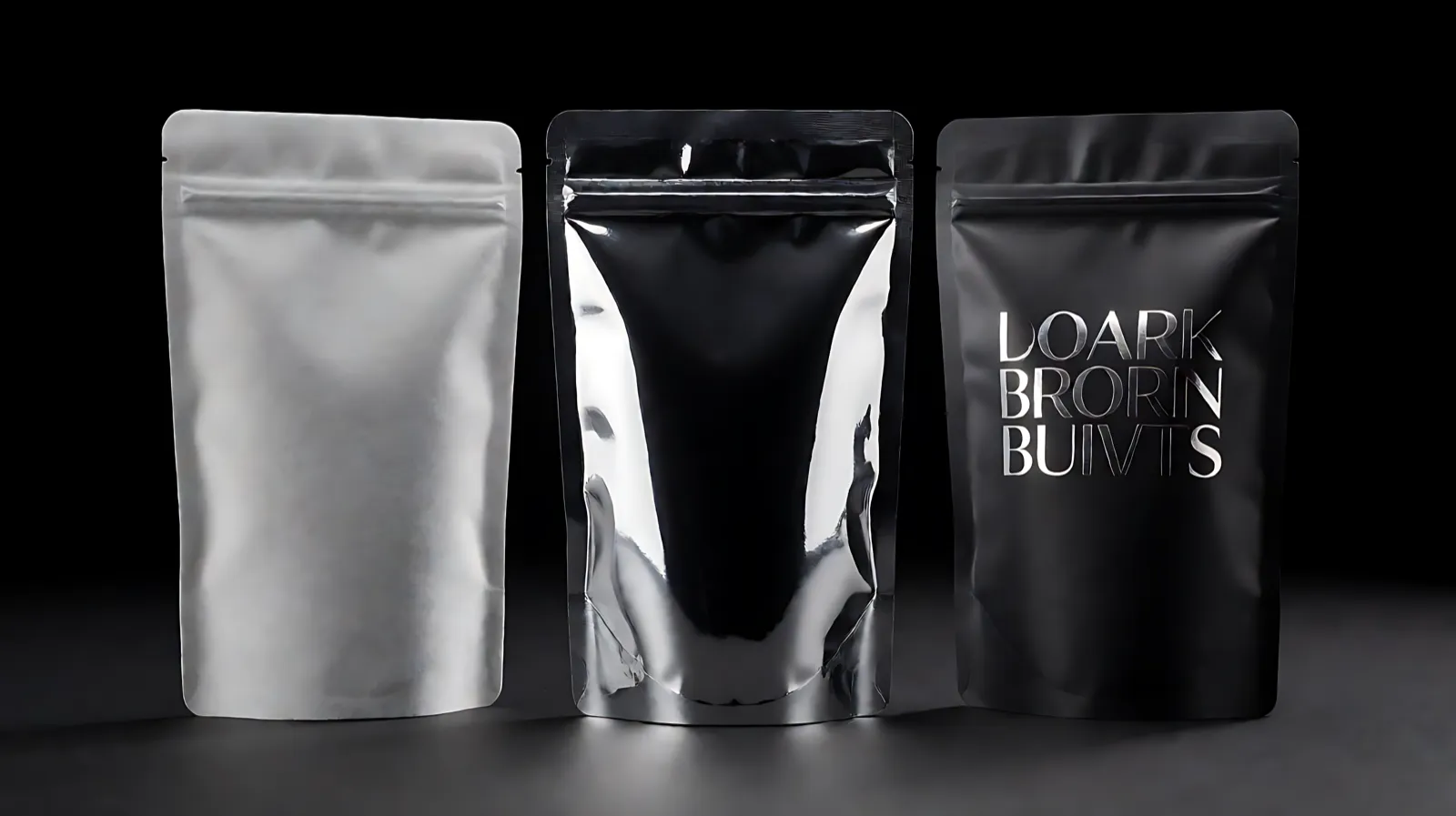
Matte vs Gloss vs Spot UV Finishes: Flexible Packaging Guide
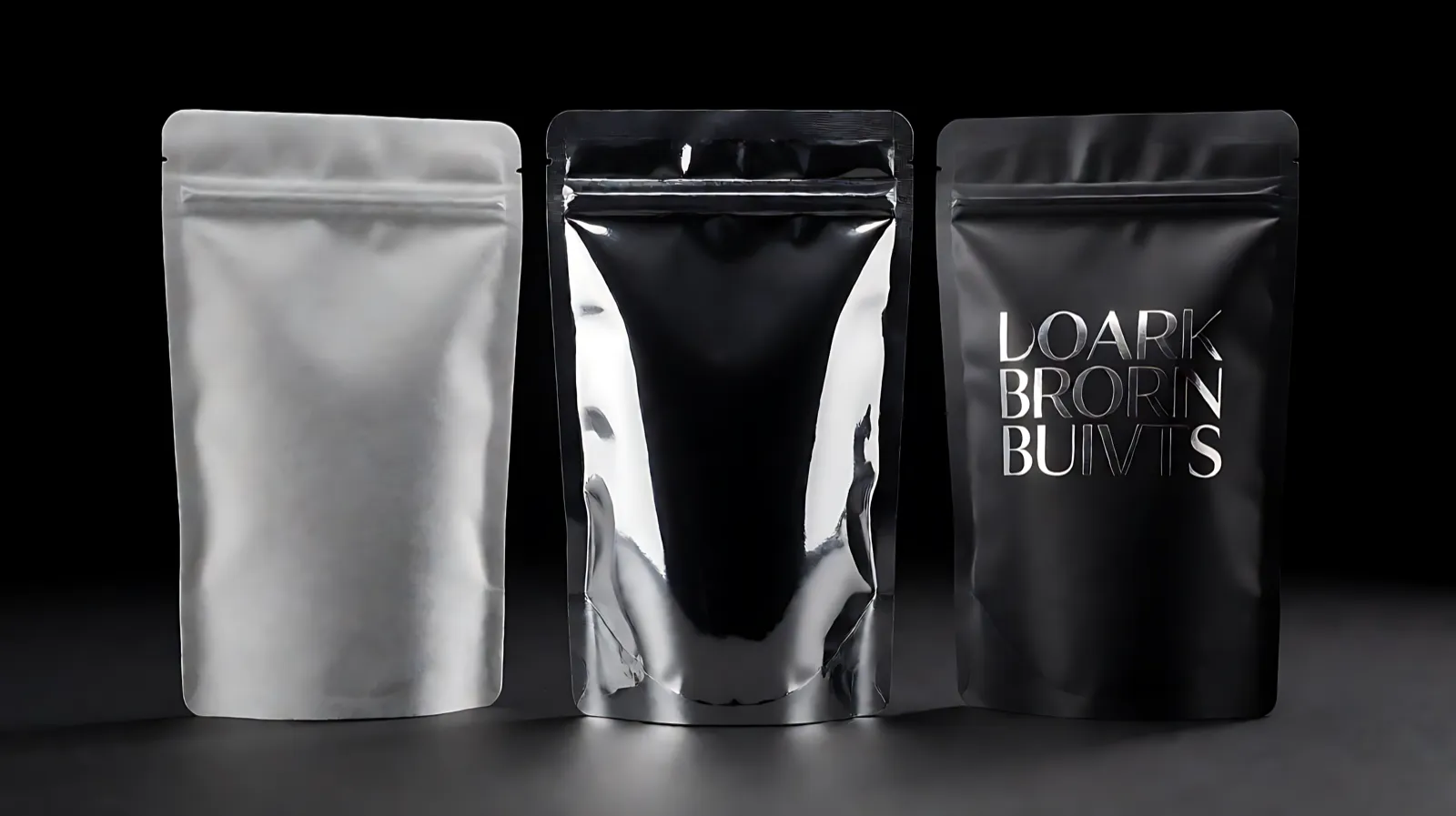
In retail consumer packaged goods (CPG), surface finish is the first sensory touchpoint that communicates brand positioning to shoppers. On crowded supermarket shelves, the optical reflectivity and tactile texture of a flexible pouch immediately signal price tier, natural authenticity, or high-tech performance.
Brand packaging designers and procurement teams typically choose among three primary surface finish technologies: High-Gloss Laminates, Matte & Soft-Touch Films, and Registered Spot UV (Matte/Gloss Contrast) Varnishes.
However, surface finish is not purely an aesthetic decision; it directly dictates converting friction on form-fill-seal lines, scuff and scratch resistance during transit (ASTM D5264 Sutherland rub testing), and plate registration tolerances.
This technical guide compares the optical physics, tactile coatings, converting mechanics, and cost economics of matte, gloss, and spot UV finishes on flexible packaging.
1. Quick Engineering Benchmark Matrix: Surface Finishes on Flexible Packaging
| Surface Finish Technology | High-Gloss Laminate (Standard PET) | Matte BOPP / Matte PET Film | Registered Spot UV / Spot Gloss Varnish | Soft-Touch Thermal Velvet Film |
|---|---|---|---|---|
| Optical Specular Gloss (60° Gloss Units per ASTM D523) |
> 85 to 95 GU (High reflective shine) | 6 to 15 GU (Diffused, glare-free) | Dual Zone: 10 GU matte + 90 GU gloss | < 4 GU (Ultra-deep matte) |
| Tactile Sensation | Smooth, slick, plastic feel | Smooth, subtle satin dry touch | Tactile embossed contrast on graphics | Velvety, suede-like rubbery grip |
| Scuff & Scratch Resistance (ASTM D5264 Sutherland Rub) |
High (Smooth surface resists rub marks) | Moderate (Prone to burnishing shiny spots) | Superior (Cross-linked UV polymer shield) | Low to Moderate (Can mark under friction) |
| Coefficient of Friction (COF) (Static $\mu_s$ / Kinetic $\mu_k$) |
Low: 0.20 to 0.30 (Fast sliding on formers) | Moderate: 0.35 to 0.45 | Variable by varnish pattern | High: > 0.55 (Can drag on formers) |
| Print Color Vibrancy | Maximum saturation & depth | Slightly muted / pastel desaturation | Maximum vibrance on spot gloss windows | Subdued, rich luxury tone |
| Plate Registration Requirements | Standard gravure / flexo print | Standard gravure / flexo print | High-precision optical eye registration (±0.5mm) | Standard lamination |
| Cost Premium (vs. Standard Gloss) | Baseline (0% premium) | +5% to +10% | +15% to +25% (Additional varnish station) | +25% to +40% |
| Primary Brand Positioning | Mainstream retail, snacks, vibrant kids brands | Organic, artisan, clean-label, premium | High-end cosmetics, luxury gifts, craft coffee | Ultra-luxury boutique, spirits, tech accessories |
Explore custom finish samples across our Stand-Up Pouches Category and Custom Printed Gift Bags Category.
2. Optical Physics & Specular Reflection
The human eye perceives surface quality based on how incident light rays bounce off the outermost polymer surface:
┌────────────────────────────────────────────────────────────────────────┐
│                   SPECULAR VS DIFFUSE SURFACE REFLECTION               │
├───────────────────────────────────┬────────────────────────────────────┤
│      HIGH-GLOSS LAMINATE          │       MATTE / SPOT UV CONTRAST     │
├───────────────────────────────────┼────────────────────────────────────┤
│           Incident Light Rays     │          Incident Light Rays       │
│               ↓↓↓↓↓↓↓             │              ↓↓↓↓↓↓↓               │
│       ┌─────────────────────┐     │      ┌─────────────────────┐       │
│       │ Smooth Glossy Web   │     │      │ Micro-Textured Web  │       │
│       └─────────────────────┘     │      └─────────────────────┘       │
│               ↑↑↑↑↑↑↑             │             ↖ ↑ ↗ ↖ ↗ ↖            │
│       Direct Specular Reflection  │      Multi-Directional Diffuse     │
│       (Mirrored shine, 90 GU)     │      Light Scattering (8 GU)       │
│                                   │                                    │
│   • Crisp, mirror-like highlights │   • Soft, glare-free readability   │
│   • Intense color saturation      │   • Spot UV adds 3D tactile pop    │
│   • Glare can hide text in store  │   • Enhances metallic under-layers │
└───────────────────────────────────┴────────────────────────────────────┘
Specular Reflection (High Gloss)
On ultra-smooth BOPET films (thickness 12µm), the outer surface has microscopic roughness under 0.05µm. Light strikes the surface and reflects uniformly at an angle equal to the angle of incidence (specular reflection). This preserves the chromatic intensity of printed inks beneath the film, giving colors deep black levels, brilliant contrast, and vibrant saturation.
However, in brightly lit supermarket aisles under overhead LED strips, high gloss produces intense glare hot-spots that can obscure brand typography, nutritional facts, and regulatory barcodes.
Diffuse Light Scattering (Matte Finish)
Matte films (such as Matte BOPP or chemical-etched Matte PET) contain inorganic micro-matting silica particles or extruded surface micro-crinkles. Incoming light strikes these microscopic facets and scatters in all directions (diffuse reflection).
- Glare is eliminated, making fine text legible from any viewing angle.
- Colors appear slightly softer and less saturated, which consumers subconsciously associate with natural, organic, or handcrafted ingredients.
For printing technology options that pair with these finishes, review our Flexographic vs Rotogravure Flexible Packaging Guide.
3. The Engineering of Registered Spot UV Varnishes
The most powerful visual and tactile technique in premium flexible packaging is the combination of matte and gloss on the same pouch:
┌─────────────────────────────────────────────────────────────────────────┐
│               SPOT UV PRINTING ARCHITECTURE IN-LINE                     │
│                                                                         │
│     Station 1-7: CMYK + Spot Colors (Reverse Printed on Clear Web)      │
│     Station 8:   White Opaque Backer / Metallic Cold Foil               │
│     Station 9:   Full Flood Matte Lacquer (Soft-Touch / Anti-Glare)     │
│     Station 10:  High-Gloss UV Varnish Applied Through Pattern Cylinder │
│                  (Cured Instantly Under UV-LED Mercury Lamps)           │
└─────────────────────────────────────────────────────────────────────────┘
How Spot UV Contrast Works:
- The Base Web: The film is first printed with graphic artwork on high-speed rotogravure or flexographic presses.
- The Matte Flood: An overall matte lacquer is applied across 100% of the film web.
- The Registered Gloss Varnish: On the final print station, a precision-engraved cylinder transfers a thick layer (typically 3µm to 6µm) of photo-reactive clear UV varnish exclusively over designated brand elements—such as a brand logo, product illustration, or metallic foil highlight.
- UV Curing: High-intensity ultraviolet lamps instantly cross-link the monomers into a glassy, high-gloss polymer network.
The stark optical contrast between the non-reflective matte background (8 GU) and the raised, glossy logo (92 GU) creates a faux-3D visual pop and a distinct tactile ridge that consumers can feel with their fingertips.
For luxury gift and carton applications, see our guide on Custom Printed Gift Bags Luxury Finishes.
4. Friction (COF) & Machinery Converting Challenges
While marketing teams choose finishes for shelf appeal, plant managers must run those films through automated pouch-making formers, filling tubes, and conveyor belts.
Coefficient of Friction (COF) Hazards
- Standard Gloss PET has a natural kinetic COF ($\mu_k \approx 0.22$ to $0.28$). It glides effortlessly over stainless steel former collars on high-speed lines.
- Matte and Soft-Touch Films have a rougher surface profile that increases the coefficient of friction ($\mu_k \approx 0.40$ to $0.60$).
- The Operational Risk: If COF exceeds 0.45, film webs can stutter, chatter, or seize around packaging forming collars, causing tracking misalignment, film wrinkles, and line jams.
The Converter’s Fix: Slip Additive Chemistry Converters formulate matte lacquers with micro-wax slip additives (such as erucamide or specialized silicone slip agents). These migrate to the film surface, reducing kinetic friction down to 0.25–0.32 without degrading matte optical dullness.
5. Transit Scuff Resistance: ASTM D5264 Sutherland Rub Testing
During overseas container shipping and domestic trucking, pouches vibrate against corrugated shipping carton walls and against neighboring bags. This continuous vibration causes scuff burnishing.
ASTM D5264 Sutherland Rub Resistance Benchmark (4 lb weight, 100 strokes):
──────────────────────────────────────────────────────────────────────────
Surface Finish Type           Visual Scuff Defect            Durability Rating
──────────────────────────────────────────────────────────────────────────
High-Gloss Reverse Printed    Zero surface scuffing          ★★★★★ (Superior)
                              (Ink protected behind PET)
Standard Matte BOPP Film      Prone to shiny burnish marks   ★★★☆☆ (Moderate)
                              where friction polishes matte
UV Cross-Linked Spot Varnish  Resists scratching & rubs      ★★★★★ (Superior)
Soft-Touch Thermal Film       Vulnerable to dark rub trails  ★★☆☆☆ (Requires slip)
──────────────────────────────────────────────────────────────────────────
Protecting Matte Bags During Distribution:
- Specify Cross-Linked Polyurethane Matte: Avoid cheap air-dry nitrocellulose lacquers; demand two-component catalytic polyurethane or electron-beam (EB) cured matte coatings.
- Carton Separator Dividers: For high-end luxury pouches featuring spot UV or gold cold foil, incorporate poly-coated corrugated divider pads to prevent bag-to-bag face friction. For cold foil engineering, review our Cold Foil vs Hot Stamping Guide.
6. Selection Framework by Market Vertical
| Retail Vertical | Recommended Finish Strategy | Engineering Rationale |
|---|---|---|
| Specialty Roasted Coffee | Overall Matte + Registered Spot UV Logo | Matte conveys craft artisan heritage; spot gloss highlights origin seal |
| Gourmet Pet Treats & Kibble | Soft-Touch Matte with Clear Gloss Window | Soft tactile hand-feel appeals to pet parents; clear window verifies kibble |
| Sports Nutrition & Protein Powders | High-Gloss Metallic with Neon CMYK | High gloss delivers intense contrast and aggressive athletic energy |
| Organic & Clean-Label Snacks | Natural Kraft or Pure Dull Matte | Low gloss signals unadulterated, wholesome ingredients |
| Luxury Cosmetics & Bath Salts | Velvety Soft-Touch + Gold Hot Stamping | Premium tactile grip commands $30+ boutique retail pricing |
Explore related luxury retail packaging formats in our Custom Eurotote Paper Bags and Gift Bags Custom Collection.
7. Frequently Asked Questions (FAQ)
Is spot UV more expensive than overall matte?
Yes. Spot UV requires an additional printing cylinder and specialized UV curing lamps, adding approximately 15% to 25% to overall printing unit costs compared to standard single-finish flood coatings. However, for premium brands, the shelf conversion increase typically offsets the packaging cost.
Can spot UV be applied to digital print pouches for short runs?
Yes. Modern digital flexible packaging finishing lines utilize inkjet spot UV units that apply variable tactile gloss polymers digitally without requiring physical engraved cylinders, making spot UV feasible for run sizes as low as 1,000 pouches.
Can matte pouches be recycled in monomaterial streams?
Yes. When using a matte-oriented polypropylene (Matte BOPP) laminated to a cast polypropylene (CPP) sealant, the entire structure remains 100% Mono-PP (Code 5) and fully recyclable under CEFLEX guidelines.
Ready to test physical surface finishes on your packaging prototypes? Contact CraftPack Global’s packaging design team to request our tactile swatch book and sample pouches.