
Laser Scoring vs Perforation: Easy-Open Pouch Tear Guide
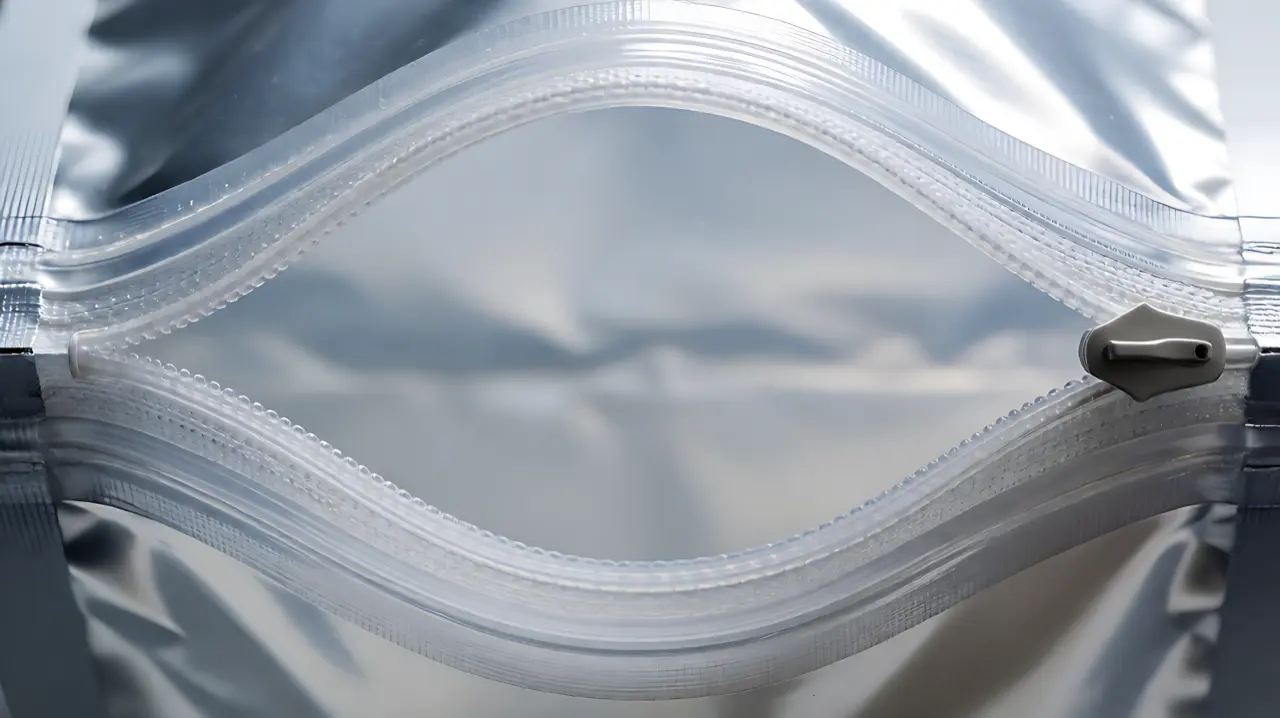
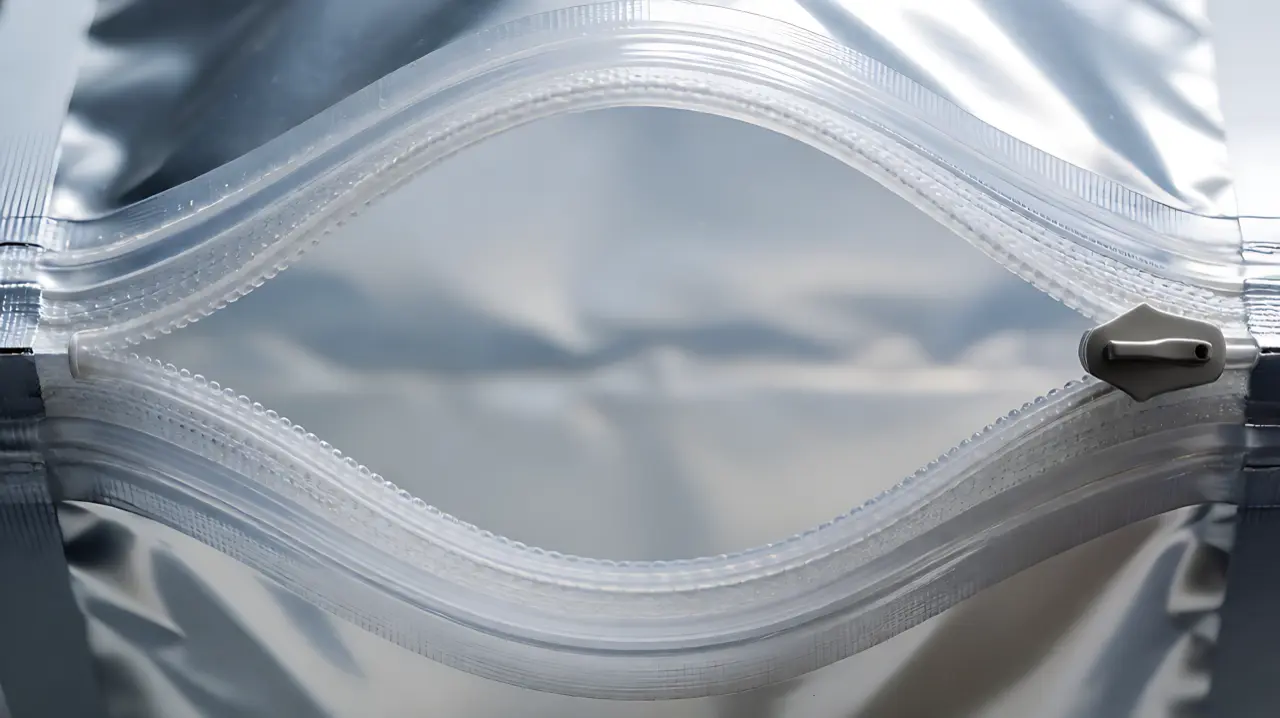
In consumer packaged goods (CPG) retail, consumer satisfaction is heavily influenced by the first ten seconds of product interaction: opening the package. When a consumer encounters a flexible barrier stand-up pouch that resists opening, tears diagonally into the product branding, spills powder across kitchen counters, or shears off above the zipper track, brand equity suffers immediate damage.
Historically, flexible packaging converters attempted to facilitate easy opening using simple mechanical tear notches (V-notch or U-notch die-cut into the side seals) or mechanical rotary pin perforation. However, biaxially oriented polymer films (BOPP, BOPET, BOPA) possess severe molecular orientation anisotropy: once a tear initiates from a mechanical notch, the fracture propagation naturally follows the orientation grain of the film, frequently veering wildly away from the intended zipper line.
To deliver a razor-straight, effortless opening experience while preserving 100% of internal barrier integrity, the flexible packaging industry has standardized on controlled-depth laser scoring.
This technical guide evaluates the laser physics, selective layer ablation, barrier foil preservation, and operational economics of laser scoring versus mechanical perforation.
1. Technical Comparison: Laser Scoring vs. Mechanical Perforation
| Engineering Metric | Controlled-Depth Selective Laser Scoring | Mechanical Rotary Blade / Pin Perforation | Simple Die-Cut Tear Notch (No Scoring) | | :— | :— | :— | :— | :— | | Material Removal Method | Photothermal ablation via pulsed $CO_2$ laser | Physical cutting blades or puncturing pins | Mechanical knife punch at pouch perimeter | | Ablation Depth Precision | Micro-scale accuracy (± 2µm depth tolerance) | Macro depth variance (± 15µm to 25µm) | Only cuts side edge; no horizontal score | | Internal Barrier Layer Status | 100% Intact (Foil, AlOx, or EVOH untouched) | Penetrates or weakens internal barrier | Untouched (Until consumer tears bag) | | Hermetic Gas & Moisture Seal | Zero barrier degradation (OTR & WVTR unchanged) | Compromised (Micro-pinholes leak gases) | Zero degradation | | Tear Propagation Direction | 100% Straight directional line across web | Follows perforation line with jagged edges | Random diagonal veering along film grain | | Opening Force (Tensile Tear) | Low & Smooth (3.0 N to 5.5 N tear initiation) | Moderate (Starts easy, catches on unperforated gaps) | High & unpredictable (10 N to >25 N) | | Zipper Alignment Safety | Tears precisely 5mm above zipper tracks | Prone to tearing below zipper, destroying reseal | High failure rate (Tears through zipper) | | Web Running Speed | High-speed rollstock (Up to 400+ m/min) | Limited by blade wear & vibration (200–250 m/min) | In-line bag machine speed |
To view our full collection of easy-open consumer packaging, browse our Stand-Up Pouches Category and flat bottom barrier packaging lines.
2. Laser Physics: Selective Wavelength Polymer Ablation
The core engineering breakthrough of laser scoring is the selective absorption of infrared optical wavelengths by different polymers:
Cross-Section of Selective Laser Layer Ablation:
Pulsed CO₂ Laser Beam (λ = 10.6 µm or 10.2 µm)
                   ▼
┌──────────────────────────────────────────────┐
│ [BOPET Print Layer 12µm]  --> VAPORIZED (8µm)│ <-- Precision micro-groove created
├──────────────────────────────────────────────┤
│ [Solventless PU Adhesive] --> INTACT         │
├──────────────────────────────────────────────┤
│ [Aluminum Foil 7µm / EVOH]--> 100% REFLECTED │ <-- 0% Energy absorbed; Barrier intact!
├──────────────────────────────────────────────┤
│ [PE Sealant Layer 50µm]   --> 100% UNTOUCHED │ <-- Hermetic seal & strength preserved
└──────────────────────────────────────────────┘- Wavelength Calibration: Industrial laser systems utilize pulsed Carbon Dioxide ($CO_2$) lasers emitting infrared energy at wavelengths of 10.6 µm or 10.2 µm.
- Selective Absorption by Carrier Substrates: Outer biaxially oriented polyester (BOPET) or polypropylene (BOPP) films have very high optical absorption coefficients at 10.6 µm. The laser energy is absorbed instantaneously by the polymer chains, vaporizing the outer film to a precise micro-groove depth of 6µm to 9µm.
- The Metallic Reflectance Shield: Aluminum foil possesses near-zero absorption and over 98% optical reflectance at 10.6 µm infrared wavelengths. When the laser reaches the aluminum barrier or metallized interface, the beam is harmlessly reflected. The barrier foil and underlying polyethylene sealant layer experience zero thermal ablation, maintaining hermetic gas barrier integrity.
3. Why Mechanical Perforation Destroys Shelf Life
Mechanical perforation relies on hardened steel pins or crushing blades mounted on rotary anvils:
- The Pin-Hole Defect: Even when mechanical blades are adjusted to “kiss-cut” the web, variations in film tension, roll runout, and blade wear inevitably cause pinholes to punch through the barrier foil or EVOH core.
- Barrier Collapse: In coffee, dried fruits, and infant formula, a single microscopic puncture allows ambient oxygen to rush in, increasing the Oxygen Transmission Rate (OTR) from $<0.1\text{ cc/m}^2/\text{day}$ to $> 50\text{ cc/m}^2/\text{day}$, cutting product shelf life from 12 months down to under 30 days.
- Dusting & Flaking: Mechanical cutting shatters brittle foil layers, generating microscopic metallic dust particles that can contaminate dry food matrices.
4. Directional Tear Mechanics & Zipper Protection
Stand-up pouches equipped with resealable zippers face a common consumer complaint: tearing off the zipper during initial opening:
Tear Propagation Trajectory Comparison:
Mechanical Tear Notch Only:                  Laser-Scored Pouch:
┌───────────────────────────┐                ┌───────────────────────────┐
│ Notch                     │                │ Notch  ===================│ <-- Laser Score Line
│   ╲                       │                │                           │
│    ╲ (Veers downward)     │                │ ═════════════════════════ │ <-- Zipper Track Intact
│ ────X──────────────────── │                │                           │
│   [Zipper Destroyed!]     │                │   [Clean, Effortless Tear]│
└───────────────────────────┘ └───────────────────────────┘- The Stress Concentration Channel: Laser scoring cuts a continuous or dashed channel across the front and rear faces of the pouch. When the consumer tears from the side notch, the tear force encounters the laser-scored groove, where the remaining film thickness is reduced by 60% to 70%.
- Eliminating Anisotropic Grain Drift: The tear force stays trapped inside this low-energy fracture trench, traveling in a perfectly straight horizontal line directly across the pouch. It never veers downward into the zipper track, ensuring the zipper remains 100% functional for repeat resealing.
5. Web Processing Integration: Machine Direction (MD) vs. Cross Direction (CD)
Flexible packaging converters can execute laser scoring in two primary configurations:
- Machine Direction (MD) Laser Scoring: Continuous or dashed lines cut parallel to the moving film web. Systems use fixed focusing heads aligned with high-speed slitters or laminators running at speeds up to 400 to 500 m/min. Ideal for rollstock intended for vertical form-fill-seal (VFFS) pillow bags and stick packs.
- Cross Direction (CD) Laser Scoring: Scores lines perpendicular to web flow. Requires high-speed dual-axis galvanometer scanner heads that track the moving web dynamically via optical encoder feedback, steering the laser beam across the web in milliseconds.
6. Procurement & Specification Quality Checklist
When ordering laser-scored flexible barrier pouches, define:
- Scoring Architecture: Specify Full-Width Front & Back Scoring, or Window Scoring positioned directly above zipper tracks.
- Residual Thickness Specification: Mandate remaining outer film thickness (e.g., 4µm ± 1µm residual PET thickness) to ensure easy opening without web breaking during pouch forming.
- Post-Scoring Hermeticity Proof: Require ASTM D3078 bubble leak testing confirming zero gas bypass along the score line under -0.5 bar vacuum.
- Tear Initiation & Propagation Force: Verify that tear initiation force remains below 6.0 N (ASTM D1938 trouser tear test) for senior-friendly ergonomics.
To engineer high-barrier pouches with precision laser scoring and flawless easy-open performance, connect with the CraftPack Global packaging prepress team.