
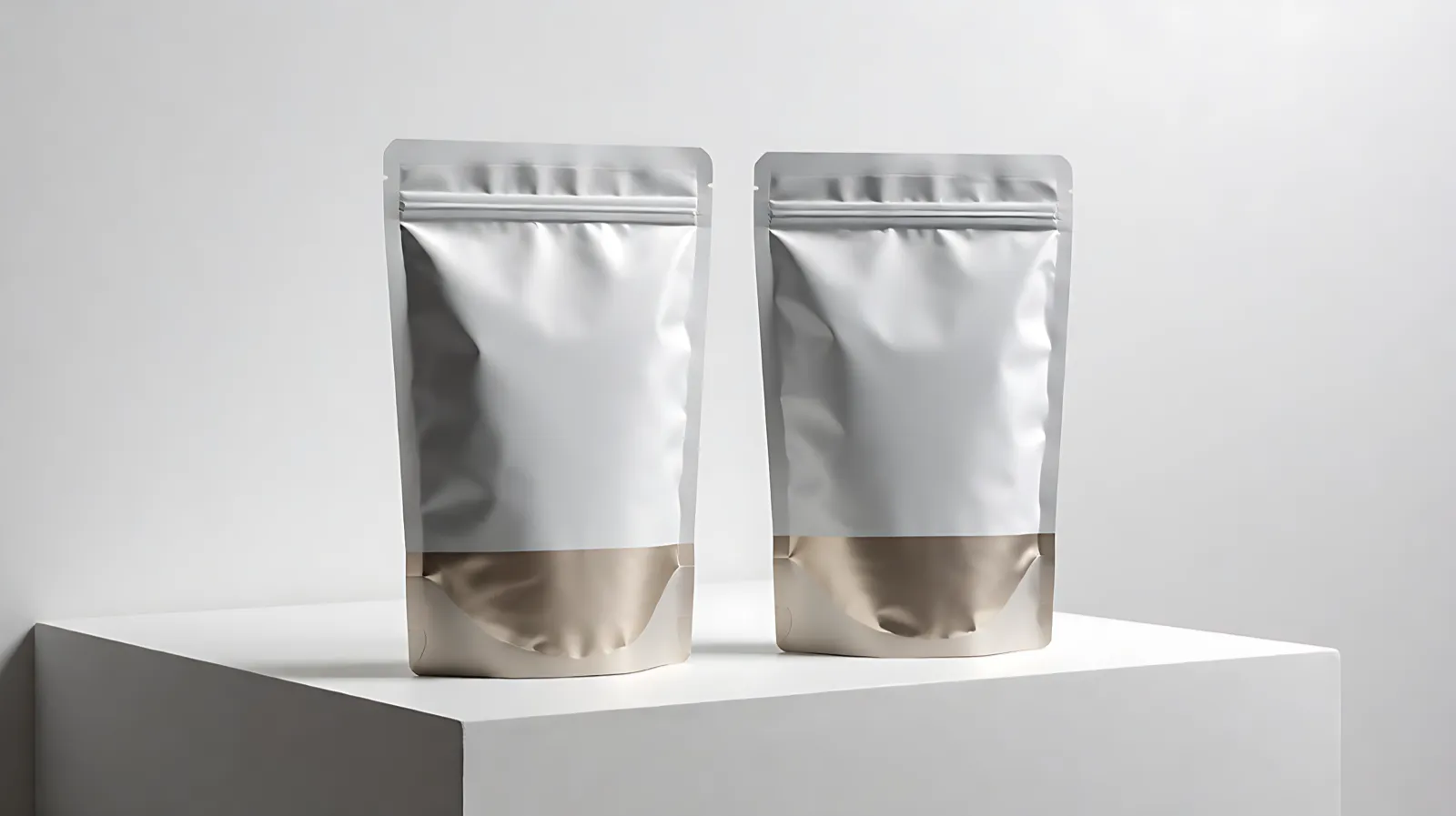
K-Seal vs Doyen vs Corner Seal: Stand-Up Pouch Bottom Guide
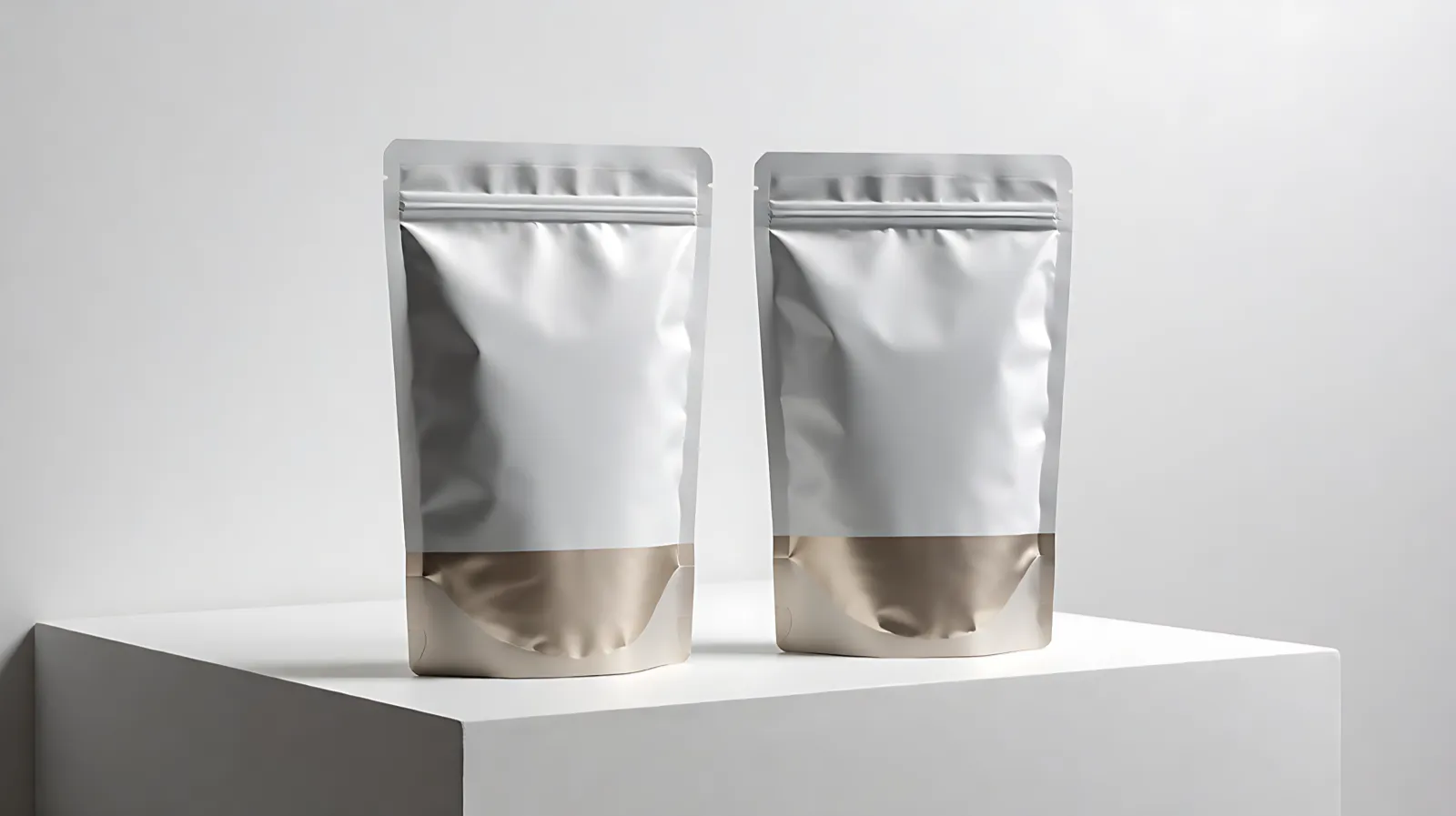
In flexible packaging engineering, the bottom gusset is the structural foundation of a stand-up pouch (SUP / doypack). While brand designers focus on surface graphics, matte-gloss tactile contrasts, and front display panels, packaging engineers know that bottom gusset geometry determines whether a pouch stands proud on supermarket shelves or sags, leans, and falls over.
Choosing between a Round Bottom Doyen, a K-Seal, or a Corner Seal (Plough / Folded Bottom) directly impacts:
- Pouch footprint stability and center-of-gravity load distribution.
- Total volumetric capacity per square inch of laminated barrier film.
- High-speed pouch-filling line speeds and bottom seal burst resistance.
This guide provides an engineering teardown of the three dominant bottom gusset configurations for brand procurement and packaging engineering teams.
1. Quick Engineering Benchmark Matrix
| Performance Metric | Round Bottom Doyen | K-Seal Bottom Gusset | Corner Seal (Plough Bottom) |
|---|---|---|---|
| Gusset Geometry | U-shaped curved heat seal | 45-degree angled corner seals | Continuous folded base, side vertical seals |
| Weight Capacity | 20g to 500g (Lightweight products) | 500g to 3,000g (Heavy / Dense) | 1,000g to 5,000g (Bulk formats) |
| Product Consistency | Granules, light snacks, liquids | Powders, dense grains, pet food | Heavy pet kibble, lawn seed, bulk protein |
| Shelf Footprint Shape | Oval / Elliptical base | Rectangular / Hexagonal base | Flat block footprint |
| Tipping Resistance (Angle) | Moderate (15° to 20° tilt limit) | High (25° to 32° tilt limit) | Superior (30° to 38° tilt limit) |
| Volumetric Efficiency | Baseline (Standard) | +12% to +18% internal volume | +20% to +28% internal volume |
| Pouch Making Machine Tooling | Standard D-seal die blades | Specialized K-seal punch and heat bar | Plough bottom folding guide plates |
Explore custom stand-up pouch options in our Stand-Up Pouches Category and calculate fill volumes using our Stand-Up Pouch Sizing & Capacity Dimensions Guide.
2. Structural Mechanics & Stress Distribution
The bottom seal architecture dictates how gravitational load transfers through the flexible web into the retail shelf:
┌────────────────────────────────────────────────────────────────────────┐
│                   BOTTOM GUSSET GEOMETRIC ARCHITECTURES                │
├───────────────────┬──────────────────────────────┬─────────────────────┤
│  ROUND DOYEN SEAL │      K-SEAL GUSSET           │ CORNER PLOUGH SEAL  │
├───────────────────┼──────────────────────────────┼─────────────────────┤
│                   │                              │                     │
│    │         │    │        │            │        │     │         │     │
│    │         │    │        │            │        │     │         │     │
│    │         │    │        │            │        │     │         │     │
│    ╰─────────╯    │        ╰╲          ╱╯        │     │         │     │
│    (U-Shape Arc)  │         45° Angled Seals     │     └─────────┘     │
│                   │                              │   Continuous Fold   │
│   • Curved seal   │   • K-notch pushes product   │   • Side-tucked gusset│
│   • Weight pushes │     into bottom corners      │   • Flattest base   │
│     outward into  │   • Creates flat, box-like   │   • Ideal for high- │
│     belly of bag  │     stable pedestal          │     speed VFFS lines│
└───────────────────┴──────────────────────────────┴─────────────────────┘
1. Round Bottom Doyen Seal
Invented by Louis Doyen in 1962, the original Doypack features a separate W-folded bottom gusset piece inserted between the front and rear panels. The bottom seal forms a continuous curved U-shape.
- Physics: When filled, product settles into the curved pocket. The pouch walls bulge slightly outward, lifting the center of the bottom seal slightly off the shelf while resting on the outer perimeter ring.
- Limitation: When filled with more than 500g of dense product, the curved base balloons into a bowling-ball shape, causing the pouch to wobble or pitch forward on retail shelves.
2. K-Seal Bottom Gusset
The K-seal modifies the bottom by adding two 45-degree heat seals running upward and outward from the side seams into the bottom gusset fold.
- Physics: These diagonal seals create dead-stop barriers that force filling product outward into the bottom corners. Instead of ballooning downward, the gusset expands horizontally into a rigid, planar, rectangular pedestal.
- Advantage: The package achieves a significantly lower center of gravity and increases effective footprint surface area by 35%, preventing heavy 1kg–2kg products from toppling over.
3. Corner Seal (Plough / Skirted Bottom)
Also known as a corner-bottom or plough-bottom pouch, this style forms the pouch from a single continuous web of film that is folded at the bottom rather than using an inserted separate gusset web.
- Physics: The bottom gusset is tucked inward in a plow shape. Side seals seal the edges without any horizontal heat seals across the bottom.
- Advantage: 100% of the pouch bottom sits flat against the shelf, maximizing internal volume and offering supreme stability for 2kg to 5kg pet food bags and industrial bulk goods.
3. Volumetric Capacity and Material Consumption
Packaging material represents the largest variable cost in flexible packaging. Comparing film area usage across gusset formats reveals meaningful cost differences:
Film Area Required for 1,000g Granola Pouch (210mm Width x 310mm Height):
──────────────────────────────────────────────────────────────────────────
Gusset Style         Gusset Depth (Open)  Usable Volume    Film Area / 1,000 Pcs
──────────────────────────────────────────────────────────────────────────
Round Doyen          100mm (Total)        1,450 cm³        142.5 m²
K-Seal               110mm (Total)        1,680 cm³        146.2 m²
Corner Plough Bottom 120mm (Total)        1,850 cm³        138.0 m² (No insert)
──────────────────────────────────────────────────────────────────────────
The Corner Plough Bottom uses a single web, eliminating the bottom gusset insertion station and reducing film scrap by 4% to 6% during high-speed rollstock conversion.
4. Packing Line Compatibility & Filling Economics
When integrating pre-formed pouches onto automated rotary filling carousels (Toyo Jidoki, Bossar, Leepack):
- Gusset Opening Reliability:
- Doyen pouches open cleanly using standard suction cups and bottom air-blast nozzles.
- K-seal pouches require slightly higher vacuum suction pressure ($-0.08\text{ MPa}$) and mechanical fingers to fully deploy the 45° angled corners before the fill funnel descends. Failure to open the gusset completely causes powder or granules to bridge over the neck, causing gross package weight rejection.
- Seal Integrity in Powder Environments:
- For whey protein, baking flour, and matcha powders, the K-seal’s angled corners can trap stray airborne dust during sealing. Using ultrasonic sealing or de-flaker powder zippers is essential to avoid microscopic pinhole channels. For closure details, see our guide on Pouch Zipper Profiles: Powder-Proof and Moisture-Lock Systems.
5. Decision Matrix for Brand Managers & Converters
                     BOTTOM GUSSET SELECTION GUIDE
                                   │
                   What is the net product weight?
                                   │
        ┌──────────────────────────┼──────────────────────────┐
        ▼                          ▼                          ▼
    < 400 grams              400g - 2,000g               > 2,000g
   (Light Snack)            (Powder / Grains)          (Pet Kibble / Bulk)
        │                          │                          │
   Round Doyen                   K-Seal                 Corner Plough
   (Cost-effective,       (Flat rectangular      (Maximum footprint,
    classic look)          stable base)           high-volume capacity)
To request physical pouch samples, test bottom gusset standability on our factory drop tables, or receive custom CAD dieline drawings, reach out to our team at CraftPack Global Contact.