
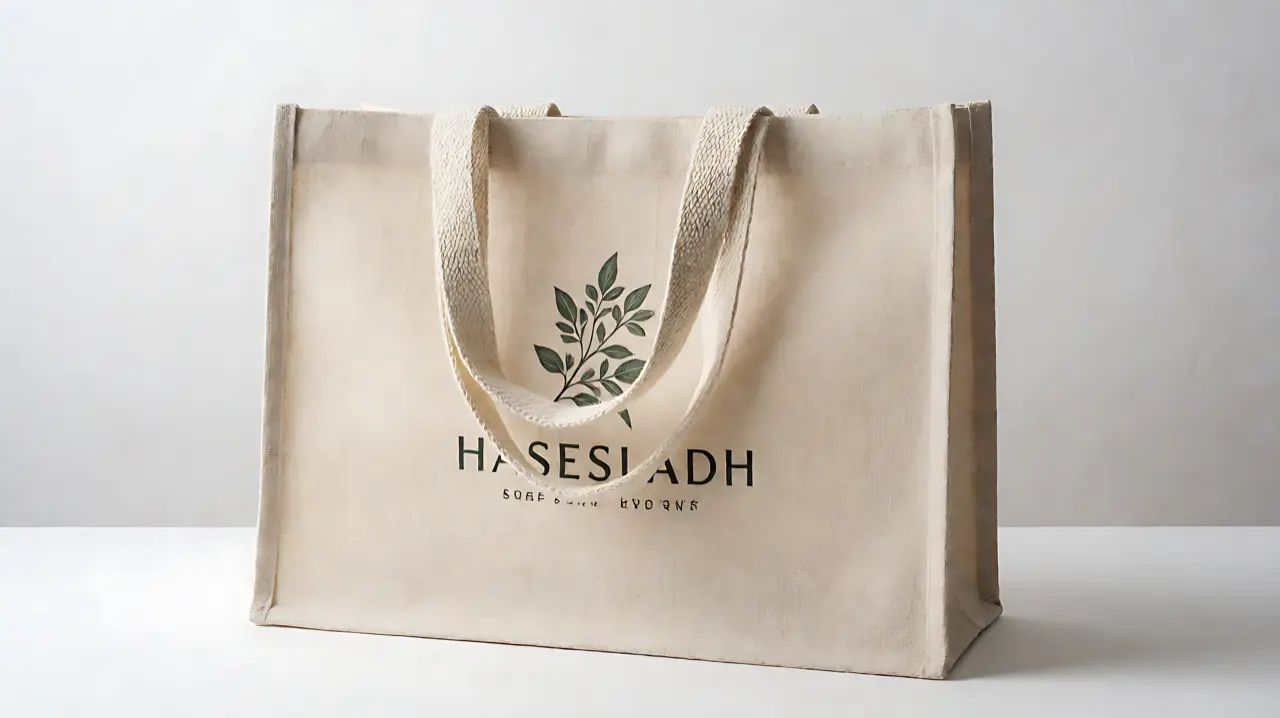
Juco Fabric vs Jute vs Cotton: Reusable Bag Fabric Guide
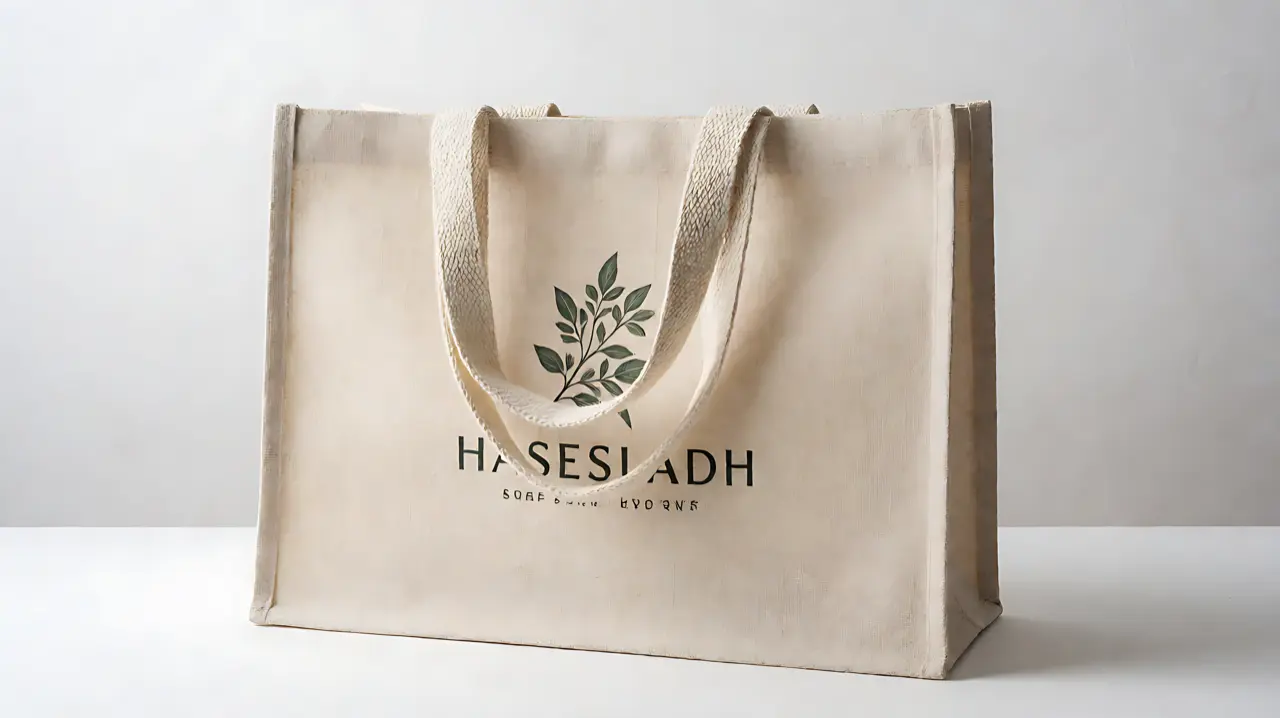
In promotional merchandise, corporate gifting, natural grocery retail, and boutique fashion, branded reusable tote bags are the undisputed leaders in long-term consumer brand impressions. A single well-constructed reusable bag is kept for an average of 14 months and generates over 3,300 visual brand impressions throughout its useful lifespan.
However, brand managers and procurement specialists frequently encounter a material dilemma when specifying natural plant-fiber bags:
- Pure Jute (Hessian/Burlap): Highly sustainable and incredibly strong, but its coarse, rough, hairy texture prevents fine-line graphic printing and feels rough against sensitive skin.
- Pure Cotton (Canvas/Calico): Luxuriously soft and smooth for high-definition screen printing, but cotton cultivation requires massive agricultural water volumes and lacks the rigid, freestanding structure needed for heavy grocery packaging.
The textile engineering solution bridging this divide is Juco fabric—an intimate blend typically composed of 75% natural jute and 25% organic cotton.
This comprehensive engineering guide analyzes the fiber mechanics, weave counts, print dot reproduction, tensile load capacities, and Life Cycle Assessment (LCA) metrics of Juco versus pure jute and cotton reusable bags.
1. Material Comparison: Juco vs. 100% Jute vs. 100% Cotton Canvas
| Engineering Metric | Juco Fabric (75% Jute / 25% Cotton) | 100% Pure Jute (Hessian Burlap) | 100% Heavy Cotton Canvas |
|---|---|---|---|
| Fiber Composition | Jute warp + Cotton weft (or blended yarn) | 100% Corchorus plant bast fiber | 100% Gossypium seed hair fiber |
| Standard Fabric Weight | 280 to 350 GSM (10 to 12 oz) | 330 to 420 GSM (12 to 15 oz) | 280 to 400 GSM (10 to 14 oz) |
| Thread Count (Warp × Weft / Inch) | ~38 × 34 (Tight, smooth weave) | ~14 × 12 (Coarse, loose, open weave) | ~60 × 45 (Ultra-fine, smooth weave) |
| Surface Hairiness & Linting | Low (Cotton suppresses jute fuzz) | High (Prone to fiber shedding/lint) | Minimal to zero |
| Graphic Print Resolution | Sharp (Fine screen print & heat transfer) | Coarse (Bold block graphics only) | Photographic (Screen, direct-to-garment) |
| Structural Self-Standing Ability | High (Maintains boxy tote shape) | High (Rigid bast fiber stiffness) | Low (Collapses when empty) |
| Tensile Load Capacity (Box-X Stitch) | 20 kg to 25 kg working load | 25 kg to 30 kg working load | 15 kg to 20 kg working load |
| Internal Lamination Support | PP or LDPE wipe-clean film lamination | PP or food-grade LDPE lamination | Unlaminated or PU water-resistant coating |
| LCA Water Footprint (Liters/kg) | Low (~2,500 L/kg fiber) | Ultra-Low (~1,800 L/kg fiber) | Extremely High (~10,000 to 15,000 L/kg) |
To explore our full range of eco-textiles and branded promotional carry solutions, browse our Reusable Bags Category and shopping totes.
2. Fiber Physics & Weaving Architecture
Understanding the physical structure of bast fibers versus seed fibers reveals why Juco delivers unique structural advantages:
Microscopic Fiber Structure Comparison:
Pure Jute Bast Fiber:           Pure Cotton Seed Fiber:          Juco Intimate Blend:
[▒▒▒▒▒▒▒▒▒▒▒▒▒▒▒▒▒▒▒▒▒▒]        (~~~~~~~~~~~~~~~~~~~~~~)         [▒▒▒▒▒▒▒▒](~~~~~~)[▒▒▒▒▒▒▒▒]
Coarse, high-lignin cylinder    Soft, twisting cellulose ribbon   Rigid Jute core + Soft Cotton skin
Extreme stiffness & strength    High comfort & smooth surface     Rigid structure + Refined print face
1. Jute (The Strength Core)
Jute fibers are extracted from the bark (bast) of the Corchorus plant. Rich in lignin (12% to 14%), jute fibers possess high tensile strength, negligible elastic elongation (<2%), and natural antimicrobial properties. However, high lignin content makes pure jute stiff, brittle, and rough to the touch.
2. Cotton (The Surface Refiner)
Cotton consists of nearly 90% pure cellulose formed as fine, flexible, hollow micro-ribbons. Cotton fibers bend easily, absorb moisture, and provide a remarkably smooth tactile face.
3. The Juco Hybrid Synergy
In Juco fabric, spinners blend coarse jute staple fibers with carded cotton, or weave a rigid jute warp yarn with a softer cotton weft yarn.
- The resulting fabric retains 75% of jute’s structural rigidity and tensile strength, allowing shopping bags to stand upright on supermarket checkout counters for easy loading.
- Simultaneously, the cotton component fills the open weave voids, creating a flat, non-scratchy tactile exterior that consumers gladly carry as a daily lifestyle handbag.
3. Graphic Reproduction: Screen Printing & Heat Transfer Precision
For luxury branding, cosmetic gift-with-purchase programs, and corporate conference totes, print crispness determines aesthetic success:
Print Dot Reproduction on Rough vs. Smooth Weave:
Pure Jute Burlap (14×12 Threads/Inch):       Juco Blended Fabric (38×34 Threads/Inch):
┌─────────────────────────┐                 ┌─────────────────────────┐
│ Inks Sink into Holes    │                 │ Ink Films Sit on Flat Surface │
│ Broken lines, ink bleed │                 │ Razor-sharp 0.5pt typography  │
│ 1-Color bold text only  │                 │ 4-Color process + Metallic Foil│
└─────────────────────────┘ └─────────────────────────┘- Why Pure Jute Distorts Logos: Pure jute’s open mesh (12 to 14 threads per inch) causes liquid screen-printing inks to bleed into deep fiber crevices. Fine serif typography, intricate line art, and multi-color halftone dots break apart, restricting designers to simple block silhouettes.
- Juco’s Smooth Canvas: With thread counts averaging 36 to 40 threads per inch, Juco presents an even, calendered surface. Converters can execute fine-line water-based silk-screen printing down to 0.5-point lines, metallic foil stamping, and detailed CMYK heat-transfer transfers with crisp dot fidelity and zero fiber bleed.
4. Internal Waterproof Laminations: PP vs. Plant-Based Starch
To protect the bag interior from grocery liquid leaks (leaking milk cartons, damp produce, raw meat juices) and allow easy wipe-clean maintenance, Juco totes typically incorporate an interior backing layer:
- 0.02mm Wipe-Clean Polypropylene (PP) Coating: The commercial benchmark. Heat-laminated onto the inner fabric face, this micro-film provides total water impermeability, increases fabric stiffness, and prevents jute dust from shedding onto interior merchandise.
- Biodegradable Starch / PLA Biopolymer Lamination: For 100% plastic-free corporate mandates, mills apply a compostable polylactic acid (PLA) or cassava starch dispersion lining, preserving wipe-clean water resistance while retaining certified industrial compostability (EN 13432).
5. Life Cycle Assessment (LCA) & Carbon Accounting
Evaluating the environmental footprint of natural fiber bags requires analyzing agricultural water usage versus reuse thresholds:
- The Cotton Water Dilemma: Growing 1 kg of conventional cotton requires an average of 10,000 to 15,000 liters of fresh irrigation water and chemical pesticides. According to environmental studies (e.g., UK Environment Agency LCA), a pure cotton canvas tote must be reused at least 131 times before its environmental impact drops below that of a single-use plastic bag.
- The Jute Advantage: Jute is primarily rain-fed in delta regions (such as the Ganges delta), requiring almost zero chemical fertilizers or artificial irrigation.
- Juco’s Balanced LCA Profile: By substituting 75% of cotton mass with low-impact rain-fed jute, Juco slashes the agricultural water and pesticide footprint by more than 70%, lowering the environmental break-even point down to just 15 to 25 reuse cycles.
6. Sourcing & Custom Manufacturing Checklist
When specifying custom-branded Juco reusable tote bags, confirm:
- Blend Ratio: Ensure standard 75% Jute / 25% Cotton (or 70/30) blend with certified natural plant-fiber origin.
- Fabric Weight: Specify 280 to 300 GSM for promotional conference giveaways; specify 350+ GSM for heavy-duty retail shopping totes.
- Handle Stitching Integrity: Mandate Box-X cross-stitching with heavy nylon or poly-cotton thread connecting the webbing handles to the bag hem, verified to support $\ge 20\text{ kg}$ static pull weight.
- Handle Material: Choose between 100% Cotton Webbing (soft on shoulders), Padded Round Cotton Rope, or Self-Fabric Juco handles.
To manufacture custom Juco natural fiber shopping totes with bespoke embroidery or precision screen printing, consult the CraftPack Global sustainable packaging team.