
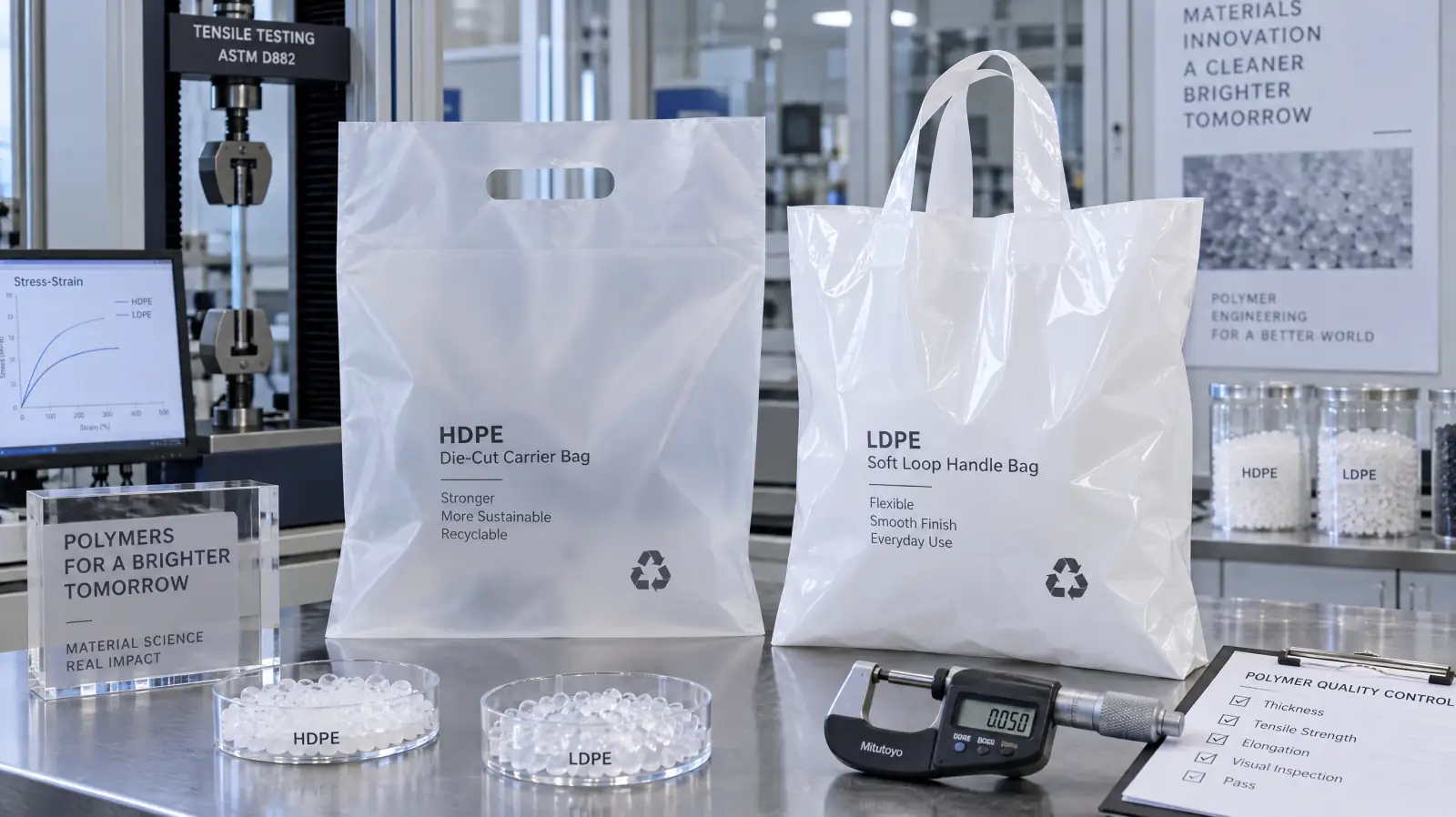
HDPE vs LDPE: Polymer Density & Tensile Strength in Bags
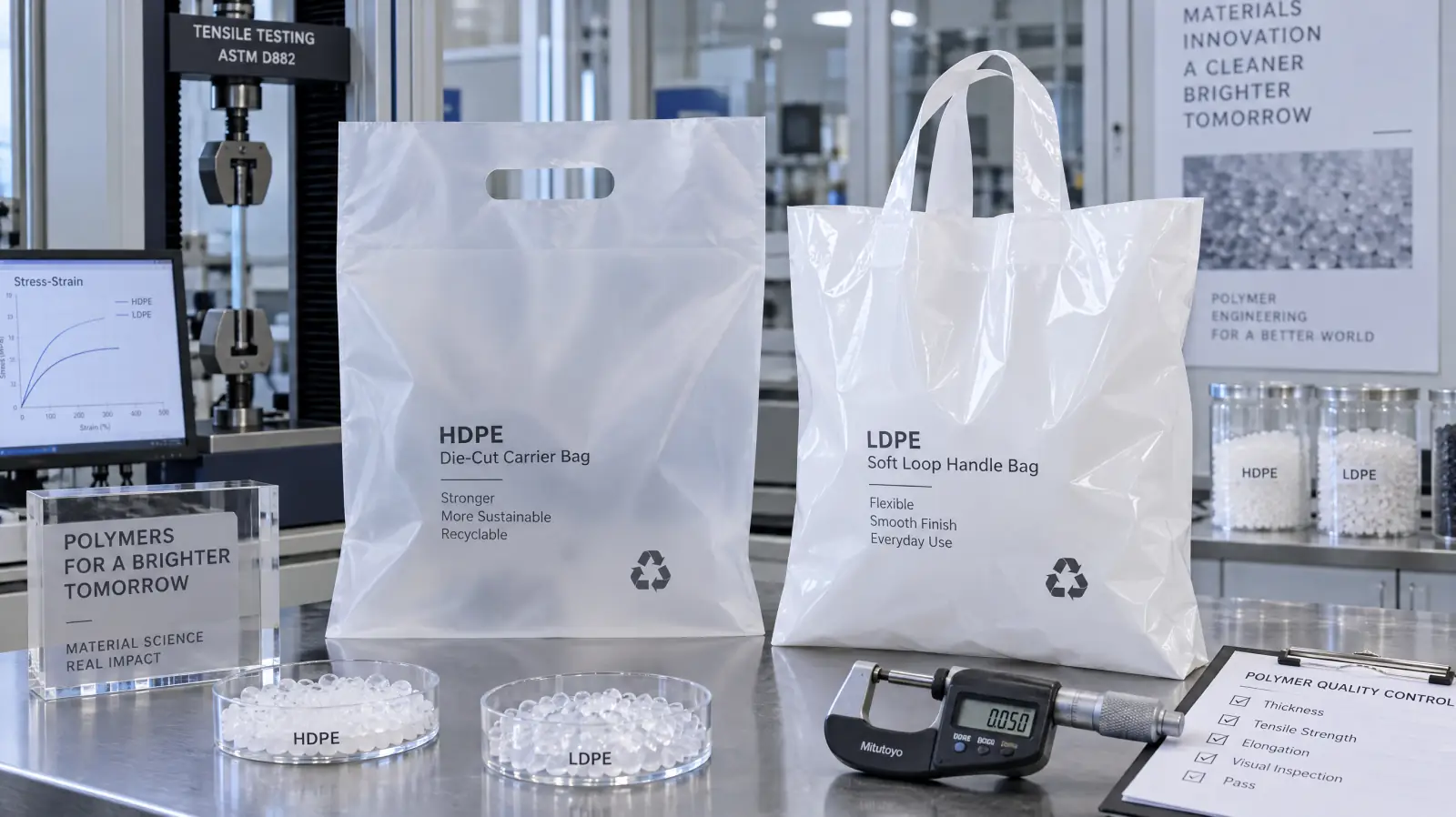
In commercial retail packaging, polyethylene carrier bags remain one of the most widely consumed logistical products on earth. However, procurement managers frequently encounter confusion when navigating polymer specifications: Why does a 15-micron grocery bag hold 8 kg of groceries without breaking, while a 30-micron retail bag stretches and tears? What is the molecular difference between HDPE, LDPE, and LLDPE? And what film gauge is required to comply with global single-use plastic regulations?
The mechanical behavior of plastic shopping bags is dictated by polymer density, molecular chain branching, and orientation dynamics during blown film extrusion.
This technical engineering guide breaks down the physical properties of High-Density Polyethylene (HDPE), Low-Density Polyethylene (LDPE), and Linear Low-Density Polyethylene (LLDPE), analyzing tensile yield strength, dart-drop puncture resistance, film calipers (microns vs. mils), and handle load physics.
1. Quick Comparison: HDPE vs. LDPE vs. LLDPE
| Physical & Mechanical Property | HDPE (High-Density Polyethylene) | LDPE (Low-Density Polyethylene) | LLDPE (Linear Low-Density Polyethylene) |
|---|---|---|---|
| Polymer Density Range | $0.941 - 0.965\text{ g/cm}^3$ | $0.910 - 0.940\text{ g/cm}^3$ | $0.915 - 0.925\text{ g/cm}^3$ |
| Crystallinity Percentage | 70% to 85% (Tightly packed linear chains) | 45% to 55% (High degree of branching) | 50% to 60% (Linear backbone + short branches) |
| Tactile Texture & Sound | Stiff, crinkly, paper-like rustle | Smooth, soft, quiet, flexible | Supple, rubbery, high elasticity |
| Optical Clarity | Semi-translucent to opaque milky matte | High gloss, semi-transparent | Glossy, high haze unless blended |
| Typical Film Caliper | 12 – 25 µm (0.5 – 1.0 mil) | 40 – 75 µm (1.6 – 3.0 mil) | 30 – 60 µm (primarily used in resin blends) |
| Tensile Strength at Yield (MD) | 25 – 35 MPa (High initial stiffness) | 10 – 15 MPa (Yields and stretches easily) | 12 – 20 MPa |
| Puncture & Dart Drop Impact | Moderate (Splits once nicked or punctured) | Good (Blunt impact absorption) | Exceptional (High dart drop resistance) |
| Primary Retail Applications | Supermarket T-shirt bags, pharmacy bags | Fashion boutique die-cut bags, luxury loop handles | Stretch film, heavy duty patch reinforcements |
Explore our full commercial collection in the Plastic Carrier Bags Category and review our Die-Cut vs Loop Handle Guide.
2. Molecular Architecture: Why Density Dictates Strength
The performance differences between HDPE and LDPE originate entirely at the microscopic molecular level:
┌────────────────────────────────────────────────────────────────────────┐
│                   POLYMER MOLECULAR STRUCTURES                         │
├────────────────────────────────────────────────────────────────────────┤
│                                                                        │
│   HDPE: LINEAR CHAINS (High Crystallinity)                             │
│   ══════════════════════════════════════════════════════════════════   │
│   ══════════════════════════════════════════════════════════════════   │
│   • Close packing of parallel polymer backbones                        │
│   • High intermolecular van der Waals forces                          │
│   • Maximum tensile yield strength per unit thickness                  │
│                                                                        │
│   LDPE: HIGHLY BRANCHED CHAINS (Low Crystallinity)                     │
│   ───┬───────┬─────────┬──────┬─────────┬──────┬───────────────┬───   │
│      │       │         │      │         │      │               │       │
│      └───    └──────   └──    └─────    └──    └───────────    └──     │
│   • Long and short random branches prevent tight crystal packing       │
│   • Molecules slide easily under tensile stress                        │
│   • High elongation at break (>400%) and superior puncture cushioning  │
│                                                                        │
└────────────────────────────────────────────────────────────────────────┘- High-Density Polyethylene (HDPE): Synthesized using transition metal catalysts, HDPE forms long, straight polymer backbones with minimal branching. Because the molecules pack tightly into a crystalline lattice, HDPE achieves high rigidity, moisture impermeability, and high tensile yield. This allows converters to draw down film to an ultra-thin 12 to 18 microns while safely carrying heavy grocery loads.
- Low-Density Polyethylene (LDPE): Produced via high-pressure free-radical polymerization (1,000–3,000 bar), LDPE develops numerous random side branches. These branches prevent close packing, creating an amorphous, rubbery polymer. While LDPE has lower tensile yield, it flexes under sharp corners without propagating tear lines.
3. ASTM Mechanical Performance Testing
In flexible packaging engineering, films are subjected to standardized mechanical stress tests:
┌────────────────────────────────────────────────────────────────────────┐
│                   STANDARDIZED POLYMER STRESS TESTS                    │
├────────────────────────────────┬───────────────────────────────────────┤
│     TENSILE TESTING (ASTM D882)│      DART DROP IMPACT (ASTM D1709)    │
├────────────────────────────────┼───────────────────────────────────────┤
│                                │                                       │
│   ▲ Tensile Pull               │      Falling Missile (Dart)           │
│   │                            │                 │                     │
│   ┌───────┐                    │                 ▼                     │
│   │ Film  │                    │         ┌───────────────┐             │
│   │ Strip │                    │         │ Clamped Film  │             │
│   └───────┘                    │         └───────────────┘             │
│   │                            │                                       │
│   ▼ Measures Yield & Break     │      Measures Impact Puncture         │
│                                │                                       │
└────────────────────────────────┴───────────────────────────────────────┘- Tensile Yield vs. Tensile Break (ASTM D882):
- When pulling an HDPE film strip, it resists stretching up to approximately 30 MPa. Once this yield point is breached, it fails rapidly with low ultimate elongation (~200%).
- When pulling an LDPE film strip, it yields at a lower threshold (~12 MPa), but then cold-draws and stretches continuously up to 450% to 600% elongation before final fracture.
- Elmendorf Tear Propagation (ASTM D1922):
- HDPE Vulnerability: HDPE has an unbalanced tear ratio. While it resists tears across the Transverse Direction (TD), it tears easily along the Machine Direction (MD). If a sharp cardboard corner nicks an HDPE bag, the crack can zipper rapidly down the bag face.
- LDPE / LLDPE Blends: Incorporating 20% to 35% C8 octene-based LLDPE arrests tear propagation, preventing catastrophic zippering.
4. Thickness Selection Matrix: Microns, Mils & Safe Loads
Selecting the appropriate gauge balances raw material cost with transit security:
| Material Type | Film Thickness (Microns) | Film Thickness (Mils / Gauge) | Safe Working Load (SWL) | Optimal Commercial Application |
|---|---|---|---|---|
| HDPE | 12 – 15 µm | 0.47 – 0.60 mil | 4.0 – 6.0 kg (8.8 – 13.2 lbs) | Pharmacy bags, convenience stores, fruit & vegetable rolls |
| HDPE | 18 – 22 µm | 0.70 – 0.87 mil | 7.0 – 10.0 kg (15.4 – 22.0 lbs) | Supermarket T-shirt checkout sacks, hardware sundries |
| LDPE | 35 – 45 µm | 1.38 – 1.77 mil | 4.0 – 6.5 kg (8.8 – 14.3 lbs) | Fashion apparel, cosmetics, lightweight boutique retail |
| LDPE + Patch | 50 – 60 µm | 2.00 – 2.36 mil | 8.0 – 12.0 kg (17.6 – 26.4 lbs) | Department stores, denim, footwear, trade show giveaways |
| LDPE + Loop | 65 – 80 µm | 2.56 – 3.15 mil | 12.0 – 16.0 kg (26.4 – 35.2 lbs) | Heavy winter apparel, luxury boutique purchases, electronics |
5. Handle Engineering & Stress Distribution
The handle cut-out must withstand upward lifting tension without stretching into an uncomfortable thin cord:
┌────────────────────────────────────────────────────────────────────────┐
│                   CARRIER BAG HANDLE CONFIGURATIONS                    │
├───────────────────────────────┬────────────────────────────────────────┤
│      PUNCHED DIE-CUT HANDLE   │          REINFORCED PATCH HANDLE       │
├───────────────────────────────┼────────────────────────────────────────┤
│                               │                                        │
│         ╭───────────╮         │              ╭───────────╮             │
│         ╰───────────╯         │              ╰───────────╯             │
│                               │       [ 100µm Heavy Glue Patch ]       │
│                               │                                        │
│ • Simple kidney/oval punch    │ • Internal heavy polymer patch glued   │
│ • High stress on handle rim   │   around handle perimeter              │
│ • Best for light loads (<4kg) │ • Increases load capacity by 250%      │
│                               │                                        │
├───────────────────────────────┼────────────────────────────────────────┤
│     SOFT LOOP HANDLE (WELDED) │          T-SHIRT VEST HANDLE           │
├───────────────────────────────┼────────────────────────────────────────┤
│                               │                                        │
│          ╭─────────╮          │             ││           ││            │
│          │         │          │             ││           ││            │
│         ═╧═════════╧═         │             │╰───────────╯│            │
│                               │                                        │
│ • Heavy 150µm extruded strap  │ • Side gusset + integrated strap       │
│ • Thermally welded to body    │ • Spreads weight across wide arc       │
│ • Maximum customer comfort    │ • Supermarket efficiency champion      │
│                               │                                        │
└───────────────────────────────┴────────────────────────────────────────┘- Punched Die-Cut Handles: Clean, flat aesthetic. In pure LDPE bags, heavy loads cause the plastic above the oval cut-out to stretch and deform.
- Reinforced Patch Handles: A heavy 100-micron reinforcing patch is thermally welded to the interior face surrounding the handle opening. This triples handle tear resistance while keeping the exterior surface smooth for branding.
- Soft Loop Handles: Extruded LDPE straps welded to the bag rim allow 100% of the bag cavity to be utilized without reducing usable height.
6. Regulatory Compliance: PCR Mandates & Reusable Thickness Laws
Around the world, plastic carrier bags face strict legislative mandates designed to combat plastic pollution:
- California SB 270 & US State Laws: Reusable plastic grocery bags must have a minimum thickness of 57 microns (2.25 mils) and contain at least 40% Post-Consumer Recycled (PCR) plastic resin.
- EU Directive on Lightweight Plastic Carrier Bags: Imposes taxes and consumption reduction targets on thin plastic bags ($<50\text{ µm}$), encouraging retailers to switch to either reusable bags ($>50\text{ µm}$) or certified compostable materials.
- Global Recycled Standard (GRS): CraftPack Global provides GRS-certified carrier bags containing 30%, 50%, or 100% certified PCR resin, complete with third-party Chain of Custody documentation.
Source Certified Polyethylene Carriers with CraftPack Global
Whether you need ultra-strong HDPE checkout bags for high-volume retail or premium glossy LDPE soft loop handle carriers with 8-color rotogravure printing, CraftPack Global delivers certified polymer engineering and factory-direct volume pricing.
Contact Our Plastic Packaging Team today to request thickness swatch books, custom dielines, and quotation comparisons.