
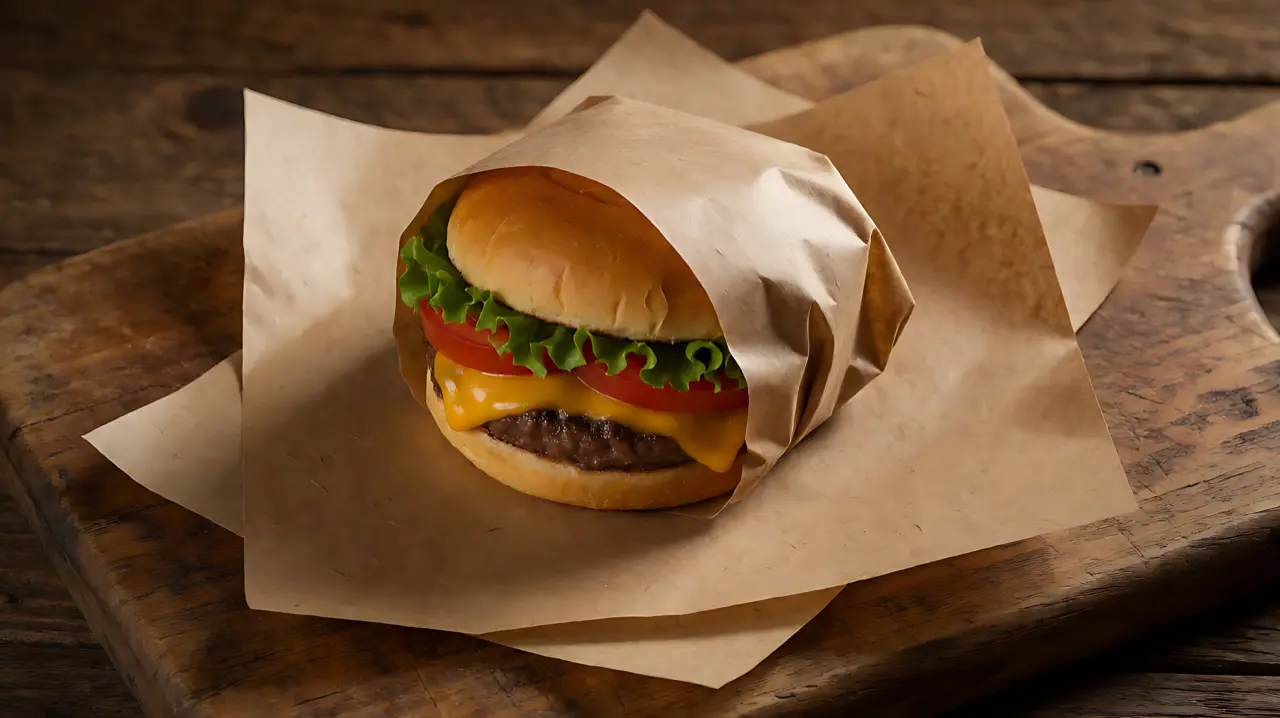
Greaseproof Paper Burger Wraps: Wax-Free Food Packaging Guide
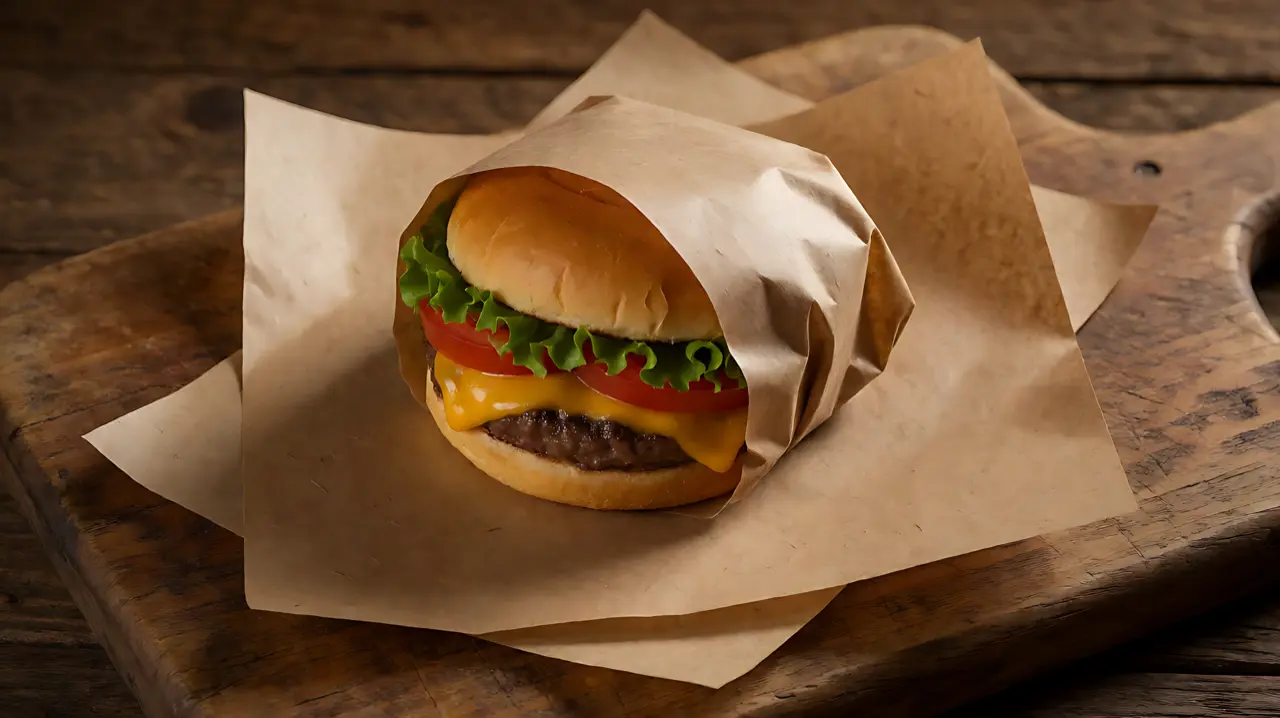
In the fast-casual dining, quick-service restaurant (QSR), and gourmet burger delivery sectors, primary food wrap paper serves a dual functional purpose: it protects customer hands from molten grease and burger juices while regulating steam release to prevent artisanal brioche and potato buns from turning soggy.
Historically, the food service industry relied on two legacy technologies: paraffin-wax coated tissue (dry wax and wet wax papers) and fluorochemical-treated papers containing Per- and Polyfluoroalkyl Substances (PFAS). However, tightening global regulations—including the US FDA’s phase-out of grease-proofing PFAS and the European Union’s Packaging and Packaging Waste Regulation (PPWR)—have rendered traditional wraps obsolete. Furthermore, paraffin wax melts under hot burger temperatures, leaving a greasy waxy mouthfeel and rendering paper completely unrecyclable.
Modern food service brands are rapidly converting to wax-free, PFAS-free greaseproof papers—formulated through mechanical supercalendering hydration or advanced water-based mineral barrier coatings.
This technical guide evaluates the fiber physics, TAPPI T559 Kit ratings, bun moisture breathability, bleached versus unbleached virgin kraft substrates, and commercial composting certifications for high-volume sandwich and burger wraps.
1. Technical Matrix: Wax-Free Greaseproof vs. Legacy Wraps
| Performance Parameter | Mechanical Supercalendered Greaseproof | Aqueous Water-Based Coated Kraft | Traditional Dry-Waxed Paper (Legacy) | PE-Extruded Burger Wrap (Legacy) |
|---|---|---|---|---|
| Substrate Basis Weight | 32 to 45 GSM | 35 to 50 GSM | 28 to 35 GSM | 35 GSM Paper + 10 GSM PE |
| Grease Resistance (TAPPI T559) | Kit 6 to Kit 8 (100% Mechanical fiber beating) | Kit 7 to Kit 11 (Aqueous dispersion) | Kit 4 to Kit 6 (Temp-dependent) | Kit 12 (Plastic polymer film) |
| High-Temp Grease Holdout (90°C) | Flawless (No melting or softening) | Stable up to 120°C | Fails (Wax liquefies at >55°C) | Softens above 95°C |
| Water Vapor Breathability (WVTR) | High (~180 to 280 g/m²/day — Anti-soggy) | Controlled (~80 to 140 g/m²/day) | Low (~25 to 45 g/m²/day) | Impermeable (< 5 g/m²/day — Traps steam) |
| PFAS / Fluorine Chemistry | 100% PFAS-Free Guaranteed | 100% PFAS-Free Guaranteed | Contains traces in legacy stocks | PFAS-free but plastic-coated |
| Municipal Recycling & Composting | 100% Curbside Paper Recyclable & Compostable | Curbside Recyclable (CEPI 95%+ fiber) | Landfill bound (Wax gums repulpers) | Landfill bound (Polymer layer rejects) |
| Tactile Fold & Dead-Fold Memory | Crisp, tight crease (Stays folded around bun) | Excellent dead-fold memory | Moderate fold retention | Springy (Springs open without sticker) |
To review our complete lineup of sustainable restaurant packaging, visit our Food Service Bags Category and takeaway paper packaging lines.
2. Bun Crispness vs. Grease Bleed: The Steam Breathability Equation
The fundamental engineering challenge of hot burger wrapping is balancing liquid oil holdout against water vapor permeability:
Thermodynamic Vapor Balance in Burger Wrapping:
Plastic-Coated / Low-WVTR Wrap:              Breathable Mechanical Greaseproof:
┌─────────────────────────────────┐         ┌─────────────────────────────────┐
│ Evaporating Steam Trapped       │         │ Steam Escapes via Micro-Pores   │
│ ░░░░░░░░░░░░░░░░░░░░░░░░░░░░░░░ │         │ ⇡ ⇡ ⇡ ⇡ ⇡ ⇡ ⇡ ⇡ ⇡ ⇡ ⇡ ⇡ ⇡ ⇡ ⇡   │
│ Moisture Condenses on Bun Crust │         │ Traps Fat & Oils (Kit 7-8)      │
│ Result: Soggy, Mushy Burger Bun │         │ Result: Fluffy, Toast-Crisp Bun │
└─────────────────────────────────┘ └─────────────────────────────────┘- The Soggy Bun Trap: A freshly cooked smashburger or fried chicken fillet radiates steam at 75°C to 85°C. When wrapped in plastic-laminated paper (e.g., PE-coated paper with WVTR < 10 g/m²/day), steam cannot escape. Within 3 minutes inside a delivery bag, condensation pools on the wrapper surface, saturating the toasted bun crust and degrading consumer eating quality.
- The Calendered Pore Solution: Pure mechanical greaseproof paper features sub-micron hydrophilic cellulose pores that resist non-polar animal fats and vegetable oils, while allowing gaseous water molecules ($H_2O$ vapor) to diffuse freely at 180 to 280 g/m²/day. The bun remains structurally intact and crusty throughout a 25-minute courier transit cycle.
3. Grease Barrier Physics: TAPPI T559 Kit Test Explained
In procurement specifications, grease resistance is measured using the standardized TAPPI T559 Kit Test (a sequence of 12 chemical reagents blending castor oil, toluene, and n-heptane in increasing aggressiveness):
- Kit 1 to Kit 4: Suitable only for cold baked bread and dry pastries; hot melted butter quickly penetrates the fibers.
- Kit 5 to Kit 6: Standard sandwich threshold; resists light mayonnaise, mustard, and deli cold cuts.
- Kit 7 to Kit 9 (The QSR Standard): Withstands hot beef tallow, rendered bacon grease, hot cheddar cheese, and deep-fried vegetable oils at 85°C for up to 30 minutes without strike-through or fiber darkening.
- Kit 10 to Kit 12: Required for high-temperature chicken bucket liners, fish-and-chip wraps, and buttery croissants.
4. Substrate Selection: Bleached White vs. Natural Unbleached Kraft
Visual merchandising shapes customer perception of sustainability and food cleanliness:
1. Unbleached Natural Brown Kraft (35–45 GSM)
- Sustainability Aesthetic: Signals organic, artisanal, farm-to-table dining. Retains natural wood lignin, offering slightly higher tear strength and puncture resistance against burger toothpicks or crispy bacon shards.
- Print Contrast: Earthy background dampens bright colors; works best with bold dark brown, burgundy, or black soy-based flexographic inks.
2. Bleached White Virgin Greaseproof (32–40 GSM)
- High-Definition Graphics: Provides a pristine, sterile white canvas that allows multi-color brand logos, seasonal illustrations, and QR codes to pop with exceptional vibrancy.
- Purity: Manufactured from chlorine-free bleached chemical pulp (ECF/TCF) conforming to FDA 21 CFR 176.170 for direct contact with fatty and aqueous foodstuffs.
5. Dead-Fold Memory & Sheet Sizing Optimization
Speed of service during peak lunch rushes depends directly on dead-fold memory—the ability of paper to hold a crease without springing open or requiring adhesive tape:
Burger Wrapping Sizing Standard (QSR Operations):
┌─────────────────────────┐
│ 300 mm × 300 mm (12"×12")│  --> Standard single-patty cheeseburgers, breakfast bagels
├─────────────────────────┤
│ 350 mm × 350 mm (14"×14")│  --> Double-patty smashburgers, large burritos, gourmet subs
├─────────────────────────┤
│ 380 mm × 450 mm (15"×18")│  --> Footlong baguettes, whole rotisserie chicken wraps
└─────────────────────────┘- Embossed Diamond / Dot Texture: Adding a subtle micro-embossed pattern during final winding increases air-gap loft between the paper and food, creating microscopic thermal insulation pockets that keep food warm while enhancing tactile grip for kitchen line cooks.
6. Procurement & Kitchen Quality SLA Checklist
When requesting quotes for custom-printed burger wrap sheets or rollstock, specify:
- Target TAPPI T559 Kit Rating: Mandate Kit 7 or Kit 8 holdout for beef burgers; Kit 9+ for deep-fried tenders and oily sandwiches.
- Food Safety Compliance: Request independent third-party lab documentation verifying zero fluorinated chemicals (Total Fluorine < 50 ppm per EN 14582).
- Ink Safety (Low-Migration): Require 100% water-based or soy-based vegetable flexographic inks formulated for odorless high-heat food contact.
- Dispenser Format: Choose between pre-cut interfolded pop-up sheets (e.g., 500 sheets per dispenser box) or continuous perforated master rolls for kitchen prep tables.
To develop custom-branded, wax-free greaseproof burger wraps with certified PFAS-free compliance, contact the CraftPack Global food service team.