
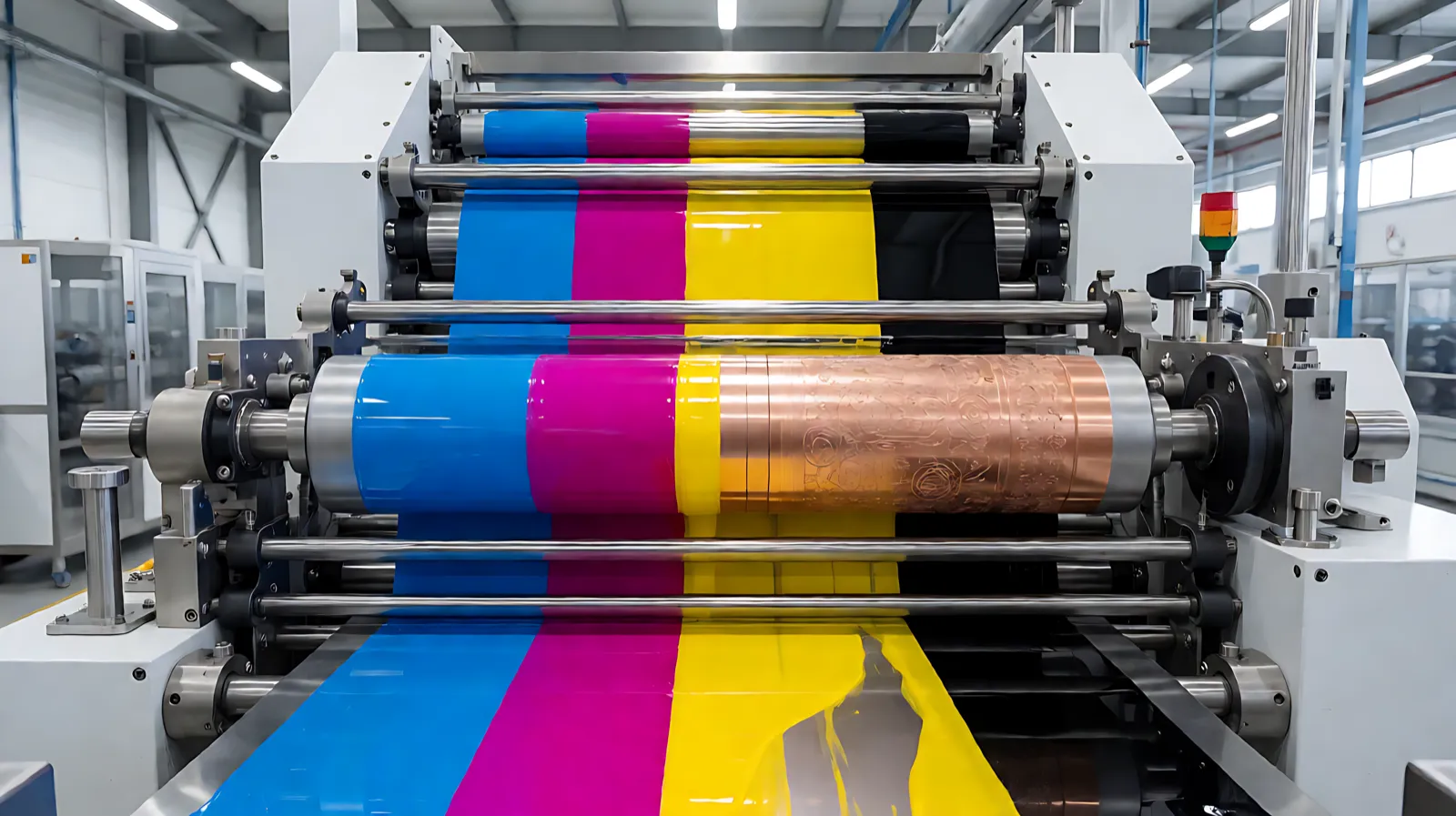
HD Flexo vs Rotogravure: Flexible Packaging Print Guide
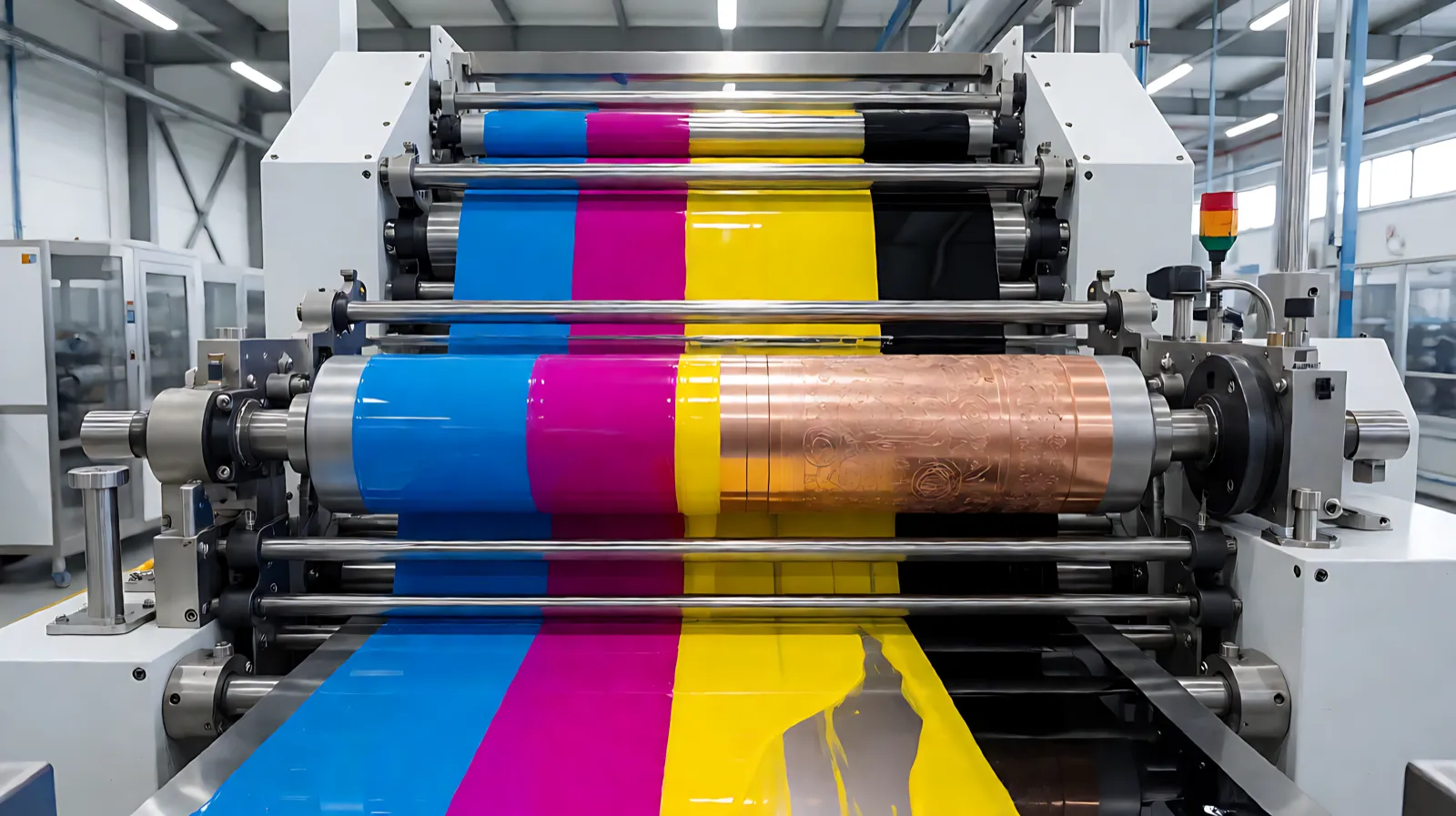
In the production of printed flexible packaging—such as stand-up pouches, flat-bottom coffee bags, and high-barrier rollstock—brand managers and procurement teams face an ongoing manufacturing choice: High-Definition Flexographic (HD Flexo) or Rotogravure (Gravure) printing.
Historically, the decision was straightforward: rotogravure yielded unmatched photographic sharpness for massive million-impression runs, while flexography was relegated to simpler, coarse retail graphics.
However, advancements in direct-laser digital photopolymer plates, high-line-screen anilox rollers (up to 1,200 LPI), and Expanded Color Gamut (ECG 7-color process) have closed the visual quality gap. Modern HD flexo now delivers crisp 175–200 LPI halftone reproduction rivaling gravure, with significantly lower tooling costs and faster changeover cycles.
This technical guide compares the tooling mechanics, ink chemistry, setup waste, and financial break-even curves between both printing processes.
1. Quick Engineering Benchmark Matrix
| Evaluation Parameter | HD Flexographic Printing (HD Flexo) | Rotogravure Printing (Gravure) | Digital Printing (HP Indigo / Inkjet) |
|---|---|---|---|
| Tooling Medium | Digital photopolymer plates or elastomer sleeves | Engraved copper-plated steel cylinders (Chrome-plated) | Zero physical tooling (Digital imaging) |
| Tooling Cost (per Color) | $120 – $250 per plate sleeve | $350 – $650 per steel cylinder | $0 (Zero cylinder/plate cost) |
| Cylinder / Plate Lead Time | 24 to 48 hours | 7 to 14 days (Engraving + Chroming) | Immediate file RIP |
| Maximum Screen Ruling | 175 to 200 LPI (HD Flexo) | 200 to 250+ LPI (Gravure) | Variable (equivalent to 180 LPI) |
| Highlight Dot Reproduction | 1.0% to 1.5% minimum dot (Flat-top dot) | 0.5% to 1.0% dot (Micro-gravure cells) | Variable electronic screening |
| Solid Ink Density (SID) | Excellent (Enhanced by cell-patterning) | Superior (High ink volume transfer) | Moderate |
| Press Speed | 300 to 500 m/min | 400 to 800 m/min (Ultra-high speed) | 30 to 45 m/min |
| Make-Ready Web Waste | 150 to 300 meters | 400 to 800 meters | < 15 meters |
| Optimal Order Volume | 10,000 to 75,000 pouches | 75,000 to 1,000,000+ pouches | 1,000 to 10,000 pouches |
Explore available packaging architectures across our Stand-Up Pouches Category and learn about digital print economics in our Digital vs Rotogravure Pouches Break-Even Guide.
2. Tooling Physics: Photopolymer Relief vs. Intaglio Cell Transfer
The core functional distinction between flexography and rotogravure is how ink transfers from the plate to the moving film web:
┌────────────────────────────────────────────────────────────────────────┐
│                   PRINTING TOOLING & INK TRANSFER MECHANICS            │
├───────────────────────────────────┬────────────────────────────────────┤
│   HD FLEXOGRAPHIC (RELIEF)        │   ROTOGRAVURE (INTAGLIO)           │
├───────────────────────────────────┼────────────────────────────────────┤
│                                   │                                    │
│   Anilox Roller (Ceramic)         │   Doctor Blade (Steel Oiler)       │
│         │                         │         │                          │
│         ▼                         │         ▼                          │
│   ┌───────────┐ Raised Relief     │   ╔════════════════════════════╗   │
│   │ Photopoly ├───► Ink Dot       │   ║ Engraved Copper Cylinder   ║   │
│   └───────────┘     Transfer      │   ║ [▼▼▼] Microscopic Cells    ║   │
│         │                         │   ╚════════════════════════════╝   │
│         ▼                         │         │                          │
│   ════════════════════════════    │         ▼                          │
│   Film Web (PET/BOPP/PE)          │   ════════════════════════════     │
│                                   │   Film Web (PET/BOPP/PE)           │
│   • Flexible relief plate         │   • Precision laser/diamond cells  │
│   • Light impression nip pressure │   • Direct contact wiping          │
│   • Micro-cell surface screening  │   • Extreme solid density laydown  │
└───────────────────────────────────┴────────────────────────────────────┘
HD Flexo: Flat-Top Dot Technology
Traditional flexo suffered from dot gain—excessive enlargement of halftone dots under impression nip pressure. The introduction of Flat-Top Dot (FTD) laser imaging removed atmospheric oxygen during UV curing, eliminating the curved dot shoulders of older plates. Flat-top dots maintain precise geometric integrity under pressure, allowing flexo presses to hold 1% highlight transitions smoothly into pure substrate white without harsh cutoff borders.
Rotogravure: Micro-Engraved Copper Cells
Rotogravure uses heavy steel cylinders electroplated with copper, mechanically carved via high-frequency diamond styli or vaporized by fiber lasers at 70,000 cells per second, and coated with a micro-thin chrome wear layer. The cylinder rotates directly inside an ink fountain. A flexible Swedish steel doctor blade wipes excess surface ink clean, leaving ink only inside the microscopic recessed cells. When the substrate web is squeezed against the cylinder under heavy rubber impression rollers, surface tension and electrostatic assist (ESA) pull ink directly out of the cells onto the film.
3. Financial Break-Even Analysis
Because cylinder engraving requires specialized electroplating and diamond tooling, the upfront investment is 2x to 3x higher than flexo plate sleeves:
Financial Comparison for an 8-Color Stand-Up Pouch Job (200 x 300 mm):
──────────────────────────────────────────────────────────────────────────
Cost Factor               HD Flexo (8 Sleeves)     Rotogravure (8 Cylinders)
──────────────────────────────────────────────────────────────────────────
Initial Prepress/Tooling  $1,600 ($200/color)      $4,400 ($550/color)
Tooling Turnaround Time   2 to 3 Business Days     10 to 14 Business Days
Make-Ready Setup Waste    250 Linear Meters        600 Linear Meters
Press Running Hourly Rate $380 / hour              $520 / hour
Tooling Durability        1 to 2 Million Meters    10 to 20 Million Meters
──────────────────────────────────────────────────────────────────────────
The Production Break-Even Curve
- Below 10,000 Units: Digital printing (HP Indigo) is most cost-effective due to zero tooling expenditure.
- 10,000 to 75,000 Units: HD Flexo delivers the lowest total landed cost. The moderate plate sleeve tooling cost ($1,600) is quickly amortized across units without the heavy $4,400+ cylinder penalty of rotogravure.
- Over 100,000 Units: Rotogravure becomes progressively more economical. The ultra-high run speed (600+ m/min), minimal cylinder wear over millions of impressions, and lower per-kilogram ink costs overcome initial cylinder charges.
4. Expanded Color Gamut (ECG) and Sustainability
A major trend in modern flexible packaging is Expanded Color Gamut (ECG) or Fixed Palette Printing. Instead of formulating custom Pantone spot inks for each packaging SKU (which requires press washdowns, toxic solvent disposal, and press downtime between jobs), ECG uses 7 standardized process inks: Cyan, Magenta, Yellow, Black, Orange, Green, and Violet (CMYK+OGV).
- Color Space Coverage: ECG reproduces over 92% of the Pantone Formula Guide, compared to only 65% with standard 4-color CMYK.
- Job Gang-Running: Different SKU designs can be printed side-by-side on the same web without washing printing decks, reducing solvent consumption by 45% and setup scrap by over 60%.
For food contact regulatory safety and compliant ink chemistry, refer to our guide on Low-Migration Inks for Food and Cosmetics Packaging.
5. Specification Guidelines for Packaging Buyers
When requesting manufacturing quotes, provide converters with:
- Target Run Volumes: Forecast total annual volume across all SKUs and per-order batch release sizes.
- Design Complexity: Identify whether designs require high-density white backings, metallic vignettes, or fine photographic gradients below 3% screen values.
- Substrate Requirements: Specify high-barrier laminated foils, mono-PE recyclable films, or kraft paper composites.
For detailed technical evaluation of your packaging designs and press selection, contact our engineering team via the CraftPack Global Contact Page.