
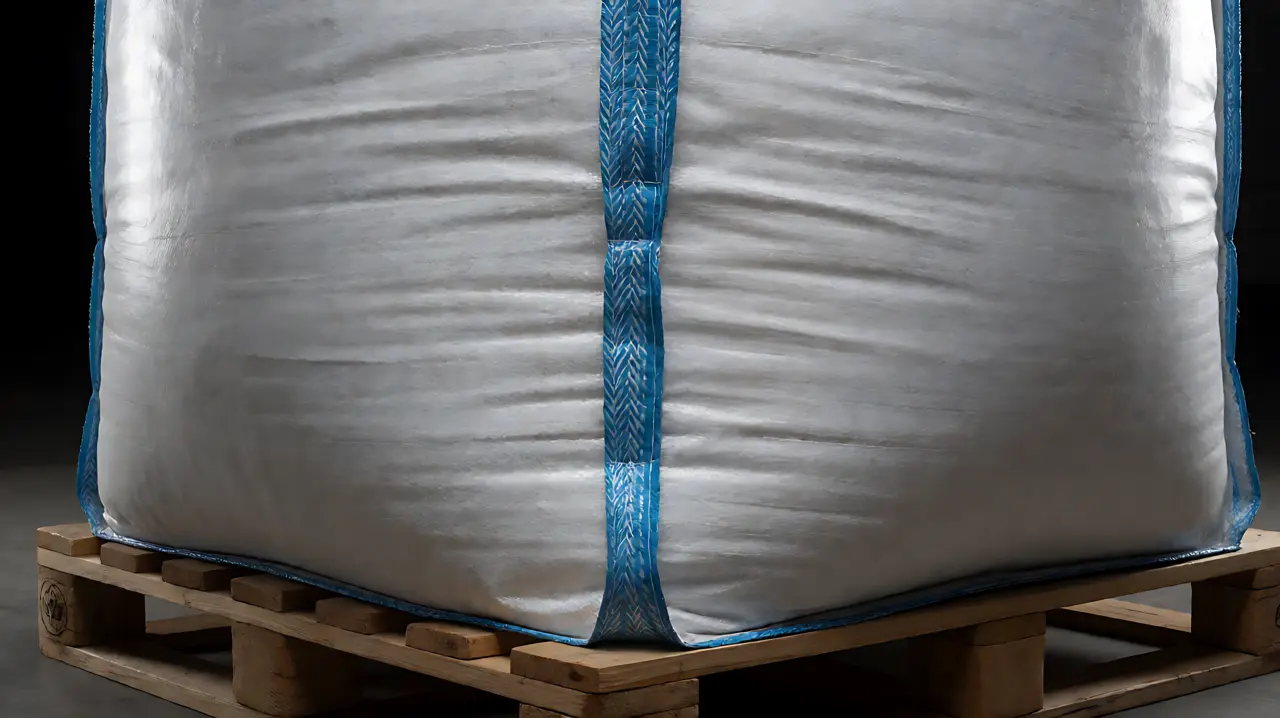
FIBC Bulk Bags: Type A, B, C & D Electrostatic Safety Guide
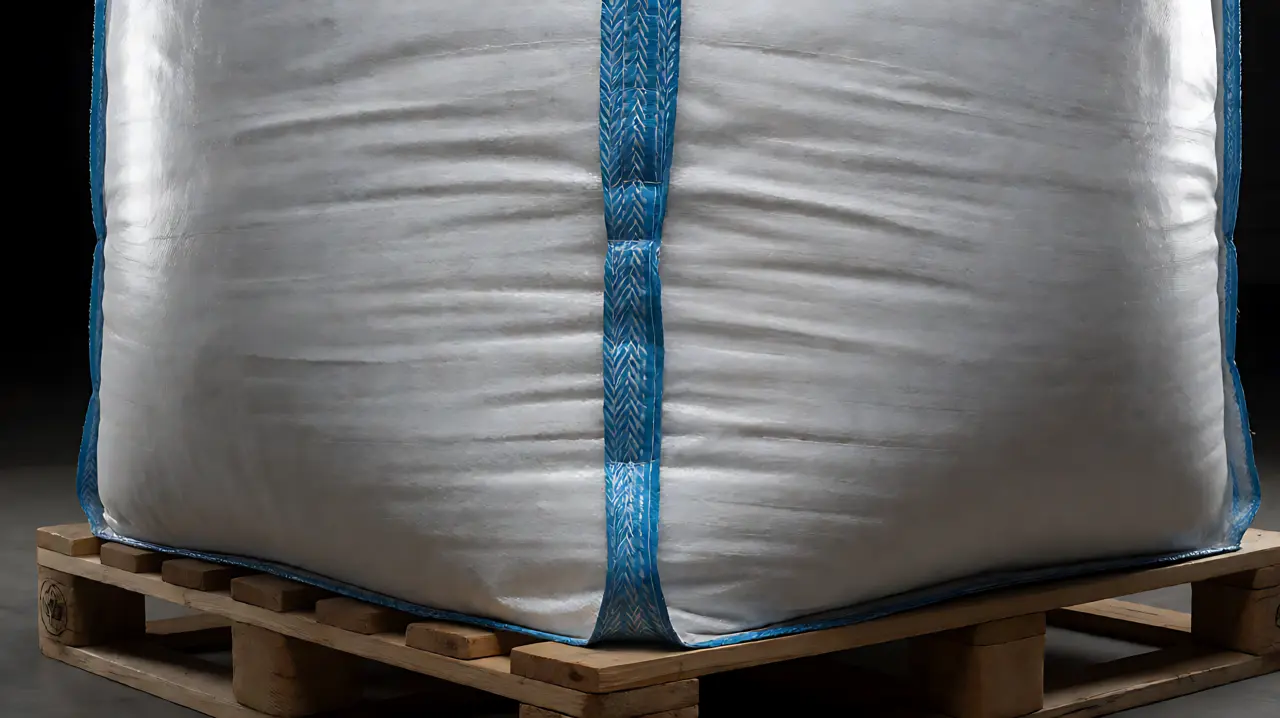
In bulk solids processing, chemical manufacturing, agricultural commodities, and pharmaceutical powder handling, Flexible Intermediate Bulk Containers (FIBCs)—commonly known as bulk bags, jumbo bags, or big bags—are the indispensable standard for shipping 500 kg to 2,000 kg unit loads.
However, handling dry, fine powders during rapid filling and discharging induces extreme triboelectric charging. When insulating polypropylene fabric accumulates static electrical charges, sudden electrostatic discharges can ignite surrounding flammable solvent vapors, combustible dust clouds (Minimum Ignition Energy, MIE < 3 mJ), or explosive atmospheres.
To prevent catastrophic factory dust explosions and comply with international standard IEC 61340-4-4, bulk bags are classified into four distinct electrostatic safety categories: Type A, Type B, Type C, and Type D.
This comprehensive technical guide outlines the physical construction, breakdown voltages, grounding protocols, Safe Working Load (SWL) safety factors, and baffle engineering required for B2B procurement managers and plant safety directors.
1. The Four Electrostatic Categories: IEC 61340-4-4 Engineering Matrix
| FIBC Category | Fabric Construction & Antistatic Mechanism | Breakdown Voltage Limit | Grounding Protocol | Permissible Atmosphere | Prohibited Environment |
|---|---|---|---|---|---|
| Type A | Standard woven polypropylene (PP) tape; no electrostatic protection | None (> 6 kV typical) | No grounding capability | Non-flammable products (sand, stone, grains with MIE > 1,000 mJ) | Any flammable vapor, gas, or combustible dust atmosphere |
| Type B | Woven PP with thin or unbonded coating; prevents propagating brush discharges | < 6 kV strictly enforced | No grounding capability | Combustible dusts with MIE > 3 mJ in non-explosive ambient air | Flammable solvent vapors or gases |
| Type C (Conductive) | Woven PP interwoven with conductive grid threads (carbon / silver filaments, spacing ≤ 20 mm) | Breakdown voltage irrelevant if grounded | MANDATORY: Must be grounded to earth (Resistance < 1.0 × 10⁷ Ω) | Hazardous zones (Zone 1 / 21) with flammable gases, vapors, and fine dusts | CRITICAL: Unbonded or ungrounded operation causes catastrophic sparks |
| Type D (Dissipative) | Special antistatic quasi-conductive fibers (e.g., Crohmiq®); corona dissipation | Safe corona discharge; prevents brush discharges | NO GROUNDING REQUIRED (Passively safe dissipation) | Hazardous zones with combustible dusts and flammable atmospheres (MIE ≥ 0.14 mJ) | Direct contamination with conductive slurries or grease |
For other industrial polypropylene and woven logistics bags, explore our Reusable Bags Category and heavy-duty logistics packaging lines.
2. In-Depth Breakdown: Physics of Static Discharges in FIBCs
Understanding discharge physics dictates correct bag selection during high-speed pneumatic loading:
Static Charge Dissipation Dynamics:
Type A: [++++++++++] -> High Charge Build-up -> Propagating Brush Discharge (RISK)
Type B: [++++      ] -> Controlled Voltage (<6kV) -> Prevents Spark Puncture
Type C: [++++++++++] === Ground Cable ===> [Earth Ground] (Zero Charge Retention)
Type D: [++++      ] ~~~ Low-energy Corona ~~~> Ambient Atmosphere (Safe Passive Dissipation)
1. Propagating Brush Discharges (PBD)
During rapid pneumatic loading of non-conductive powders (such as starch, PVC resin, or sulfur), charges of opposite polarities accumulate on the inner and outer surfaces of coated bulk bags. If the breakdown voltage of the insulating fabric exceeds 6 kV, an energetic propagating brush discharge (up to several joules of energy) can erupt through the fabric wall. This easily exceeds the minimum ignition energy of common chemical dusts (often between 1 mJ and 50 mJ). Type B bags eliminate PBD by ensuring fabric breakdown voltage remains below 6 kV.
2. Type C: Conductive Grid Grounding Protocol
Type C bulk bags incorporate a continuous interconnected grid of multifilament conductive yarns running through both the warp and weft directions, linked to the lifting loops and discharge spout.
- The Golden Grounding Rule: Every conductive thread must maintain electrical continuity across seams. Prior to filling or discharging, the ground tab must be clamped to verified plant earth ground.
- Interlock Systems: Leading chemical facilities install automatic grounding interlock monitors. If resistance between the bag clamp and plant ground exceeds 10 megohms (1.0 × 10⁷ Ω), the filling hopper auger or blower is electrically interlocked from starting.
3. Type D: Self-Dissipating Corona Fibers
Type D FIBCs solve human error—specifically the failure of operators to attach ground clamps to Type C bags. Type D fabrics incorporate specialized antistatic filament yarns with quasi-conductive micro-tips. When electrostatic charge accumulates on the bag surface, the fibers emit low-energy, harmless corona discharges into the surrounding air at voltages far below the ignition threshold of combustible atmospheres. Type D bags must never be grounded, but surrounding equipment and operators must remain grounded to avoid secondary charging.
3. Safe Working Load (SWL) & Safety Factor (SF) Mechanics
Structural failure of a 1.5-ton bulk bag suspended by an overhead forklift creates catastrophic occupational safety hazards. International standards (ISO 21898) classify bags by working load limits:
Safety Factors: 5:1 vs. 6:1 vs. 8:1
- Single-Trip Bags (5:1 Safety Factor): Designed for one-way export shipments. A bag rated for an SWL of 1,000 kg must withstand a dynamic cyclic top-lift load of 5,000 kg on certified test rigs without tensile seam rupture or loop tearing.
- Multi-Trip Reusable Bags (6:1 Safety Factor): Engineered with heavier polypropylene fabric weight (200 to 240 GSM vs. 140 to 180 GSM for single-trip), heavy-duty webbing loops, and double-needle lockstitching. A 1,000 kg SWL bag must withstand 6,000 kg proof loads.
- UN Certified Hazardous Goods Bags (6:1 to 8:1 Safety Factor): Required for regulated dangerous goods (toxic powders, corrosive granular chemicals). Must successfully pass rigorous 1.2m drop testing, topple testing, righting testing, and 24-hour stacking load tests under UN Orange Book specifications.
Cyclic Load Testing Protocol (ISO 21898):
Phase 1: 30 cycles from 0 to 2x SWL
Phase 2: 30 cycles from 0 to 4x SWL
Phase 3: Final pull to destruction (Must exceed 5x or 6x SWL threshold)
4. Baffle Bags (Q-Bags) vs. Circular Woven FIBCs
For shipping efficiency in intermodal sea containers and dry van trailers, bag geometry dictates pallet utilization:
Cross-Sectional Deformation Under Powder Load:
Standard Circular / U-Panel Bag:       Baffle Bag (Q-Bag Structure):
        ╭─────────────╮                       ┌─────────────┐
       │   Bulging     │                      │  Internal   │
      │   Sides (-20%   │                     │  Perforated │
       │  Pallet Space)│                      │   Baffles   │
╰─────────────╯ └─────────────┘- Standard Circular or U-Panel Bags: When loaded with aerated dry powder, hydrostatic lateral pressure forces flexible polypropylene walls outward into a rounded cylinder. This creates bulging side profiles that overhang pallet edges, reducing container payload capacity by 15% to 25% and risking forklift fork punctures.
- Baffle Bags (Form-Stable Q-Bags): Feature four internal baffle panels sewn diagonally across each interior corner. Constructed from polypropylene fabric with strategically die-cut flow ports, baffles allow powder to distribute evenly during filling while mechanically restricting outward wall deflection.
- Cube Benefit: A baffle bag maintains a crisp, rectangular cubic shape (e.g., 105 × 105 cm footprint), maximizing ocean container floor space and saving up to 22% to 30% in ocean freight costs.
5. Moisture Protection: Liners & Sift-Proof Seam Engineering
Fine powders (such as titanium dioxide, carbon black, cocoa powder, or milk powder) require specialized seam engineering to prevent dust escape:
- Single / Double Dust-Proof Cord (Felt / Braided PP Cord): High-speed sewing machines insert non-woven polypropylene felt filler cords directly along stitch lines. When tension is applied, the cord compresses into needle holes, creating a dust-tight barrier against fine powder migration.
- Form-Fit Tubular Liners (LDPE / EVOH / Aluminum): For hygroscopic chemicals or food ingredients sensitive to moisture and oxygen degradation, form-fit polyethylene or foil liners are glued, tabbed, or inserted inside the outer woven bag, delivering WVTR performance under 0.1 g/m²/day.
6. Procurement Specification Checklist for B2B Bulk Bags
When requesting quotations from FIBC manufacturers, specify the following parameters:
- Hazardous Zone Classification: Identify ATEX/NEC zone (Zone 0, 1, 2 for gases; Zone 20, 21, 22 for dusts) and powder Minimum Ignition Energy (MIE).
- Safe Working Load (SWL) & Safety Factor: State exact payload (e.g., 1,000 kg, 1,250 kg, or 1,500 kg) and designate 5:1 (Single-Trip) or 6:1 (Multi-Trip).
- Lifting Loop Configuration: Choose between 4-Corner Cross-Loop (ideal for forklift tines), Corner Seam Loops, or Single Stevedore Strap (for crane hoisting).
- Top and Bottom Spout Dimensions: Define inlet filling spout diameter/length (e.g., Ø35 cm × 50 cm) and bottom discharge spout with star or iris closure.
- UV Stabilization: Ensure virgin polypropylene masterbatch includes at least 1.0% to 1.5% HALS (Hindered Amine Light Stabilizers) for 200+ kLy UV resistance in outdoor staging.
To configure custom Type B, Type C, or Type D FIBC bulk bags with certified load testing and dust-proof seams, connect with the CraftPack Global engineering group.