
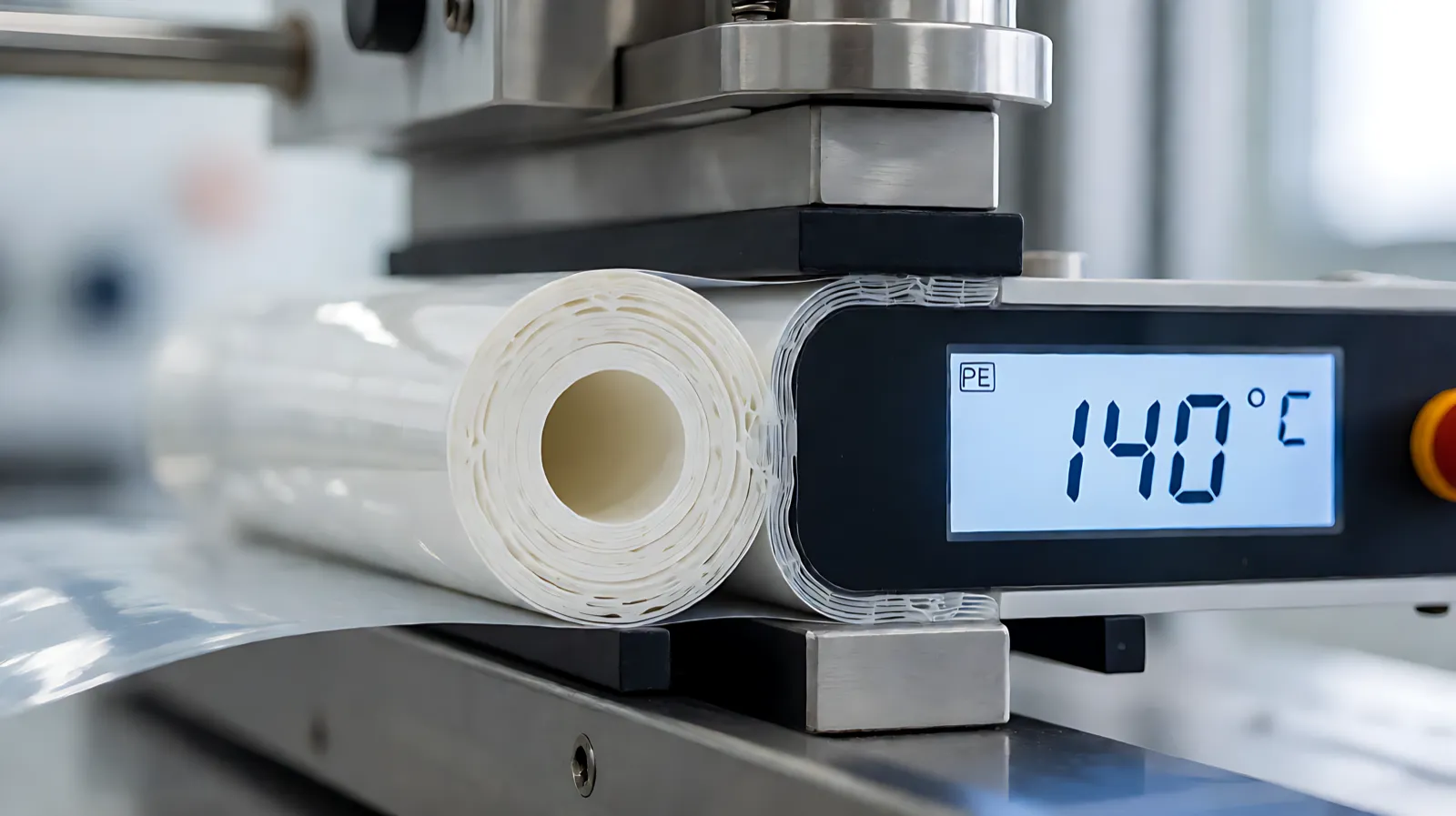
Cast Polypropylene vs Polyethylene Sealant Films: Heat Seal Guide
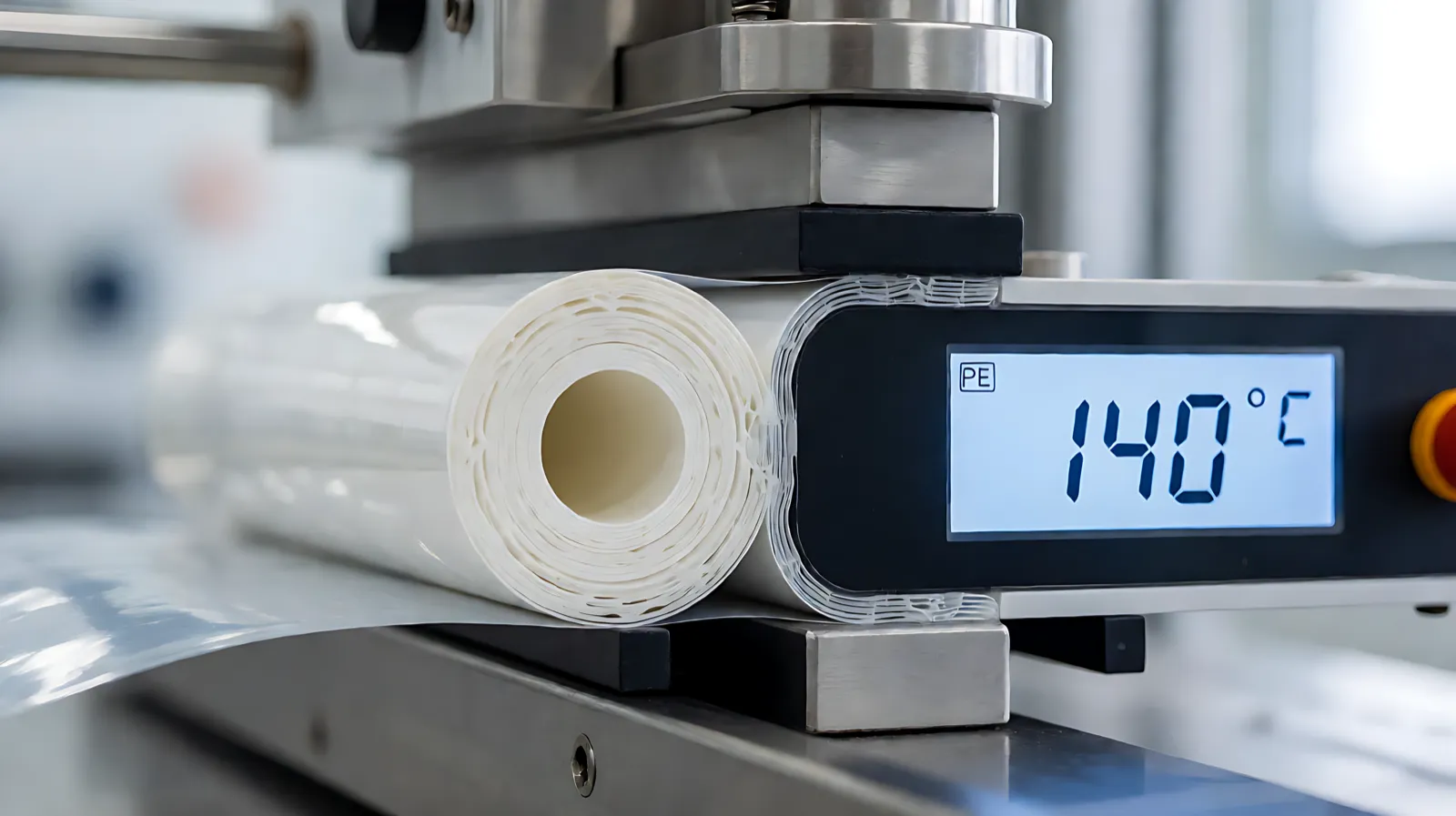
In multi-layer flexible packaging laminates, outer films (such as BOPET, BOPP, or Kraft paper) provide tensile strength, printability, and barrier performance. However, the integrity of the completed package depends entirely on the innermost layer: the sealant web.
The two dominant polymeric sealant films used across industrial converting are Cast Polypropylene (CPP) and Polyethylene (PE)—predominantly Linear Low-Density Polyethylene (LLDPE) and metallocene-catalyzed polyethylene (mPE).
While both belong to the polyolefin family, their crystalline melting points, seal initiation temperatures (SIT), hot tack behavior, and thermal retort tolerances differ significantly. Selecting the incorrect sealant causes catastrophic packaging failures, including seal thinning, channel micro-leaks, high scrap rates on high-speed form-fill-seal lines, or burst seams during thermal autoclaving.
This technical guide compares CPP and PE sealant films to help converters, packaging engineers, and brand managers specify the optimal inner web.
1. Quick Engineering Benchmark Matrix: CPP vs. LLDPE vs. mPE
| Engineering Metric | Cast Polypropylene (CPP) | Retort CPP (R-CPP) | Linear Low-Density PE (LLDPE) | Metallocene PE (mPE) |
|---|---|---|---|---|
| Polymer Density | 0.900 to 0.910 g/cm³ | 0.905 to 0.915 g/cm³ | 0.918 to 0.925 g/cm³ | 0.912 to 0.920 g/cm³ |
| Melting Point ($T_m$) | 155°C to 165°C | 162°C to 168°C | 120°C to 125°C | 115°C to 120°C |
| Seal Initiation Temp (SIT) (ASTM F1921 @ 1 N/15mm) |
130°C to 140°C | 145°C to 155°C | 110°C to 120°C | 95°C to 105°C (Fastest sealing) |
| Hot Tack Window | Narrow (135°C–155°C) | Moderate (150°C–170°C) | Broad (115°C–140°C) | Extremely Broad (100°C–145°C) |
| Thermal Retort Tolerance (121°C) | Moderate | Superior (No pouch deformation) | Unusable (Melts & delaminates) | Unusable (Loss of seal integrity) |
| Film Modulus (Stiffness) | High (Crisp, self-standing) | High | Moderate (Pliable) | Soft / Flexible |
| Puncture & Tear Resistance | Moderate | High (Block copolymer grade) | High | Exceptional (Dart drop > 800g) |
| Optical Clarity & Haze | High clarity (< 2.5% Haze) | Slightly hazy (< 4.5%) | Translucent (8%–12% Haze) | Clear (4%–6% Haze) |
| Recyclability Stream | Polypropylene (Code 5) | Polypropylene (Code 5) | Polyethylene (Code 4) | Polyethylene (Code 4) |
Explore compatible pouch options across our Stand-Up Pouches Category and Flat Bottom Bags Category.
2. Thermal Physics: Melting Point & Seal Initiation Temperature (SIT)
The core operational difference between CPP and PE sealant webs lies in their molecular crystallite melting points ($T_m$).
┌────────────────────────────────────────────────────────────────────────┐
│                   THERMAL SEALING WINDOW COMPARISON                    │
│                                                                        │
│   Temperature (°C)                                                     │
│   180 ┼                                                                │
│       │                                ┌───────────────────────────┐   │
│   160 ┼                                │ Retort CPP Sealing Range  │   │
│       │  ┌─────────────────────────┐   └───────────────────────────┘   │
│   140 ┼  │ Standard CPP Range      │                                   │
│       │  └─────────────────────────┘   ┌───────────────────────────┐   │
│   120 ┼                                │ Standard LLDPE Range      │   │
│       │  ┌─────────────────────────┐   └───────────────────────────┘   │
│   100 ┼  │ Metallocene PE (mPE)    │                                   │
│       │  └─────────────────────────┘                                   │
│    80 ┼────────────────────────────────────────────────────────────    │
│          Low-Temp High-Speed Lines         High-Temp Retort Lines      │
└────────────────────────────────────────────────────────────────────────┘
Why Seal Initiation Temperature (SIT) Matters
Seal Initiation Temperature (defined under ASTM F1921 as the temperature at which a 15mm seal strip attains 1.0 N of seal strength under 0.2 seconds of jaw dwell time) directly dictates packaging line output:
- Metallocene PE (mPE) initiates bonding at just 95°C to 105°C. On high-speed Vertical Form-Fill-Seal (VFFS) or pouch-making machines operating at 120+ cycles per minute, mPE enables faster line speeds without requiring excessive jaw dwell time.
- Cast Polypropylene (CPP) requires at least 130°C to 140°C to initiate fusion. Consequently, standard CPP requires slower converting line speeds or higher jaw temperatures, increasing energy consumption.
The Retort Sterilization Boundary
While mPE excels in speed, it cannot survive high-temperature processing. Food products subjected to commercial autoclave sterilization ($121^\circ\text{C}$ to $135^\circ\text{C}$ steam counter-pressure) will completely destroy polyethylene sealants, as PE enters a viscous melt phase above $120^\circ\text{C}$.
For retort pouches, Retort-Grade Cast Polypropylene (R-CPP) is compulsory. Formulated from high-isotactic polypropylene block copolymers, R-CPP withstands $121^\circ\text{C}$ to $135^\circ\text{C}$ without seal thinning, stress relaxation, or seal failure. For autoclave cycle specifications, review our Retort Pouch Autoclave Engineering Guide.
3. Hot Tack Strength & VFFS Line Dynamics
On automated vertical form-fill-seal (VFFS) packaging machines, the bottom seal is formed fractionally before dense product (such as nuts, frozen seafood, or pet kibble) is dropped directly onto the freshly melted seam.
Hot Tack measures the tensile strength of the seal while the polymer remains in a molten, semi-crystallized state before full cooling.
Hot Tack Force (N/15mm) across Temperature Range:
──────────────────────────────────────────────────────────────────────────
Temperature (°C)      Metallocene PE (mPE)     Standard LLDPE      CPP
──────────────────────────────────────────────────────────────────────────
100°C                 2.2 N                    0.2 N               0.0 N
115°C                 4.8 N                    1.8 N               0.0 N
130°C                 5.2 N (Peak Plateau)     3.2 N               1.4 N
145°C                 4.5 N                    2.9 N               3.8 N
160°C                 1.5 N (Over-melt)        0.8 N               4.2 N (Peak)
──────────────────────────────────────────────────────────────────────────
Why mPE Dominates Vertical Packaging:
- Broad Hot Tack Plateau: Metallocene PE maintains high hot tack strength (> 4.5 N/15mm) across a wide 30°C temperature window. If machine heat jaws fluctuate by ±5°C, seal integrity remains unaffected.
- Resistance to Product Drop Impact: When a 1kg load of frozen poultry drops 400mm into a pouch on a VFFS machine, molten mPE absorbs the kinetic energy without tearing open at the seam. For film friction and machine drag formulas, see our VFFS Rollstock Engineering Guide.
4. Optical Clarity, Stiffness, and Barrier Lamination
Beyond sealing physics, the physical properties of the sealant web influence the final tactile and optical quality of the completed pouch:
1. Pouch Standing Rigidity (Modulus)
CPP has an elastic modulus of 400 to 600 MPa, whereas LLDPE ranges between 180 and 280 MPa. When constructing large Standup Pouches Standard Line, incorporating a 70µm CPP sealant layer yields a significantly stiffer, crisper pouch that resists sagging or slouching on supermarket retail shelves.
2. Optical Transparency and Gloss
Because CPP is quenched rapidly against chilled chrome casting rolls during extrusion, its spherulite crystal sizes remain smaller than the wavelength of visible light. This produces high gloss (> 85 GU) and low haze (< 2.5%). In contrast, blown PE films exhibit surface micro-roughness that scatters light, resulting in a slightly milky appearance. For window pouches showcasing colorful candy, dried berries, or organic tea, CPP provides superior window clarity.
3. Puncture and Flex-Crack Toughness
While CPP is stiffer, standard homopolymer CPP becomes brittle at refrigerated or sub-zero freezing temperatures ($< 0^\circ\text{C}$). For frozen food packaging, heavy frozen poultry, or sharp bone-in meats, metallocene LLDPE is far superior due to its branched short-chain structure, which provides dart drop impact resistance exceeding 800 grams and puncture survivability down to $-40^\circ\text{C}$.
5. Converter Selection Guide: Specifying the Right Sealant
| Packaging Application | Recommended Sealant Film | Key Engineering Rationale |
|---|---|---|
| High-Temp Retort Pouches (121°C–135°C) | 70µm–100µm Retort CPP (R-CPP) | Polypropylene melting point ($165^\circ\text{C}$) withstands autoclave steam counter-pressure |
| High-Speed VFFS Snack Packaging | 30µm–50µm Metallocene PE (mPE) | Low seal initiation ($100^\circ\text{C}$) and superior hot tack for drop impact |
| Bakery & Dry Candy Window Pouches | 40µm–60µm High-Clarity CPP | Glass-like transparency and crisp standing stiffness |
| Deep-Freeze Seafood & Poultry (-20°C) | 60µm–90µm Heavy-Duty LLDPE/mPE | Sub-zero ductile elongation prevents cold shattering |
| High-Oil Condiments & Liquid Pouches | 80µm–120µm High-Seal-Integrity mPE | High seal caulking seals through fluid contamination |
Review compatible material configurations in our Side-Gusset Custom Catalog or consult our Sustainable Monomaterial Recyclable Pouches Guide.
6. Frequently Asked Questions (FAQ)
Can I laminate CPP directly to PE to get the benefits of both?
Laminating CPP to PE is strongly discouraged. Because polypropylene (Code 5) and polyethylene (Code 4) are chemically immiscible polymers, mixing them in a single laminate ruins mechanical recycling compatibility under CEFLEX guidelines. Stick to mono-PP (BOPP / CPP) or mono-PE (MDO-PE / LLDPE) structures.
What is “seal caulking” and which resin performs better?
Seal caulking refers to the molten polymer’s ability to flow into micro-voids, wrinkles, and folds (such as the four-layer step in side gussets or zipper transitions). Metallocene PE has a lower melt viscosity and superior melt flow index, allowing it to caulk channels and eliminate leaks far more effectively than rigid CPP.
Why do some CPP pouches crack when shipped in winter?
Standard homopolymer CPP undergoes a ductile-to-brittle transition around 0°C. If your product is distributed through winter cold chains, you must specify a random copolymer CPP or impact-modified block copolymer CPP formulated with ethylene comonomers to maintain flexibility down to -15°C.
Need help specifying the exact sealant layer micron thickness and resin grade for your packaging converting project? Contact CraftPack Global’s packaging engineering specialists for technical consultation and pilot testing samples.