
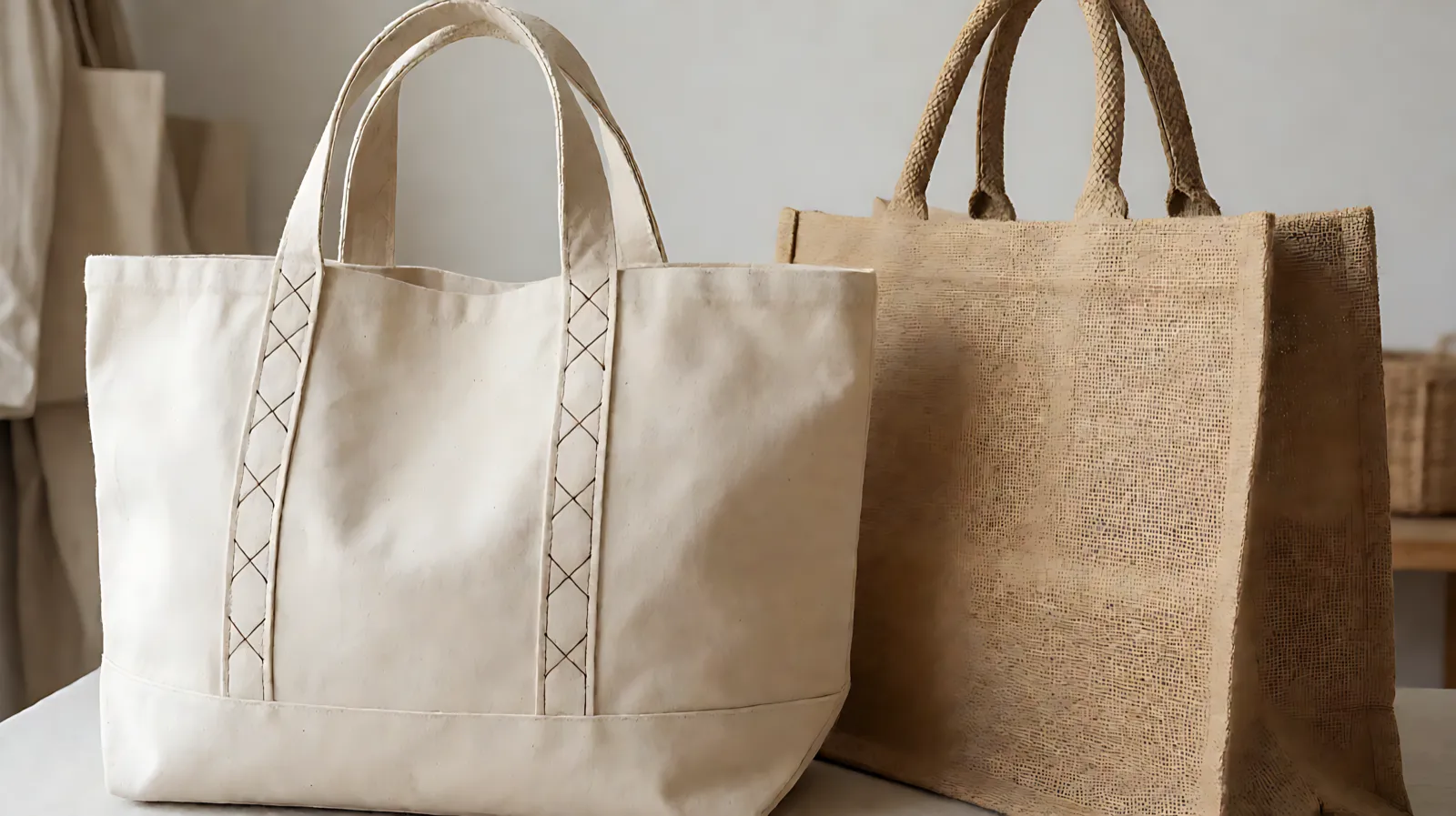
Cotton Canvas vs Jute Reusable Bags: Life Cycle & LCA Guide
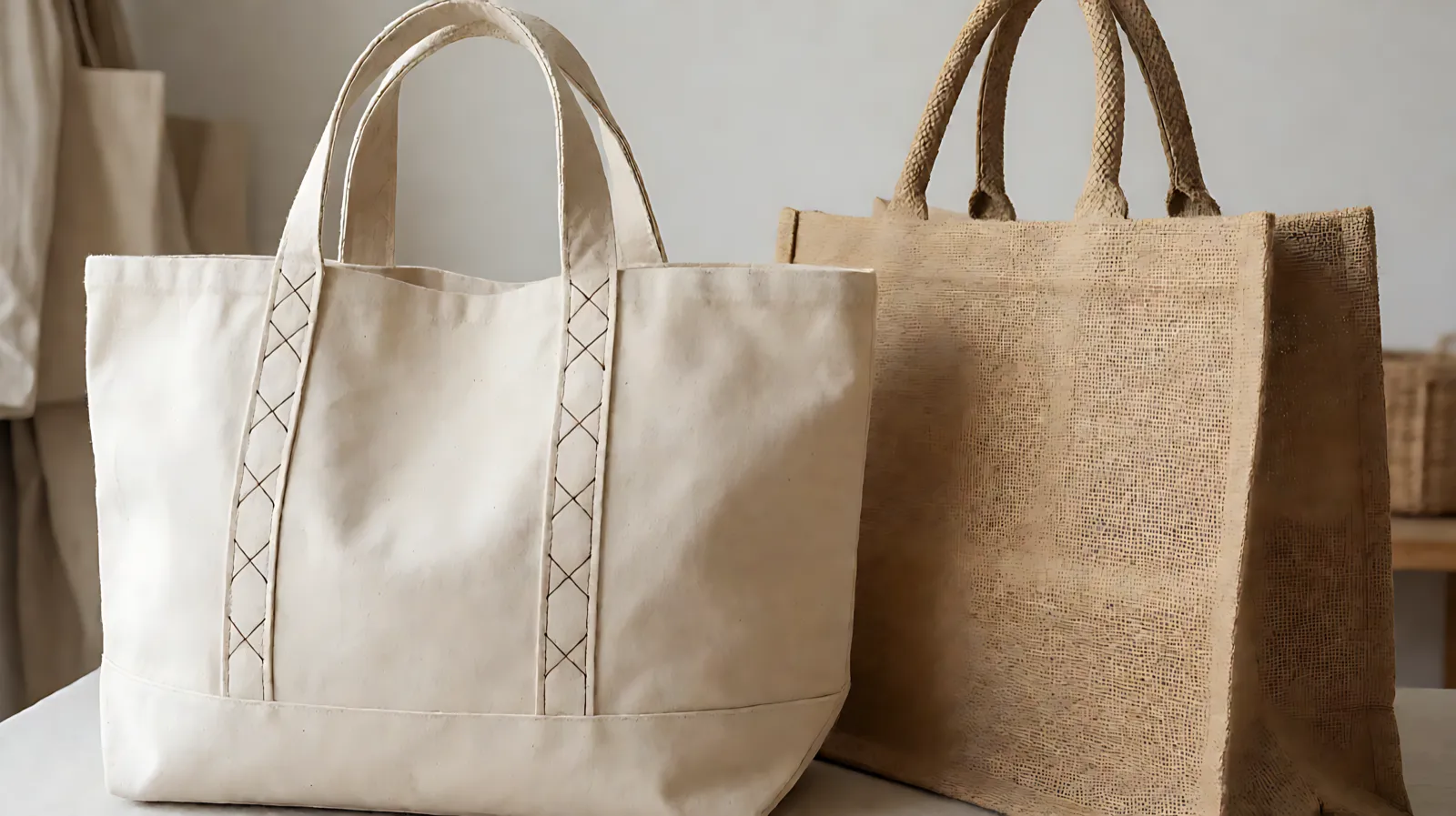
In sustainable retail merchandising, supermarket grocery logistics, and corporate brand promotions, natural fiber reusable tote bags have largely replaced single-use polyethylene carrier bags. Among natural bast and seed fibers, two materials lead high-end reusable bag manufacturing: Organic Cotton Canvas and Natural Jute (Burlap / Hessian).
While both fibers project an artisanal, eco-conscious aesthetic, their environmental footprints, agricultural water consumption, structural tensile strength, and consumer lifespan diverge significantly.
According to life cycle assessment (LCA) studies from the UK Environment Agency and the Danish Environmental Protection Agency, a reusable bag’s true environmental merit depends directly on its LCA Break-Even Reuse Threshold—how many times a shopper must reuse the bag to offset the energy, water, and agricultural inputs required to produce it.
This technical guide examines fiber agronomy, tensile load limits, laundering shrinkage, and life cycle carbon metrics.
1. Quick Engineering Benchmark Matrix
| Engineering Metric | Organic Cotton Canvas (10–14 oz Duck) | Natural Jute / Burlap (300–450 GSM Hessian) | Recycled PET (rPET Fabric) |
|---|---|---|---|
| Fiber Origin | Cotton seed hair (Gossypium hirsutum) | Bast stem fiber (Corchorus olitorius) | Post-consumer recycled plastic bottles |
| Fabric Weight (GSM / oz) | 280 to 470 GSM (10 oz to 16 oz Duck) | 320 to 450 GSM (Heavyweight Burlap) | 140 to 190 GSM |
| Agricultural Water Footprint | High (10,000 to 20,000 L / kg fiber) | Very Low (Rain-fed, < 2,000 L / kg) | Negligible agricultural water |
| Tensile Breaking Strength | Superior flex fatigue; high elongation | Rigid, low stretch; high initial modulus | High tensile tear strength |
| Washability & Laundering | Fully machine washable (Slight shrinkage) | Hand sponge clean only (Degrades in washer) | Machine washable |
| LCA Break-Even Uses (Climate) | 50 to 100 reuses (vs single-use LDPE) | 15 to 25 reuses (vs single-use LDPE) | 8 to 12 reuses |
| LCA Break-Even (Water Stress) | > 7,000 reuses (Conventional cotton) | < 150 reuses | < 10 reuses |
| Biodegradability in Soil | 100% Biodegradable (3 to 6 months) | 100% Biodegradable (1 to 3 months) | Non-biodegradable (Mechanical recycle) |
Explore reusable bag solutions in our Custom Reusable Bags Category and review synthetic alternatives in our RPET vs Non-Woven Polypropylene LCA Guide.
2. Fiber Agronomy & Agricultural Carbon Footprint
The dramatic difference in life cycle impact begins in the field:
┌────────────────────────────────────────────────────────────────────────┐
│                   FIBER LIFE CYCLE & RESOURCE UTILIZATION              │
├───────────────────────────────────┬────────────────────────────────────┤
│   CONVENTIONAL / ORGANIC COTTON   │   NATURAL JUTE (GOLDEN FIBER)      │
├───────────────────────────────────┼────────────────────────────────────┤
│                                   │                                    │
│   • Water-intensive crop          │   • 100% Rain-fed cultivation      │
│   • Intensive irrigation required │   • Grows in monsoon regions       │
│   • Land footprint: High          │   • Low land occupation (120 days) │
│   • Fertilizer/pesticide inputs   │   • Minimal synthetic pesticide    │
│   • High embodied carbon (Farming)│   • Rapid CO₂ sequestration sink   │
│                                   │                                    │
│   WATER FOOTPRINT PER KG FIBER:   │   WATER FOOTPRINT PER KG FIBER:    │
│   10,000 - 22,000 Liters          │   1,000 - 2,500 Liters             │
│   (Highest water stress impact)   │   (Negligible irrigation stress)   │
└───────────────────────────────────┴────────────────────────────────────┘
1. Cotton Canvas Life Cycle
Cotton requires extensive freshwater irrigation. When assessing the Water Scarcity Footprint (ISO 14046), producing a single heavy 14 oz cotton tote bag consumes up to 2,700 liters of water. For a brand to claim positive environmental stewardship, cotton bags must be reused over hundreds of grocery trips throughout a multi-year lifespan. Specifying GOTS-Certified Organic Cotton eliminates synthetic organophosphates and chemical defoliants, reducing soil toxicity impacts by over 80%.
2. Natural Jute (The Golden Fiber)
Jute is cultivated in the alluvial deltas of the Ganges and Brahmaputra rivers during the monsoon season. It is 100% rain-fed, requiring zero groundwater irrigation and minimal fertilizers. During its four-month growth cycle, one hectare of jute plants consumes roughly 15 tons of carbon dioxide ($CO_2$) and releases 11 tons of oxygen. From an agricultural footprint perspective, jute is one of the most environmentally benign commercial fibers on earth.
3. Structural Tensile Strength and Handle Anchor Mechanics
Reusable shopping totes frequently carry 15kg to 25kg of grocery goods (canned goods, milk cartons, root vegetables). Structural failures occur almost exclusively at the handle-to-bag attachment interface:
Cross-Stitch Reinforcement Tensile Load Test:
──────────────────────────────────────────────────────────────────────────
Bag Construction       Handle Stitch Pattern      Max Load to Failure
──────────────────────────────────────────────────────────────────────────
8 oz Cotton Canvas     Single Horizontal Stitch   85 N (~8.6 kg)
12 oz Cotton Canvas    "Box-X" Cross-Stitch       245 N (~25 kg)
16 oz Heavy Canvas     Riveted + Box-X Stitch     380 N (~38.7 kg)
350 GSM Natural Jute   Standard Overlock          110 N (~11.2 kg)
Laminated Jute (LDPE)  Box-X Stitch with Piping   220 N (~22.4 kg)
──────────────────────────────────────────────────────────────────────────
In cotton canvas, the long cellulose fibers and twill/plain weave allow high elastic elongation (5% to 8% before break). Under stress, the fabric stretches slightly, redistributing point loads across all sewing threads.
In contrast, unlaminated raw jute is a coarse, stiff bast fiber with low elongation (<2%). Sewing threads can shear through unlaminated jute weave under heavy loads. To achieve commercial 15kg+ carry ratings, high-grade jute bags incorporate an internal food-grade PP or LDPE laminate backing (15–20µm) that locks the woven yarn matrix in place and prevents handle thread pull-out.
4. Laundering, Hygiene, and Consumer Usability
A major functional differentiator in retail grocery use is machine washability:
- Cotton Canvas: Highly durable in domestic washing machines. Cotton can be washed at 30°C–40°C with standard detergents, sanitizing food residues and meat juices. Unwashed raw cotton may experience 3% to 6% initial shrinkage, which converters mitigate by specifying pre-shrunk mercerized canvas.
- Jute Burlap: Cannot be machine washed. Submerging raw jute in water causes lignified fibers to soften, loosen, and shed shedding hair fibers (lint). Wet jute develops a musty burlap odor and takes prolonged periods to dry. Jute totes must be wiped down with a damp cloth or sponge.
5. Specification Guidelines for Brand Procurement
                       REUSABLE TOTE MATERIAL SELECTION
                                       │
                      Will the bag be washed regularly
                      or used for delicate fashion apparel?
                                   /        \
                                 YES         NO
                                 /            \
                     Organic Cotton Canvas     Is natural rustic aesthetic
                     (10-12 oz, machine        and low unit cost desired?
                      washable, smooth print)          /         \
                                                     YES          NO
                                                     /             \
                                            Natural Jute Tote    rPET Fabric
                                            (350 GSM, LDPE-      (Recycled
                                             backed, heavy load)  circular)
For customized screen-printed cotton canvas totes, natural jute grocery shoppers, and GOTS-certified supply chain documentation, contact our packaging specialists at CraftPack Global Contact.