
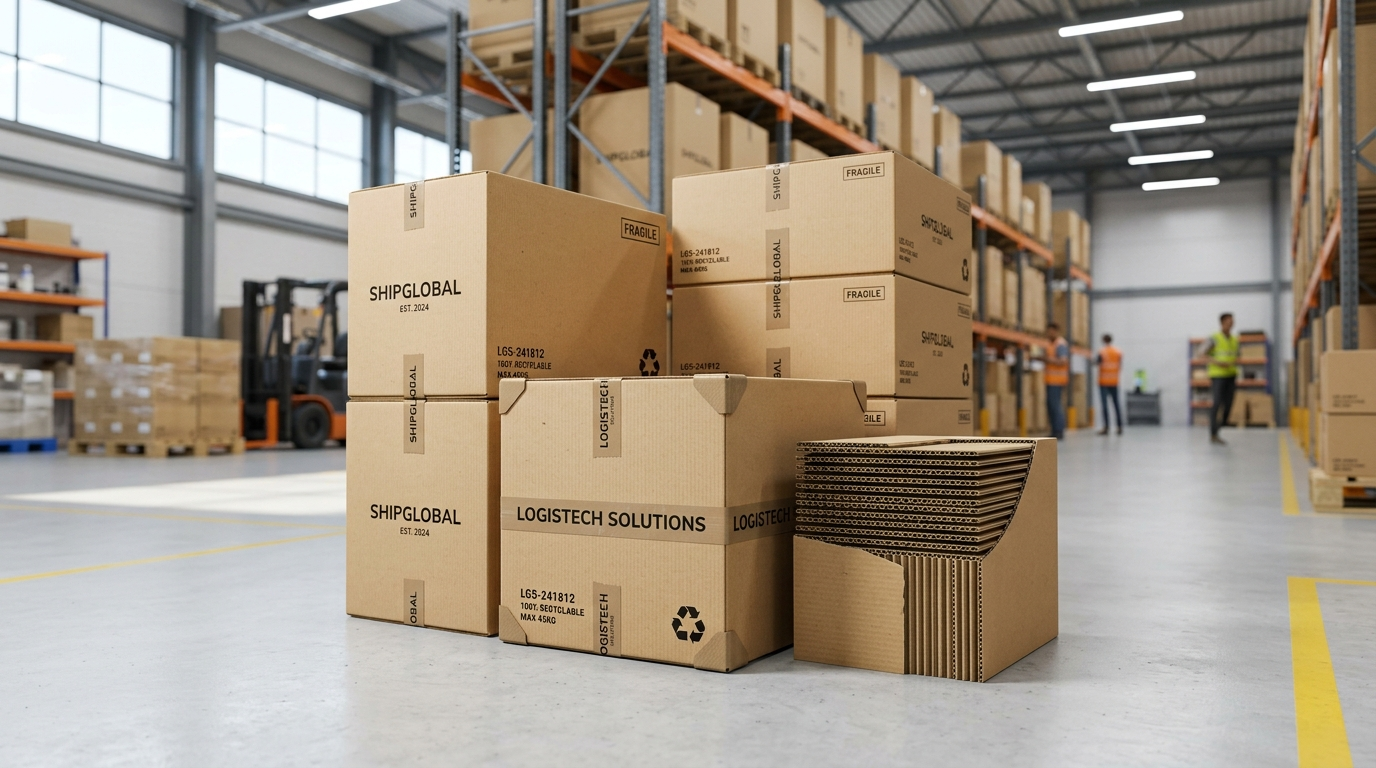
Corrugated Box Guide for Fragile Goods: 3-Ply vs 5-Ply
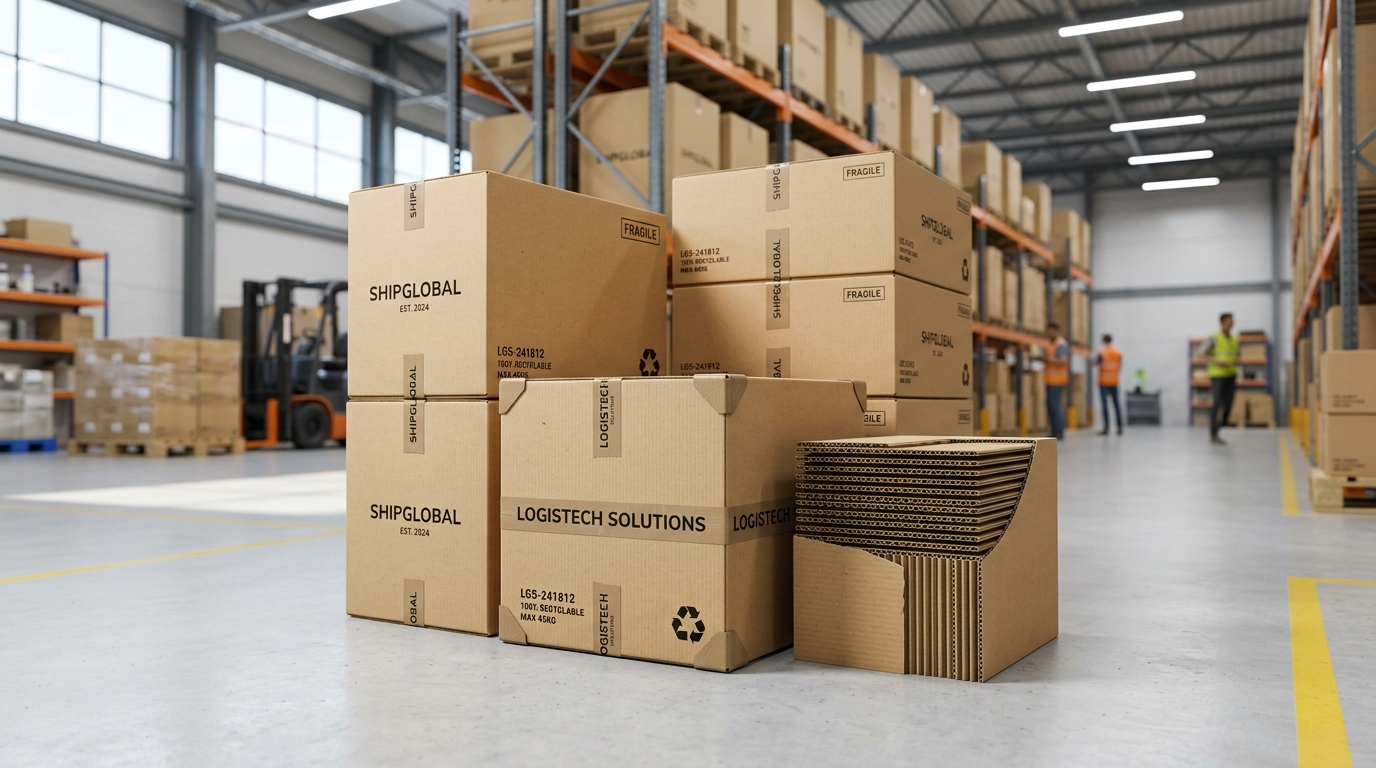
Shipping fragile products across international borders is one of the toughest tests for any packaging structure. Long-haul ocean freight, intermodal rail transfers, high-speed sorting hubs, and multi-drop courier routes expose cartons to continuous vibration, high humidity, side impacts, and heavy stacking pressure.
For export brands and e-commerce sellers, choosing between 3-ply (single-wall) and 5-ply (double-wall) corrugated boxes is not simply a question of unit price. It directly impacts your cargo damage rate, return costs, customer reviews, and dimensional weight freight charges.
This guide provides an engineering and procurement comparison between 3-ply and 5-ply corrugated cardboard, helping you select the right box structure for fragile international shipments.
Anatomy of Corrugated Board: Plies and Flutes
To choose the right box, it helps to understand how corrugated paperboard provides strength:
- Linerboards: The flat outer and inner paper facings. Higher basis weights (such as 175–250 gsm kraft paper) resist punctures, moisture absorption, and surface tearing.
- Medium (Fluting): The arched, wave-like paper layer sandwiched between the liners. Flutes provide cushioning, shock absorption, and vertical stacking strength (measured via Edge Crush Test, or ECT).
3-Ply (Single-Wall) Construction
A 3-ply board consists of one medium layer sandwiched between two linerboards (Outer Liner + Flute + Inner Liner). Common flute profiles include:
- B-Flute (approx. 3 mm thickness): Excellent crush resistance and smooth printing surface, suited for canned goods and retail cartons.
- C-Flute (approx. 4 mm thickness): The international standard for general shipping boxes, offering balanced compression strength and impact resistance.
5-Ply (Double-Wall) Construction
A 5-ply board combines two fluted mediums with three liner sheets (Outer Liner + Flute 1 + Center Liner + Flute 2 + Inner Liner). The most widespread industrial combination is:
- AB-Flute or BC-Flute (approx. 6–7 mm thickness): Combines a larger flute (for vertical compression and shock dampening) with a smaller flute (for puncture resistance and stiffness).
3-Ply vs 5-Ply: Key Performance Comparison
| Evaluation Metric | 3-Ply (Single-Wall, C/B Flute) | 5-Ply (Double-Wall, BC Flute) |
|---|---|---|
| Typical Board Thickness | 3.0 – 4.0 mm | 6.0 – 7.0 mm |
| Edge Crush Test (ECT) | 29 – 44 lbs/in | 48 – 65+ lbs/in |
| Bursting Strength (Mullen) | 175 – 200 psi | 275 – 350+ psi |
| Recommended Gross Weight | Up to 15–20 kg (33–44 lbs) | Up to 35–45 kg (77–99 lbs) |
| Pallet Stacking Resistance | Moderate (prone to corner buckling if humidity rises) | High (maintains structural rigidity in high-cube stacks) |
| Impact & Drop Protection | Good for uniform, non-brittle contents | Superior dampening for heavy or fragile items |
| Tare Weight & Freight Impact | Lighter, lower dimensional volume | Slightly heavier; increases tare weight by 20–35% |
Why Fragile Goods Require Special Consideration in Cross-Border Logistics
Unlike domestic parcel shipping where parcels change hands 3 to 5 times, cross-border consignments face severe handling hazards:
1. Dynamic Stacking and “Creep”
In ocean containers and long-haul trucks, pallets vibrate continuously. Over weeks at sea, standard single-wall boxes experience “dynamic fatigue” or creep, where bottom cartons lose up to 40% of their initial static compression strength. If stacking 4 to 6 tiers high, 3-ply boxes risk crushing from the bottom up.
2. Relative Humidity (RH) Fluctuations
Paper fiber absorbs atmospheric moisture. When an ocean container transitions through tropical waters, internal humidity can exceed 85% RH. Under these conditions, corrugated board can lose more than 50% of its rigidity. A 5-ply double-wall board retains essential safety margins where a 3-ply board would buckle.
3. Lateral Compression and Edge Impacts
Automated conveyor belts, parcel chutes, and rough forklift handling exert concentrated lateral forces. Fragile glassware, ceramics, lighting fixtures, and precision electronics cannot bear external pressure without internal structural isolation.
Decision Matrix: When to Choose 3-Ply vs 5-Ply
Choose 3-Ply (Single-Wall) When:
- Total packaged weight is under 10–12 kg: The item is relatively lightweight.
- Product has inherent structural support: The inner product can support some top load (e.g., solid metal parts or densely packed soft goods).
- Comprehensive internal cushioning is present: The item is already housed in custom-molded pulp trays, EPE foam inserts, or an inner gift box.
- Fast air courier shipping: Transit time is short, touchpoints are fewer, and air freight costs prioritize minimal dimensional tare weight.
- Consider pairing with e-commerce mailers or lightweight inner presentation paper bags.
Choose 5-Ply (Double-Wall) When:
- Total packaged weight exceeds 15 kg: Or the product is dense and compact, concentrating weight on small surface areas.
- Brittle, high-value, or zero-tolerance items: Glassware, electronics, cosmetic liquids in glass dropper bottles, precision instruments, and luxury ceramics.
- Ocean freight palletization (FCL / LCL): Where master cartons must endure multi-week container journeys and heavy stacking tiers.
- Consolidated master cartons: Packing multiple individual retail packages (such as stand-up pouches or gift bags) into an outer export shipper.
Best Practices for Fragile Export Packaging
- Avoid Over-Sizing (Vessel Ratio): Empty space is the primary cause of carton collapse. Ensure inner void fill (honeycomb paper, air pillows, or custom inserts) prevents products from shifting.
- Specify Water-Resistant Liners: For cross-border sea freight, request kraft liners with wet-strength sizing agents or a light moisture barrier coating to counteract container sweat.
- Use Reinforced Flute Orientations: Always store and palletize cartons with flutes oriented vertically to maximize compressive strength.
- H-Taping Method: Seal both top and bottom flaps using the “H” pattern with heavy-duty pressure-sensitive or water-activated reinforced gummed tape to reinforce box edges and seams.
Getting Custom Export Packaging for Your Brand
Selecting the right carton grade is a calculated balance between damage risk and shipping expenditure. If you are developing custom master cartons, branded retail packaging, or need technical assistance with export specifications, contact the CraftPack Global Team to discuss your dimensional requirements and freight requirements.