
Cold Seal vs Heat Seal: Confectionery Flow-Wrap Packaging Guide
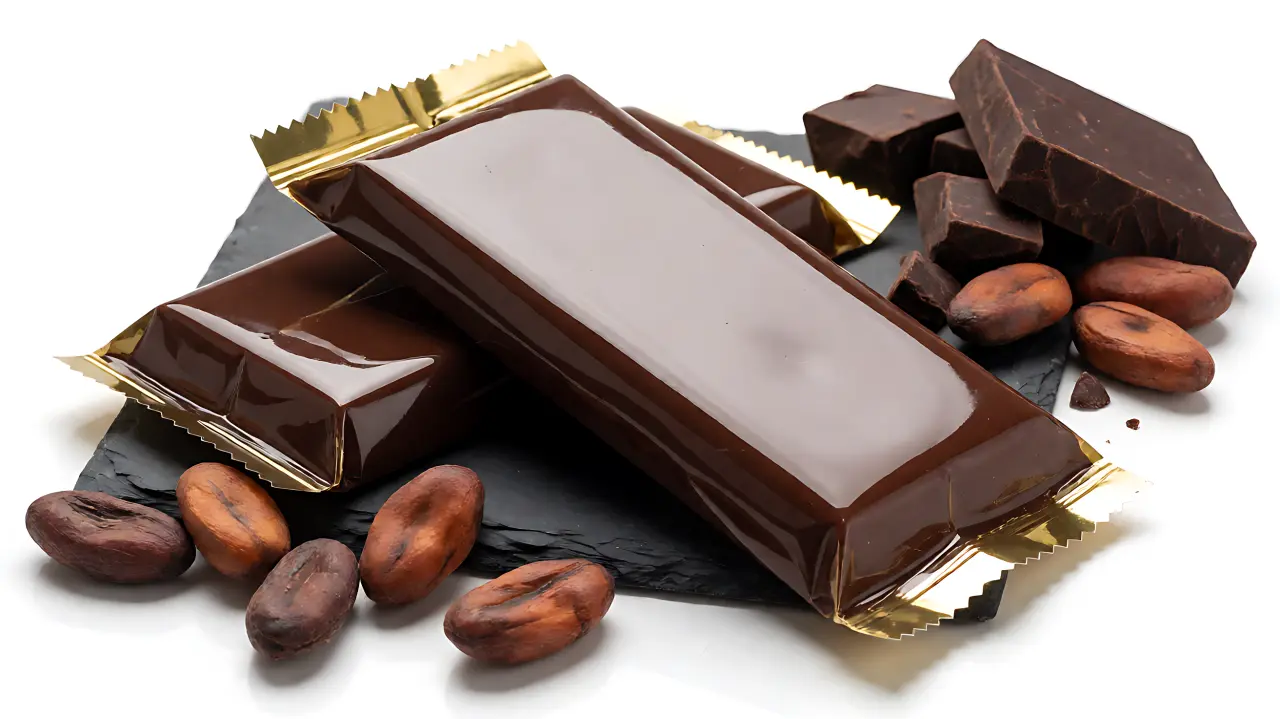
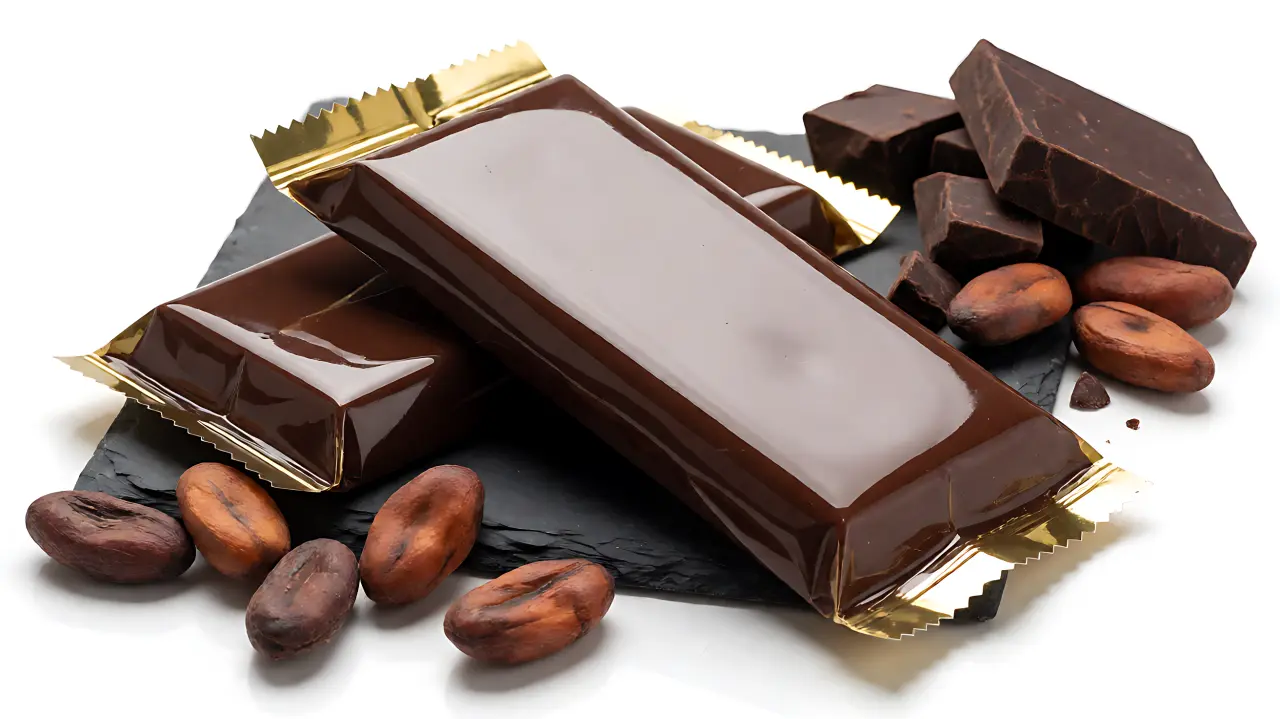
In horizontal form-fill-seal (HFFS) flow-wrapping, heat is the standard catalyst for creating hermetic package closures. However, when packaging heat-sensitive food products—such as enrobed chocolate bars, filled wafers, ice cream novelties, and soft bakery confectionery—thermal conductive sealing creates severe quality risks. Heat radiated from crimping jaws melts cocoa butter fractions ($T_m \approx 30^\circ\text{C} - 34^\circ\text{C}$), destroys product geometry, and causes fat bloom.
For high-speed flow-wrap lines, packaging engineers face a strategic choice between Cold Seal Adhesives (Cohesives) and Low-Initiation Heat Seal Films (SIT Polyolefins).
Mechanical Sealing Mechanisms
Cold Seal (Cohesive Contact)              Heat Seal (Thermal Fusion)
┌────────────────────────────────┐        ┌────────────────────────────────┐
│ Release Lacquer / Overprint    │        │ Print Layer / BOPP (20 µm)     │
├────────────────────────────────┤        ├────────────────────────────────┤
│ Substrate: White Cavitated BOPP│        │ Barrier: Metallized Cast PP    │
├────────────────────────────────┤        ├────────────────────────────────┤
│ Pattern-Applied Cold Seal      │        │ Coextruded Low-SIT PE/PP       │
└────────────────────────────────┘        └────────────────────────────────┘
       ▼ Mechanical Pressure                     ▼ Heat + Mechanical Pressure
┌────────────────────────────────┐        ┌────────────────────────────────┐
│ Cohesive Bonding (No Heat)     │        │ Molten Polymeric Interdiffusion│
└────────────────────────────────┘        └────────────────────────────────┘
1. Cold Seal Technology (Cohesives)
Cold seal coatings are formulated from natural rubber latex (NRL) or synthetic aqueous acrylic emulsions blended with tackifying resins.
- Selective Adhesion: Cold seal adhesives exhibit purely cohesive affinity—they adhere strongly to themselves under mechanical pressure ($0.2 - 0.4\text{ MPa}$), but will not stick to the unprinted film surface or the packaged food.
- Release Lacquer Necessity: When rollstock is wound onto parent reels, the cold seal pattern on the inner face contacts the outer reverse-printed film. To prevent reel blocking (layers sticking together), a high-slip release lacquer (polyamide or cross-linked acrylic) or specialized release film is printed directly opposite the cold seal zone.
- Operating Speed: Eliminating thermal dwell time enables line speeds exceeding $400\text{ to }1,200\text{ packs per minute}$ on modern servo-driven flow wrappers.
2. Heat Seal Technology (Thermal Fusion)
- Polymer Chain Interdiffusion: Requires heating a sealant layer (such as metallized CPP or metallocene LLDPE) above its melting point ($90^\circ\text{C} - 125^\circ\text{C}$), holding it under jaw pressure to allow molten polymer chains to cross the interface, and cooling under pressure.
- Throughput Bottleneck: Dwell time ($80 - 250\text{ ms}$) limits machine cycle speeds. Heat transfer through the outer substrate often restricts chocolate packaging lines to below $250\text{ packs per minute}$.
For related barrier film sealing comparisons, explore our guide on CPP vs PE sealant films and stand-up pouch structures.
Engineering Comparison: Cold Seal vs. Heat Seal
| Technical Parameter | Cold Seal Formulation (Latex/Synthetic) | Low-SIT Heat Seal Film (mPE/mPP) | Evaluation Method |
|---|---|---|---|
| Sealing Temperature | Ambient ($15^\circ\text{C} - 25^\circ\text{C}$) | $95^\circ\text{C} - 130^\circ\text{C}$ | ASTM F88 |
| Line Speed (HFFS) | $350 - 1,200\text{ packs/min}$ | $120 - 300\text{ packs/min}$ | Line Throughput |
| Immediate Bond Strength | $2.5 - 4.5\text{ N}/15\text{mm}$ (Cohesive break) | $6.0 - 15.0\text{ N}/15\text{mm}$ (Fused weld) | ASTM F88 |
| Seal Hermeticity (Bubble) | Moderate ($< 15\text{ kPa}$ test limit) | High ($> 40\text{ kPa}$ hermetic) | ASTM D3078 |
| Blocking Resistance | Dependent on release lacquer cure | Intrinsic to outer film slip | EN 13676 |
| Shelf Life of Rollstock | 6 - 9 Months (Latex oxidation) | 18 - 24 Months | Controlled RH / Temp |
| Allergen Considerations | Latex-free synthetics available | None (Polyolefin) | FDA / EU 10/2011 |
Rollstock Blocking Dynamics & Tension Control
Because cold seal coatings are permanently pressure-sensitive, improper rewind tension or warehouse storage generates catastrophic reel blocking:
$$P_{\text{core}} = \frac{T}{w \cdot r}$$
Where:
- $P_{\text{core}}$: Radial compressive pressure exerted across reel layers.
- $T$: Film web winding tension (N).
- $w$: Web width (m).
- $r$: Current roll radius (m).
To prevent cold seal transfer onto the outer graphic surface:
- Tapered Tension Winding: Slitter-rewinders must program an 8% to 15% progressive tension taper from core to outside diameter, preventing excessive pressure near the core.
- Pattern Register Accuracy: Cold seal adhesives are applied via gravure cylinders exclusively along the fin-seal and end-crimp margins (typically $8 - 15\text{mm}$ bands). Maintaining register tolerance within $\pm 0.5\text{mm}$ prevents adhesive intrusion into product pocket areas.
- Storage Conditions: Unused rollstock must be stored at $18^\circ\text{C} - 22^\circ\text{C}$ and $40% - 55%,\text{RH}$. Exposure to warehouse ambient temperatures exceeding $35^\circ\text{C}$ initiates latex crosslinking, degrading bond strength by up to 60%.
Selecting the Optimal Sealing Architecture
- Choose Cold Seal Flow-Wrap: When packaging solid chocolate bars, praline assortments, ice cream bars, or confectionery items where zero thermal transfer is mandatory, and where high-speed continuous packaging lines ($> 400\text{ ppm}$) demand maximum return on investment.
- Choose Heat Seal Barrier Pouches: For products requiring extended 18+ month modified atmosphere shelf life, nitrogen flushing, or structural reclosability, where flat bottom bags or side gusset pouches deliver rigid shelf presence.
Consult CraftPack Global to engineer precision-patterned gravure cold seal rollstock with certified food-contact compliant release lacquers tailored to your automated HFFS equipment.