
Coffee Degassing Valve Physics: Membrane Seals & Hydrophobic Guide
Freshly roasted whole-bean coffee releases between 2 and 6 liters of carbon dioxide ($CO_2$) gas per kilogram over the first several weeks post-roast, a natural consequence of the Strecker degradation and caramelization reactions that occur inside the roaster drum.
If packaged in an airtight hermetic barrier pouch without ventilation, internal pressure will balloon the package to catastrophic burst failure within 48 to 72 hours. Conversely, venting the pouch with open micro-perforations permits atmospheric oxygen ($O_2$) and ambient moisture to enter, oxidizing volatile aromatic terpenes and turning delicate specialty coffees stale in days.
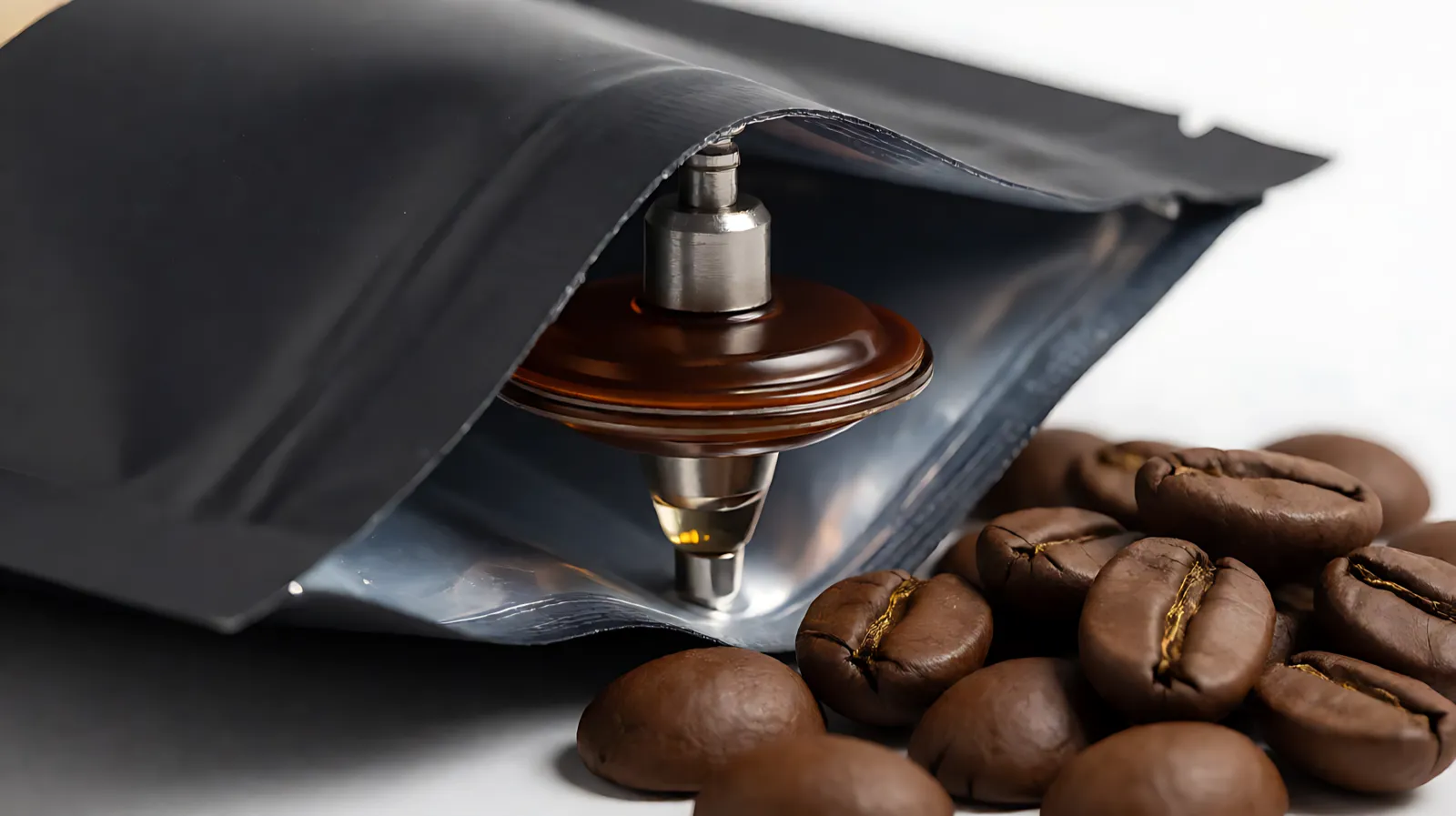
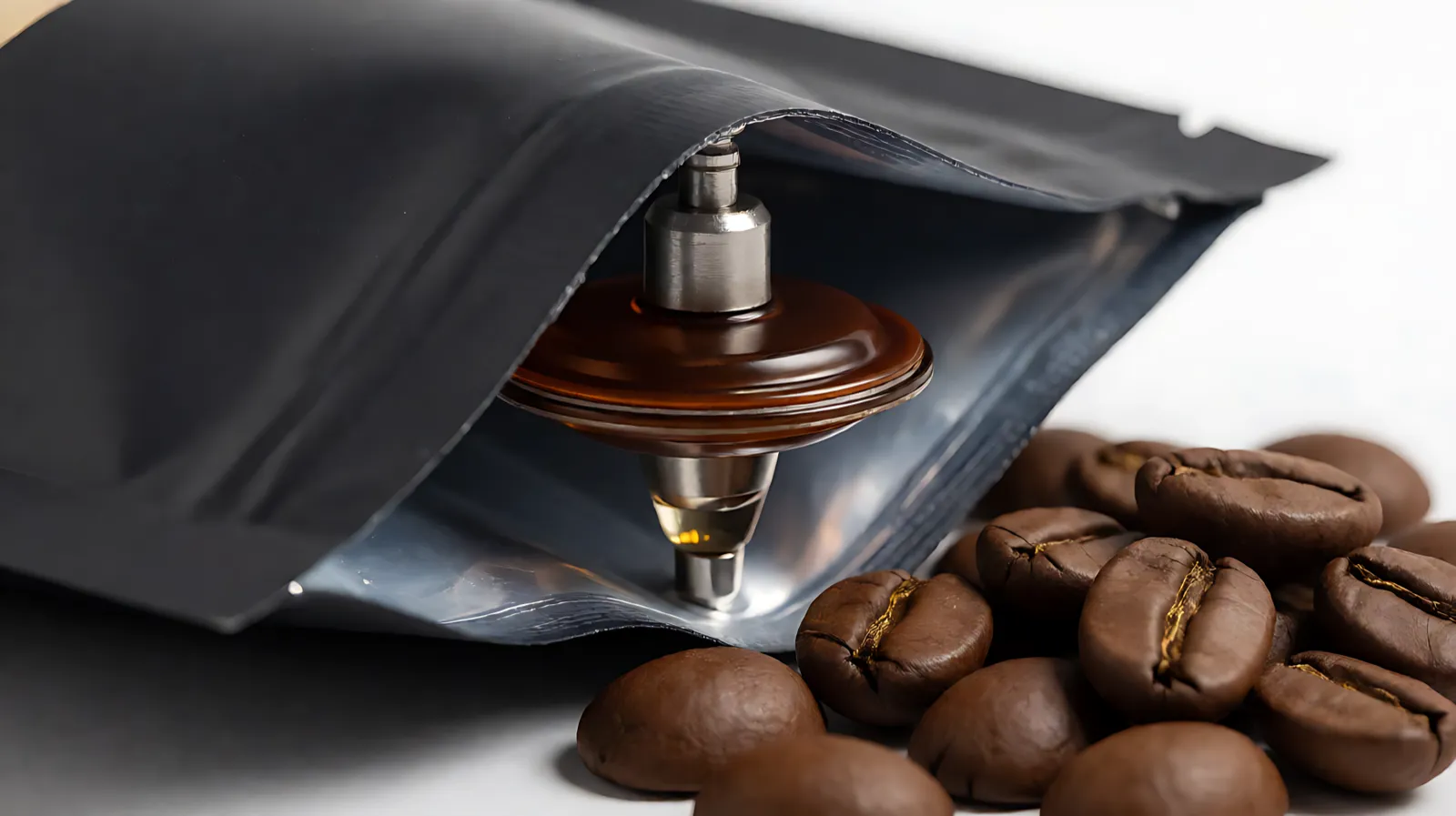
The solution is the one-way degassing valve. While outwardly simple, a commercial degassing valve is a precision micro-fluidic check valve. Its operation relies on fluid surface tension, elastomeric diaphragm mechanics, and calibrated cracking/closing pressures.
This technical guide deconstructs the internal physics of coffee degassing valves, examining diaphragm elastomeric memory, silicone oil capillary sealing, particulate filter membranes, and aroma loss kinetics.
1. Quick Engineering Benchmark Matrix: Valve Types & Operational Specifications
| Valve Engineering Metric | Button Valve with Silicone Oil | Dry Membrane Valve (Oil-Free) | Thermal Peel-and-Stick Valve | Integrated Ultrasonic Filter Valve |
|---|---|---|---|---|
| Sealing Fluid Medium | High-viscosity silicone fluid (500–1,000 cSt) | Dry elastomeric contact | Viscous liquid bead | Specialized hydrophobic coating |
| Cracking (Opening) Pressure | 3.0 to 7.0 mbar (300–700 Pa) | 8.0 to 18.0 mbar | 5.0 to 12.0 mbar | 2.5 to 5.0 mbar |
| Reseal (Closing) Pressure | 1.0 to 3.0 mbar (Tight shut-off) | 4.0 to 10.0 mbar (Risk of late seal) | Variable | 1.0 to 2.0 mbar |
| Reverse Infiltration Leak Rate (Oxygen backflow @ 20 mbar diff) |
< 0.02 cc O₂ / 24 hrs (Near-zero) | 0.15 to 0.40 cc O₂ / 24 hrs | 0.20 to 0.60 cc O₂ / 24 hrs | < 0.03 cc O₂ / 24 hrs |
| Particulate Filter Membrane | Non-woven PP / PET filter mesh | Integrated synthetic disc | Often lacks fine filter | High-density porous sinter |
| Aroma Volatile Retention Index | > 94% (Only vents excess gas) | 85% to 90% | 80% to 88% | > 95% |
| Application Method | Heat / Ultrasonic weld to inner web | Heat seal / Pressure adhesive | External label applicator | Direct rollstock ultrasonic weld |
| Recyclability Compatibility | Polyethylene or Polypropylene body | PE monomaterial | Mixed label plastic | Compatible with Mono-PE / Mono-PP |
Explore compatible coffee packaging structures across our Stand-Up Pouches Category and Flat Bottom Bags Category.
2. Anatomy & Micro-Fluidic Physics of the Oil Seal
A standard button degassing valve comprises four micro-engineered components housed in an injection-molded polyethylene (PE) or polypropylene (PP) body:
┌────────────────────────────────────────────────────────────────────────┐
│             ANATOMY OF A PRECISION ONE-WAY DEGASSING VALVE             │
│                                                                        │
│                Atmospheric Oxygen (O2) Blocked Outside                 │
│                                   │                                    │
│       ┌───────────────────────────┴───────────────────────────┐        │
│       │               Outer Valve Cap (Venting Orifice)       │        │
│       ├───────────────────────────────────────────────────────┤        │
│       │   ═══ Diaphragm (Silicone / EPDM Rubber Disc) ═══    │        │
│       │       ░░░ Food-Grade Silicone Sealing Oil ░░░         │        │
│       ├───────────────────────────────────────────────────────┤        │
│       │            Valve Base Plate & Annular Sealing Ring    │        │
│       ├───────────────────────────────────────────────────────┤        │
│       │        Non-Woven Particulate Filter Membrane Mesh     │        │
│       └───────────────────────────┬───────────────────────────┘        │
│                                   │                                    │
│                 Pressurized CO2 Gas from Coffee Beans                  │
└────────────────────────────────────────────────────────────────────────┘
The Role of Viscous Silicone Sealing Oil
Why can’t a simple dry rubber flap provide an airtight seal? At the microscopic level, even highly polished injection-molded plastics exhibit surface roughness with peak-to-valley micro-asperities ($R_a \approx 0.2$ to $0.8\text{ µm}$). A dry rubber diaphragm resting on dry plastic creates hundreds of microscopic interfacial channels through which small oxygen molecules ($O_2$, kinetic diameter 346 pm) can infiltrate back into the package.
To create an absolute hermetic seal, valve manufacturers apply a micro-droplet (~5 to 10 milligrams) of high-viscosity, food-grade polydimethylsiloxane (silicone oil) between the elastomeric diaphragm and the valve base:
- Capillary Adhesion: The liquid silicone oil wets both surfaces completely, filling all microscopic valleys through capillary action and forming a liquid meniscus seal.
- Laplace Pressure Differential: Surface tension creates an interfacial barrier that resists reverse atmospheric gas ingress up to high pressure differentials.
- Low-Friction Release: When internal $CO_2$ pressure builds up, the oil acts as a lubricious hydraulic release medium, allowing the rubber diaphragm to lift smoothly without sticking or tearing.
3. The Degassing Cycle: Cracking vs. Closing Pressure
The valve functions as a pressure-actuated relief cycle dictated by fluid statics:
┌────────────────────────────────────────────────────────────────────────┐
│                      THE 3-STAGE DEGASSING CYCLE                       │
├───────────────────┬────────────────────┬───────────────────────────────┤
│ 1. SEALED AT REST │ 2. PRESSURE RELIEF │ 3. SNAP-BACK RESEALING        │
├───────────────────┼────────────────────┼───────────────────────────────┤
│    P_int < P_crack│    P_int ≥ P_crack │    P_int drops to P_close     │
│                   │                    │                               │
│      Outside O2   │       CO2 Gas      │        Elastic Diaphragm      │
│      ──────────   │       ↑ ↑ ↑        │        Snaps Back Down        │
│      ══════════   │     ╭────────╮     │        ═════════════════      │
│     [ Oil Meniscus│     │ Venting│     │       [ Oil Ring Reformed ]   │
│       Intact ]    │     │ Slit   │     │                               │
│      ──────────   │     ╰────────╯     │        Outside Air Cannot     │
│     Internal CO2  │   Excess CO2 vents │        Enter Before Reseal    │
│     Generating    │   harmlessly out   │                               │
└───────────────────┴────────────────────┴───────────────────────────────┘
1. Stage 1: Closed State ($P_{internal} < P_{cracking}$)
Immediately after bagging, the pouch is flushed with nitrogen ($N_2$) to reduce residual oxygen below 0.5% (see our Nitrogen Flushing vs Degassing Valves Guide). As the coffee off-gases, internal pressure rises. The valve remains closed because internal pressure has not yet exceeded the surface tension of the oil meniscus and the spring-back force of the rubber disc.
2. Stage 2: Cracking Actuation ($P_{internal} \ge P_{cracking}$)
When internal pressure reaches 3.0 to 7.0 mbar (~0.05 to 0.1 psi), the upward pneumatic force overcomes the capillary meniscus. The elastomeric disc bows upward in the center, unsealing the perimeter and allowing excess $CO_2$ to vent harmlessly through the cap orifice into the atmosphere.
3. Stage 3: Instant Resealing ($P_{internal} = P_{closing}$)
As $CO_2$ vents, internal pressure drops. Before internal pressure equalizes with ambient atmospheric pressure ($P_{atm}$), the disc snaps back into the liquid oil layer at 1.0 to 3.0 mbar. This positive pressure differential ensures that atmospheric oxygen is never drawn into the package.
4. Particulate Filter Mesh & Coffee Dust Blinding
Specialty ground coffee generates fine particulate dust (“fines”) with particle diameters ranging from 15µm to 75µm.
If fine coffee dust reaches the valve chamber, particles become trapped in the silicone oil layer between the diaphragm and baseplate. A single 40µm particulate propping open the rubber disc breaks the liquid meniscus, creating an open conduit for oxygen to enter the pouch and spoil the coffee.
Non-Woven Synthetic Filter Engineering:
High-performance coffee valves incorporate a porous non-woven filter membrane heat-sealed over the base intake:
- Pore Size Rating: Engineered with a mean flow pore rating of 10µm to 20µm, blocking ground coffee dust and oils while offering zero resistance to $CO_2$ gas molecules.
- Hydrophobic / Oleophobic Treatment: Treated with fluoropolymer-free surface tension modifiers that repel natural coffee lipids, preventing coffee oils from saturating the filter matrix.
For welding process parameters on coffee bags, review our Coffee Valve Insertion: Thermal vs Ultrasonic Guide.
5. Valve Placement Geometry on Coffee Pouches
Where the valve is installed on the pouch directly influences off-gassing efficiency and packing line yield:
┌─────────────────────────────────────────────────────────────────────────┐
│               RECOMMENDED VALVE PLACEMENT DIMENSIONS                    │
│                                                                         │
│        ╭───────────────────────────────────────────╮                    │
│        │        Top Heat Seal Line (15mm)          │                    │
│        │───────────────────────────────────────────│                    │
│        │        Optional Zipper Profile            │                    │
│        │───────────────────────────────────────────│                    │
│        │                                           │                    │
│        │              (  VALVE  )                  │ ◄── 25mm to 35mm   │
│        │               CENTERED                    │     below zipper   │
│        │                                           │                    │
│        │                                           │                    │
│        │         Coffee Bean Fill Level            │ ◄── Above product  │
│        │       (Clear Headspace Cavity)            │     fill shoulder  │
│        │                                           │                    │
│        │                                           │                    │
│        ╰───────────────────────────────────────────╯                    │
└─────────────────────────────────────────────────────────────────────────┘- Headspace Clearance: The valve must sit centered horizontally and 25mm to 35mm below the zipper or top seal. Placing the valve directly into the coffee fill zone causes coffee beans to press against the valve during carton packing, risking mechanical distortion of the diaphragm.
- Pouch Front vs. Back: Premium roasters prefer installing the valve on the back panel or inside a side gusset to preserve uninterrupted front branding graphics.
- Carton Palletizing Relief: When coffee bags are stacked 5 layers high in shipping cartons, pallet compression squeezes the bags. Calibrated low cracking pressure (3 to 5 mbar) allows the valve to vent air instantly under stacking loads without popping seam seals.
6. Frequently Asked Questions (FAQ)
Can consumers smell the coffee through the valve?
Yes, but only during active degassing or when the bag is gently squeezed. When a consumer squeezes the bag, they raise internal pressure above cracking threshold (5 mbar), venting a puff of $CO_2$ carrying coffee aroma volatiles. In resting state, the oil seal prevents aroma evaporation.
Are coffee degassing valves recyclable with mono-PE pouches?
Yes, provided the valve body is injection-molded from pure Polyethylene (HDPE/LDPE). Under CEFLEX guidelines, a mono-PE pouch with a PE valve body can be recycled in the Code 4 stream. The miniature silicone disc and micro-droplet of oil represent less than 0.2% of the package weight and are filtered out during standard wash cycles.
What causes a degassing valve to fail in retail?
The two most common failure modes are: (1) Contamination by coffee dust due to a missing or damaged particulate filter, and (2) Over-heating during valve welding, which distorts the valve baseplate and prevents the flat diaphragm from seating properly.
To configure custom valve locations, specify recyclable mono-material valves, or order sample pouches, contact CraftPack Global’s packaging engineering team today.