
Child-Resistant Packaging for Detergent Pods: Safety Guide
The rise of concentrated single-dose laundry detergent pods and dishwasher tablets has provided consumers with unparalleled household convenience. However, these water-soluble polyvinyl alcohol (PVOH) capsules also introduced severe accidental poisoning risks. Because pods frequently feature bright, vibrant colors resembling candy or toys, thousands of young children were historically hospitalized annually after puncturing pods with their teeth.
In response, international regulators enacted strict packaging safety mandates. In the United States, the Consumer Product Safety Commission (CPSC) enforces the Poison Prevention Packaging Act (PPPA / 16 CFR 1700.20) and ASTM F3159. In the European Union and globally, authorities enforce ISO 8317: Child-Resistant Packaging.
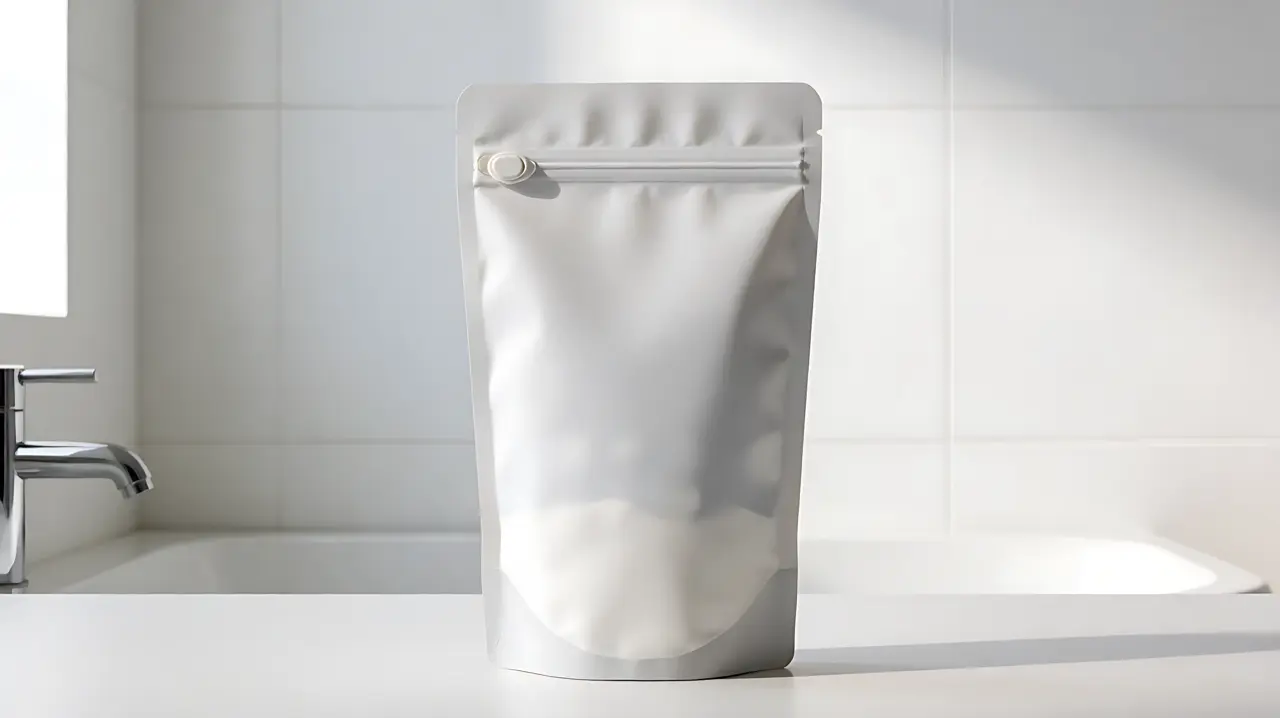
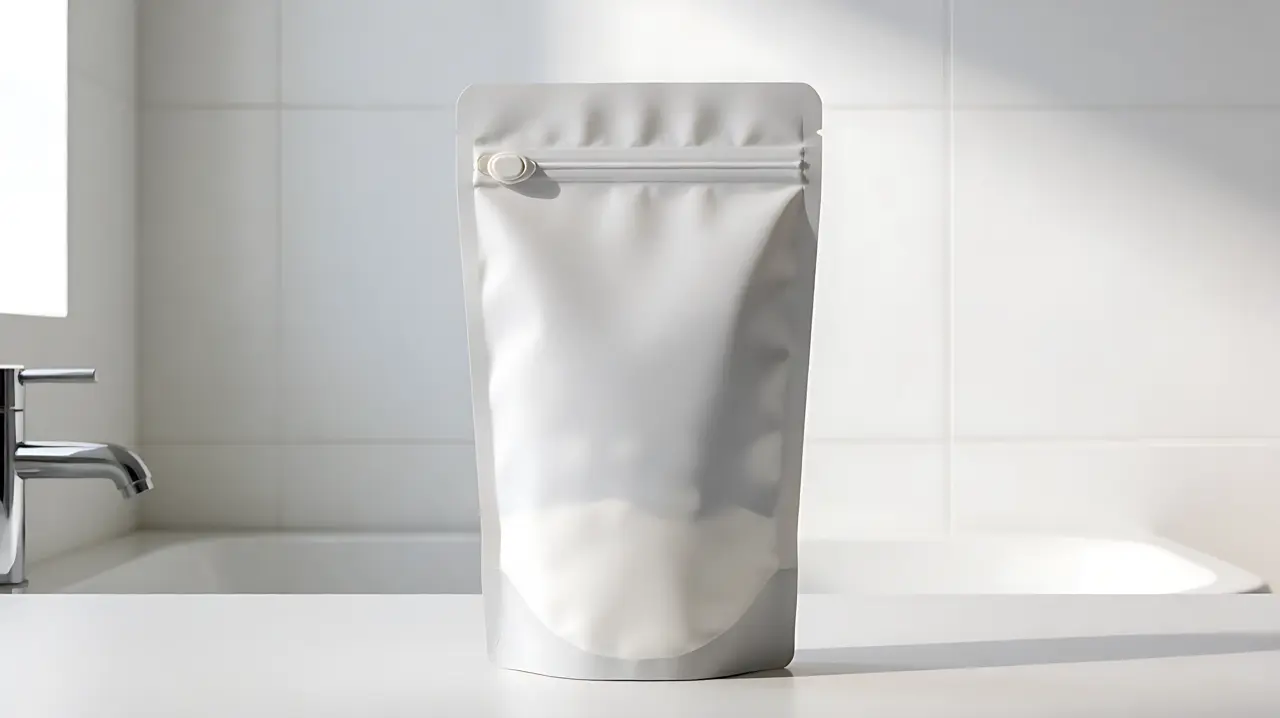
While rigid plastic tubs with locking latches initially served as the primary child-safe package, brands have increasingly transitioned to flexible stand-up pouches with certified Child-Resistant (CR) slider zippers. Flexible pouches consume up to 75% less plastic by weight, save shipping volume, and support mono-material circular recycling programs.
This engineering guide analyzes the mechanical lock designs, human panel testing protocols, opaque barrier film structures, and regulatory certifications required to market child-resistant flexible packaging for detergent pods and household chemicals.
1. Regulatory Testing Standards: The Dual-Panel Testing Protocol
Under both 16 CFR 1700.20 and ISO 8317, packaging cannot be claimed as “child-resistant” through laboratory computer simulations alone. It must be certified by an accredited third-party test house through rigorous testing with human test panels:
Child-Resistant Protocol (Human Test Panels):
Panel 1: Child Test Panel (Ages 42 to 51 Months)
[5-Min Test: No Demonstration] ──> [Silent Demonstration] ──> [5-Min Test: Full Attempt]
Passing Threshold: >= 85% of children FAIL to open before demo; >= 80% FAIL after demo.

Panel 2: Senior Adult Test Panel (Ages 50 to 70 Years)
[5-Minute Familiarization & Opening Test] ──> [1-Minute Reopening & Resealing Test]
Passing Threshold: >= 90% of senior adults MUST successfully open and properly reseal.| Regulatory Benchmark | Child Panel Requirements (42–51 Months) | Senior Adult Panel Requirements (50–70 Years) | Reclosability Requirement |
|---|---|---|---|
| US 16 CFR 1700.20 / ASTM D3475 | $\ge 85%$ fail to open within 5 min; $\ge 80%$ fail after demonstration |
$\ge 90%$ must successfully open and re-close package within 5 min (SAUE) | Mandatory: Must re-engage child resistance after multiple uses |
| ISO 8317 (International) | $\ge 85%$ fail to open in 5 min; $\ge 80%$ fail after 10 total min |
$\ge 90%$ can open in 5 min (Panel composed of 70% females, 30% males) | Mandatory: Continuous child resistance across full product lifecycle |
| ASTM F3159 (Liquid Laundry Pods) | Specifically mandates opaque, non-transparent barrier films | Evaluates ergonomic dexterity without requiring excessive grip strength | Prohibits decorative graphics resembling confectioneries |
For certified child-resistant closure options and custom flexible barrier pouches, explore our Stand-Up Pouches Category and specialized barrier packaging lines.
2. Mechanical Engineering: Child-Resistant Flexible Closure Systems
Children under 5 years old lack two primary developmental faculties: coordinated dual-action motor dexterity and the cognitive ability to follow sequential instructions (e.g., “press while sliding”). Child-resistant flexible pouches utilize closures that demand simultaneous disparate actions:
Common Child-Resistant Flexible Closures:
1. Push-and-Slide Slider:          2. Hidden Dual-Grip Pinch-and-Pull:
┌────────────────────────────┐    ┌────────────────────────────┐
│ [▼ Push Button] ──> [Slide]│    │ [Tab 1 Front]              │
│ Internal cam disengages    │    │              [Tab 2 Back]  │
│ tracks only when depressed │    │ Pulling opposing hidden tabs│
└────────────────────────────┘    └────────────────────────────┘
1. Push-and-Slide Mechanical Sliders
- Operation: A hard molded polyolefin slider rides along an interlocking profile. A protruding internal plastic locking pin drops into a recess in the end-clip.
- The Child Barrier: Sliding the clasp horizontally does nothing—the slider remains mechanically deadlocked. To open, an adult must firmly depress a release tab on top of the slider with their thumb while simultaneously exerting lateral pulling force with their other fingers.
- Senior Friendly: Older adults with arthritis can easily actuate the mechanism because it requires minimal fingertip pinching force once the release button is depressed.
2. Hidden Dual-Grip Pinch-and-Pull Zippers
- Operation: A press-to-close zipper profile with internal locking hooks is welded to the pouch walls. Two separate grip flaps are engineered inside the top hem—one offset by 20mm from the other.
- The Child Barrier: If a child pulls on the top edge of the bag, the zipper teeth bind tighter. Opening requires reaching inside the recessed flap, pinching the hidden interior tab with the left hand, and pulling the front lip with the right hand.
- Cost Advantage: Eliminates the rigid molded plastic slider clip, allowing the zipper to be fed as a continuous ribbon on high-speed pouch-making machines, reducing unit manufacturing cost by up to 35%.
3. Barrier Film Architecture: Opaque Shielding & Puncture Resistance
For liquid laundry detergent pods, the flexible pouch must satisfy both chemical resistance and child cognitive deterrence:
Multi-Layer Laminate Structure for Detergent Pod Pouches:
[Matte BOPP or PET 12µm]  <-- Scratch-Resistant Print Layer
[PU Solventless Adhesive]  <-- Chemical Resistance Tie Layer
[White Opaque PE or Met-PET]<-- 100% Optical Opacity (Hides pods from view)
[High-Density mLLDPE 90µm]<-- Drop & Puncture Resistance; ESCR Sealant- Mandatory Visual Opacity (ASTM F3159): Regulatory standards strictly ban transparent display windows on liquid detergent pod packaging. The pouch must be 100% opaque, preventing children from seeing the colorful, liquid-filled capsules inside. Opacity is typically achieved by adding 8% to 12% titanium dioxide ($TiO_2$) white masterbatch to the sealant film or by incorporating an internal metallized PET (VMPET) barrier layer.
- Environmental Stress Crack Resistance (ESCR): Concentrated liquid detergents contain aggressive non-ionic surfactants, enzymes, and fragrances that rapidly plasticize and stress-crack standard low-density polyethylenes. The inner sealant layer must be formulated with metallocene linear low-density polyethylene (mLLDPE) or cyclic olefin copolymers (COC) to resist chemical degradation.
- Moisture Vapor Barrier (PVOH Protection): Detergent pods are encapsulated in water-soluble polyvinyl alcohol (PVOH) film, which dissolves instantly in water. If atmospheric humidity penetrates the package, pods will stick together and rupture inside the pouch. The pouch laminate must deliver a Water Vapor Transmission Rate (WVTR) below 1.0 g/m²/day.
4. Ultrasonic Welding of Thick CR Zippers
Standard flexible pouch zippers measure 8mm to 10mm in profile width. In contrast, heavy-duty child-resistant zippers measure 15mm to 22mm wide and feature thicker structural flanges:
- Thermal Sealing Limitations: Traditional heated conductive seal bars struggle to melt the thick zipper flanges without overheating and scorching the outer 12µm PET print film.
- Ultrasonic Crush Sealing (Side Gussets): At the side seals where the zipper meets the pouch perimeter, four layers of heavy film plus the thick zipper profile must be hermetically fused. Ultrasonic sonotrodes operating at 20 kHz deliver localized acoustic energy, crushing the zipper profile flat and welding the perimeter without pinholes or capillary leakage channels.
5. Labeling, Graphic Warning & Child Deterrence Standards
In addition to certified physical closures, child-resistant chemical packaging must comply with standardized safety communication:
- Standardized Warning Icons: The front panel must display the internationally recognized yellow-and-black CPSC warning triangle and the “Keep Out of Reach of Children” graphic icon.
- Pictorial Opening Instructions: Clear three-step instructional diagrams illustrating the push-and-slide or pinch-and-pull mechanism must be printed immediately adjacent to the zipper closure to ensure seniors and non-native language speakers can open and properly reclose the package.
6. Sourcing & Regulatory Compliance Checklist
When procuring child-resistant flexible packaging for detergent pods, cannabis edibles, or household chemicals, require your manufacturing partner to provide:
- Accredited Test Certificate: A full ISO 8317 / 16 CFR 1700.20 certificate issued by an accredited laboratory (e.g., Perritt Laboratories or IVM) proving both child and senior adult pass rates.
- Lifecycle Reclosability Data: Evidence that the closure retains child resistance through at least 20 to 50 open-close cycles (simulating consumer use over several months).
- Total Light Opacity: Transmission spectrophotometer data confirming < 1.0% optical transmittance across the 380–750 nm visible light spectrum.
- Drop Integrity (ASTM D5276): Verification that pouches filled to full net weight survive 1.8m free-fall drop impacts without zipper bursting or seam failure.
To engineer custom child-resistant flexible barrier pouches with certified safety closures for your chemical or CPG line, contact the CraftPack Global packaging safety engineering team.