
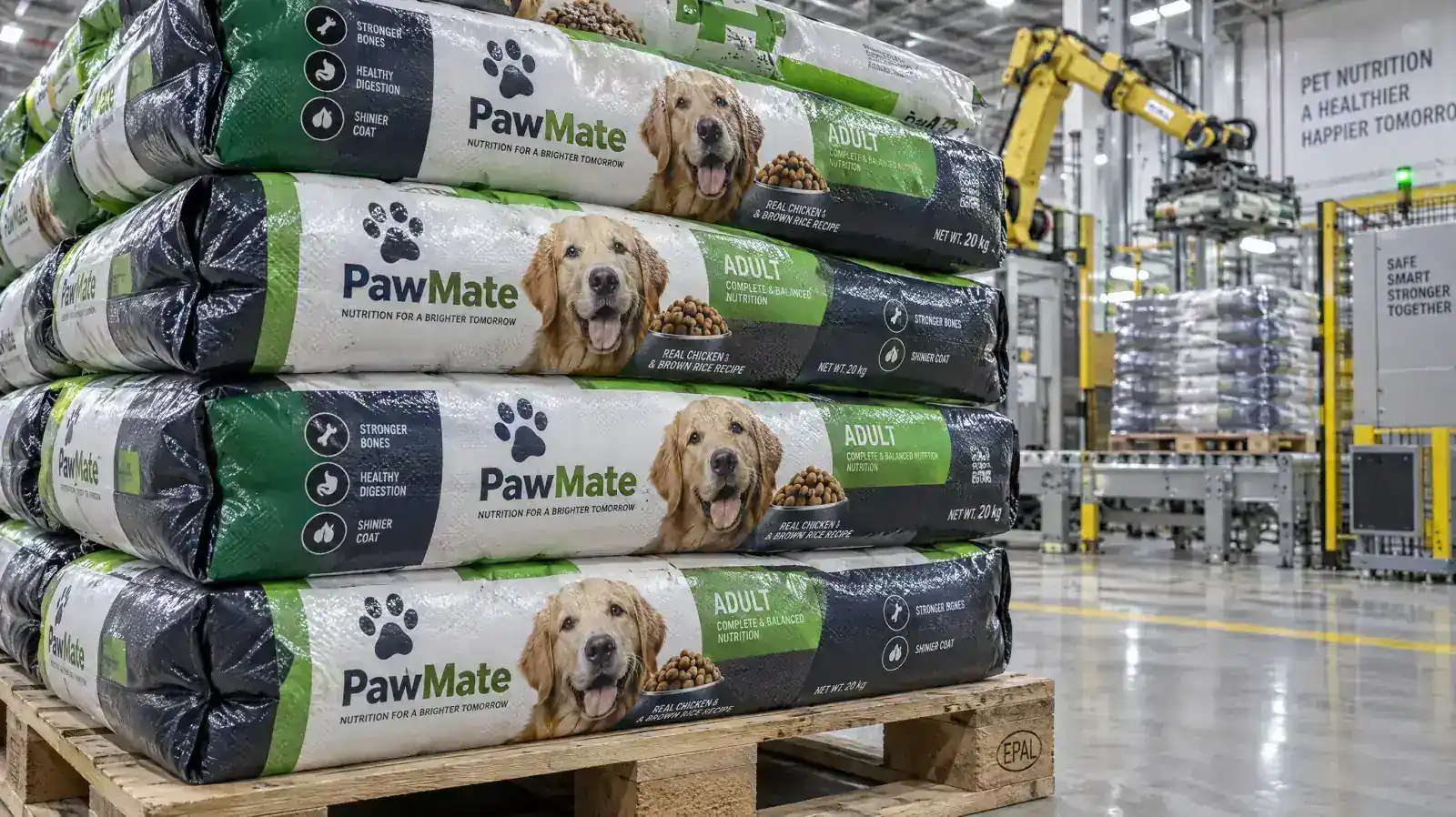
BOPP Woven Polypropylene Sacks: Palletizing & Anti-Slip Guide
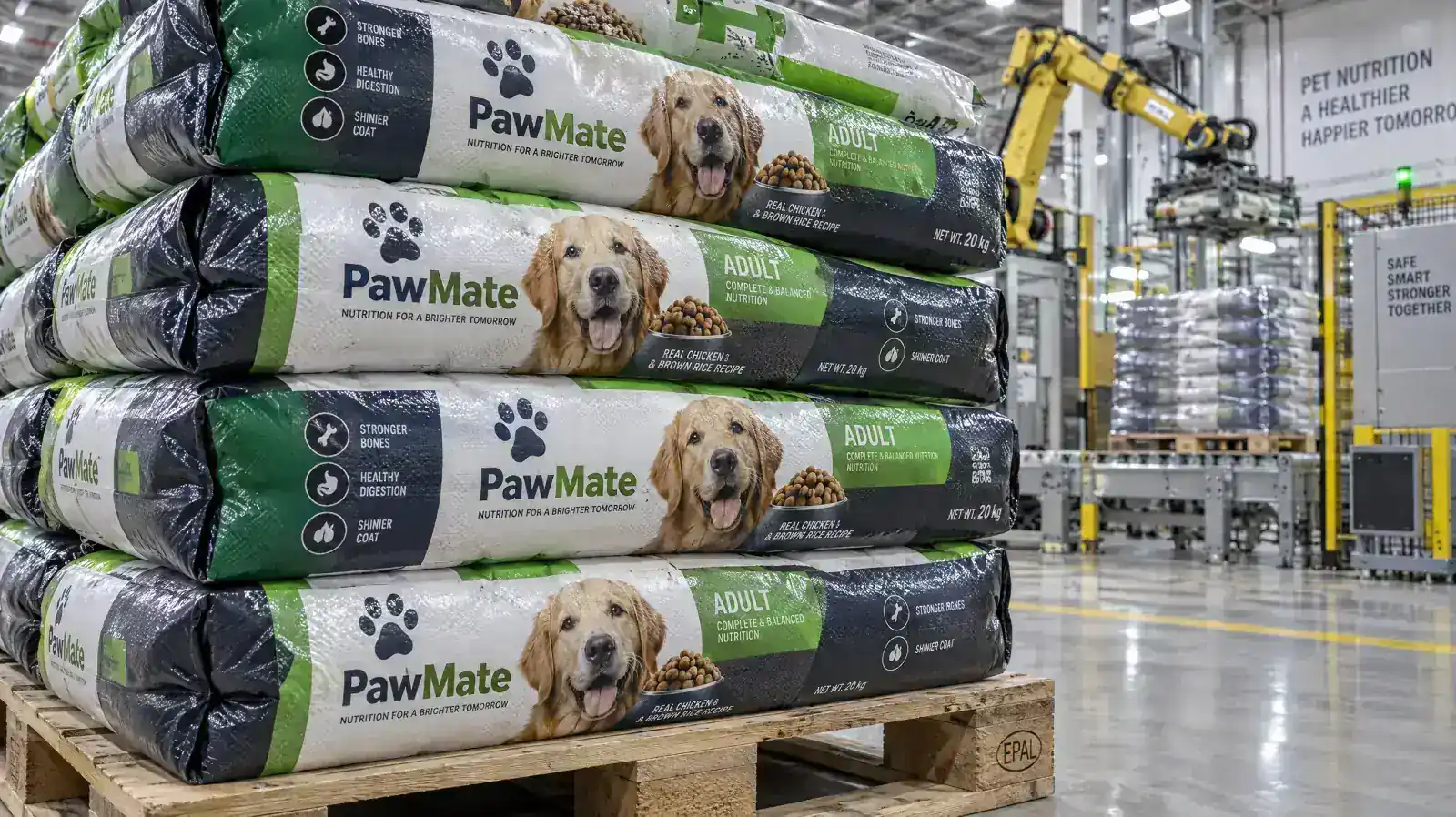
In heavy-duty bulk packaging—spanning 15 kg to 50 kg animal feeds, premium pet kibble, agricultural grains, fertilizer prills, and plastic masterbatch resins—the BOPP laminated woven polypropylene (WPP) sack has largely superseded multi-wall kraft paper bags and unlaminated woven sacks.
By combining the extreme tensile load-bearing capacity of circular-woven polypropylene tape with the photographic shelf appeal of reverse-printed biaxially-oriented polypropylene (BOPP) film, converters achieve 100% moisture barrier protection, rot-proof outdoor durability, and rotogravure print brilliance.
However, packaging engineers often face a serious warehouse challenge: pallet stack instability (the “avalanche effect”). High-gloss reverse-printed BOPP film naturally exhibits a very low Coefficient of Friction (COF). When 40 to 50 heavy bags are stacked on a pallet, forklift braking, rapid cornering, or ocean container rocking can cause the entire pallet to slide apart.
This engineering guide examines surface friction physics (ASTM D1894), anti-skid coating technologies, de-aeration micro-perforations, and high-density palletizing patterns.
1. Quick Engineering Benchmark Matrix
| Performance Attribute | Standard Gloss BOPP / WPP | Anti-Skid Coated BOPP / WPP | Embossed Matte BOPP / WPP | Multi-Wall Kraft Paper Sack |
|---|---|---|---|---|
| Static COF (ASTM D1894) | Low: 0.25 – 0.35 (Slippery) | High: 0.50 – 0.65 | Superior: 0.55 – 0.70 | Moderate: 0.40 – 0.50 |
| Pallet Slide Angle (Tilt Test) | Slides at 14° – 18° | Stable to 28° – 34° | Stable to 30° – 36° | Stable to 22° – 26° |
| Moisture / Water Barrier | 100% waterproof exterior | 100% waterproof exterior | 100% waterproof exterior | Vulnerable to rain & damp |
| De-Aeration Mechanism | Traps air unless perforated | Cold-needle micro-perforations | Labyrinth or micro-pore vent | Natural porous paper bleed |
| Tensile Strength (Grab Method) | > 900 N warp / > 900 N weft | > 900 N warp / > 900 N weft | > 900 N warp / > 900 N weft | 450 N – 650 N |
| Graphic Print Resolution | 150–175 lpi gravure photo | 150–175 lpi gravure photo | Ultra-luxurious matte photo | Limited flexo (85–110 lpi) |
Compare bulk options with our Custom BOPP Laminated PP Woven Bags and Pet Food Packaging Guide.
2. Lamination Architecture: Three Functional Layers
A BOPP woven sack is not a single plastic sheet—it is an engineered three-component composite:
┌────────────────────────────────────────────────────────────────────────┐
│             BOPP WOVEN POLYPROPYLENE COMPOSITE ARCHITECTURE            │
├───────┬────────────────────────────────────────────────────────────────┤
│ LAYER │ MATERIAL & FUNCTION                                            │
├───────┼────────────────────────────────────────────────────────────────┤
│ Outer │ 18µm – 25µm Biaxially Oriented Polypropylene (BOPP) Film       │
│       │ • Reverse-printed with 8–10 color rotogravure inks on inside   │
│       │ • Protected from scuffing, scratches, and rain wash            │
├───────┼────────────────────────────────────────────────────────────────┤
│ Core  │ 15 – 22 GSM Extruded Molten Polypropylene (PP) Tie Resin       │
│       │ • High-temperature bonding agent fusing film to fabric         │
│       │ • Fills interstices between woven tapes, sealing pinholes      │
├───────┼────────────────────────────────────────────────────────────────┤
│ Base  │ 65 – 90 GSM Circular Woven Polypropylene Tubular Fabric        │
│       │ • Slit-tape weave (10x10 to 12x12 tape count per sq inch)      │
│       │ • Delivers massive hoop tensile strength (burst load > 40 bar) │
└───────┴────────────────────────────────────────────────────────────────┘
The reverse printing protects ink layers inside the laminate sandwich. Even if sacks scrape against coarse warehouse concrete or pallet edges, brand graphics remain pristine.
3. Friction Physics: Eliminating Pallet Avalanche
PALLET SHEAR FORCE DYNAMICS
               W * sin(θ) [Shear Force Sliding Down]
               ◄────────
                 ┌──────┐
               / │ SACK │
              /  └──────┘
             /        ▲
            /         │ Normal Force: W * cos(θ)
           / θ        ▼
          /═════════════════════ Friction Force = μ * N
         Pallet Incline Angle (θ)
To prevent sliding during sudden forklift acceleration or transit tilt, the static coefficient of friction ($\mu_s$) must satisfy: $$\mu_s \ge \tan(\theta)$$
For a standard forklift turning speed, dynamic forces can simulate a tilt angle of 25 degrees ($\tan 25^\circ \approx 0.466$). Standard gloss BOPP film with $\mu_s \approx 0.30$ slides immediately.
Anti-Slip Engineering Technologies
- Registered Anti-Skid Varnish: An overprint lacquer containing microscopic silicate particles or synthetic rubber polymers applied across the sack face and back, increasing static COF to 0.55 – 0.65.
- Mechanical Micro-Embossing (Diamond / Pebble Grip): Steel embossing rollers impart a raised geometric cross-hatch pattern on the film surface during extrusion, providing physical mechanical interlocking between stacked bags.
- Exposed Woven Strip (Gusset Exposure): Leaving side gussets or the back panel unlaminated allows the natural high-friction woven PP texture to grip neighboring bags.
4. De-Aeration Engineering: Micro-Perforations vs. Powder Weeping
When high-speed automated bagging carousels fill 25 kg of powder, fine pellets, or kibble, a massive volume of air is forced into the sack along with the product. If trapped, this air creates a “balloon sack” that refuses to lay flat on a pallet.
┌────────────────────────────────────────────────────────────────────────┐
│                   AIR EVACUATION VS POWDER CONTAINMENT                 │
├───────────────────────────────────┬────────────────────────────────────┤
│     UNPERFORATED SACK (FAIL)      │   ENGINEERED MICRO-VENTING (PASS)  │
├───────────────────────────────────┼────────────────────────────────────┤
│                                   │                                    │
│             ╭──────╮              │             ┌──────┐               │
│          /            \           │             │ SACK │               │
│         | TRAPPED AIR  |          │             └──────┘               │
│          \  BALLOON   /           │               │  │  │ Air escapes  │
│             ╰──────╯              │               ▼  ▼  ▼ through 150µm│
│                                   │                       micro-pores  │
│   • Sack rolls off pallet         │   • Air vents in < 5 seconds       │
│   • Pallet height bloated by 30%  │   • Sacks lay dead flat on pallet  │
│   • Pinhole puncture explosion    │   • Zero powder weeping            │
│                                   │                                    │
└───────────────────────────────────┴────────────────────────────────────┘- Cold-Needle Micro-Perforations: High-density perforating drums punch microscopic 100µm to 250µm diameter holes through the BOPP layer in targeted zones (such as under the fold seams or across the gussets). Air escapes within 3–5 seconds under stack compression, while grains, kibble, and granular chemicals remain contained.
- Labyrinth Bottom Venting: For ultra-fine powders (flour, cement, mineral starches), direct perforations leak dust (“weeping”). Converters utilize folded labyrinth bottom seams lined with micro-porous non-woven membranes that permit gas egress while blocking particulate matter.
5. Palletization Configurations & Stretch Wrapping
To ensure secure international shipping of 1,000 kg pallet loads:
- 5-Bag Pinwheel Interlocking Pattern: Alternating bag orientations on each successive layer (interlocking 3 bags vertical, 2 horizontal) prevents vertical seam channeling.
- Double-Turn Bottom Fold (EZ-Open Stitching): The bottom fold of the sack must be double-folded and sewn with multi-ply polyester thread and crepe reinforcement tape to withstand hydrostatic downward pressures.
- High-Tension Nano-Stretch Film: Pallets should be wrapped with pre-stretched (250%–300%) nano-layer cast stretch film with a minimum 4-turn base reinforcement to lock the bottom layer securely to the wooden pallet runners.
6. Specification & RFQ Checklist for Heavy-Duty Sacks
When ordering custom BOPP laminated woven polypropylene sacks:
- Specify Fabric GSM & Tape Denier: Typically 65–85 GSM PP fabric with 800–1000 Denier tapes for 20–25 kg loads; 90–110 GSM for 40–50 kg loads.
- Define Required Static COF: Mandate minimum COF ≥ 0.55 per ASTM D1894 to ensure palletizing compliance with automated robotic palletizers.
- Determine Venting Requirements: Specify micro-perforation hole size and density based on product bulk density and particle size.
- Select Bottom Closure: Choose between traditional sewn crepe tape, hot-air welded block bottom (AD*STAR style), or pinch-bottom fold.
Source Industrial-Grade BOPP Woven Sacks from CraftPack Global
CraftPack Global manufactures high-strength BOPP woven polypropylene sacks engineered for automated packing lines, flawless pallet stability, and brilliant retail gravure branding.
Contact Our Bulk Packaging Team to request dielines, static friction test data, and competitive containerload volume pricing.