
Bag-on-Valve vs Aerosol Propellants: Sustainable Spray Guide
In personal care (sunscreen sprays, facial mists), pharmaceutical healthcare (saline nasal washes, wound care antiseptics), and culinary oils, conventional aerosol cans face increasing regulatory pressure and consumer pushback. Traditional aerosols blend the liquid formulation directly with liquefied petroleum gas (LPG) propellants—such as propane, butane, and isobutane—or fluorinated hydrofluoroalkanes (HFA).
These propellants represent high Volatile Organic Compound (VOC) emissions, carry flammability hazards, dilute active ingredient potency, and chill the skin upon application due to evaporative latent cooling.
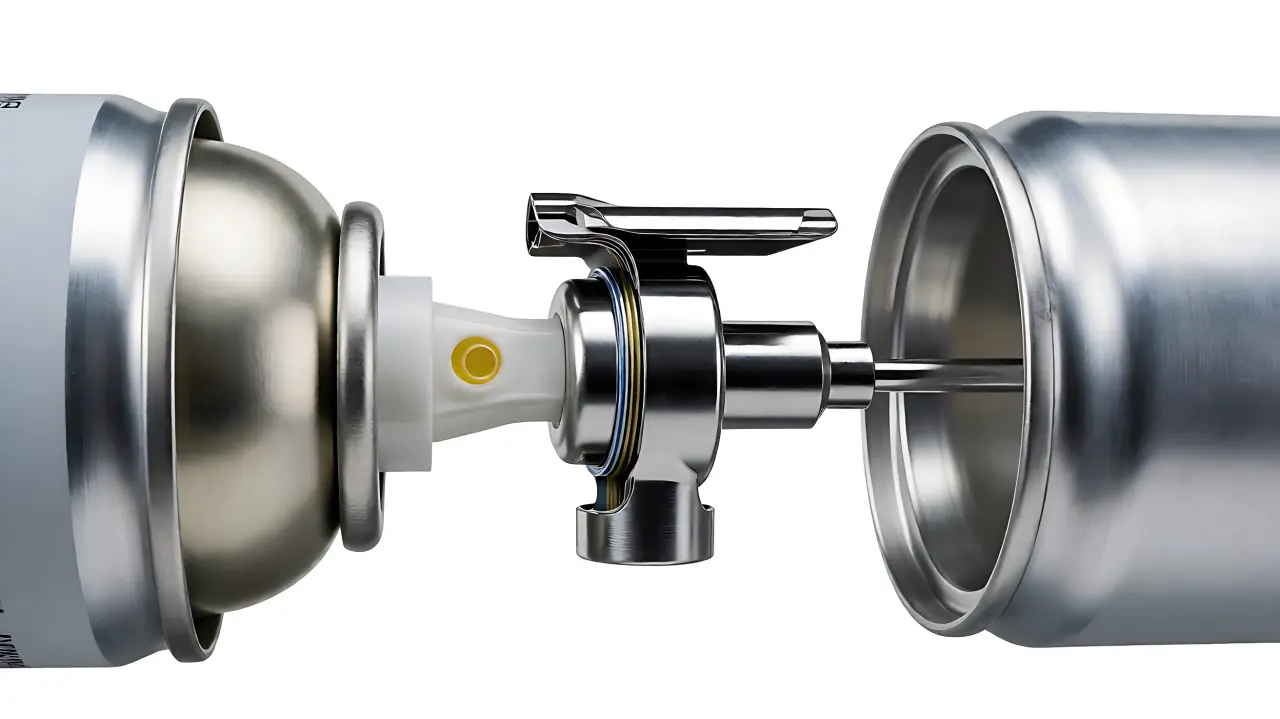
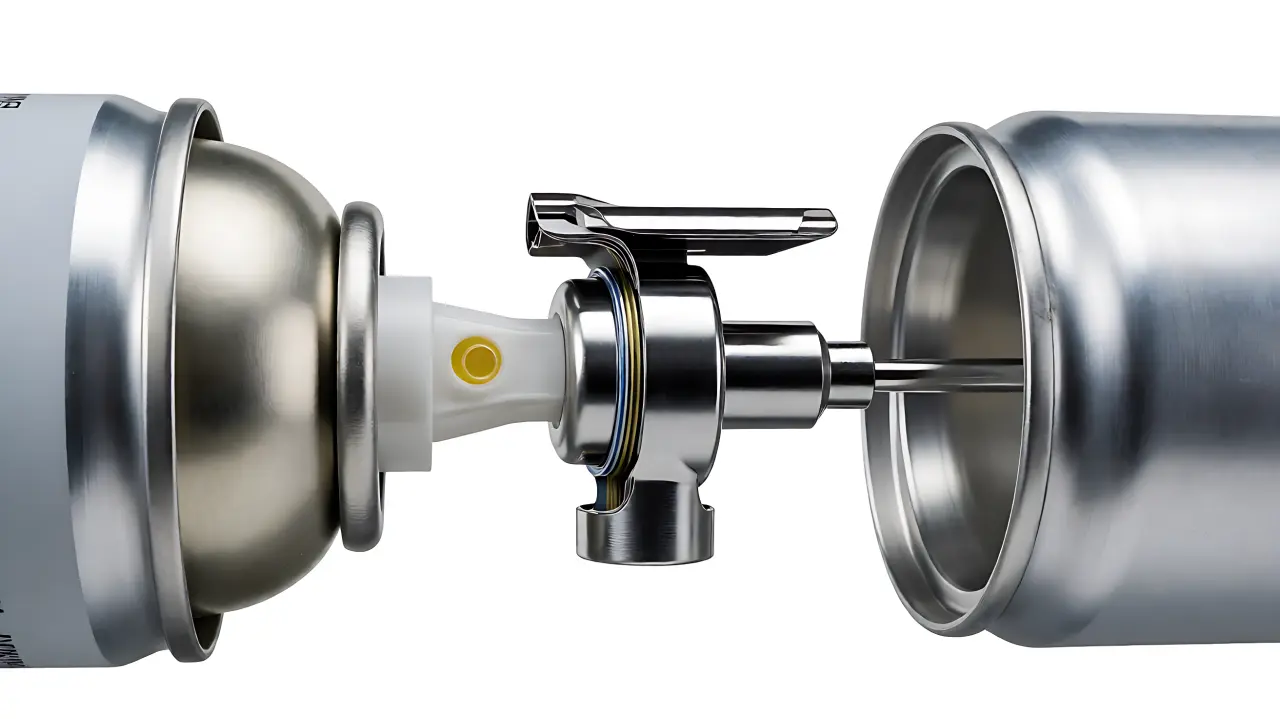
To eliminate chemical propellants, packaging engineers deploy Bag-on-Valve (BoV) Technology, which separates the product inside a flexible multi-layer barrier pouch from pressurized compressed air or nitrogen.
Mechanical Architecture & Physical Separation
Traditional Aerosol (Mixed System)           Bag-on-Valve / BoV (Separated System)
┌──────────────────────────────────────┐     ┌──────────────────────────────────────┐
│ Actuator & Dip Tube Valve            │     │ Actuator & Standard Male/Female Valve│
├──────────────────────────────────────┤     ├──────────────────────────────────────┤
│ Gaseous Headspace Propellant (LPG)   │     │ Pure Compressed Air or N2 Gas        │
├──────────────────────────────────────┤     │ Surrounding Pouch (0.5 - 0.9 MPa)    │
│ Mixed Formulation + Liquefied Butane │     ├──────────────────────────────────────┤
│ (Product chemically diluted by gas)  │     │ 4-Ply Barrier Foil Pouch (PET/Al/CPP)│
│                                      │     │ Containing 100% Pure Formulation!    │
└──────────────────────────────────────┘     └──────────────────────────────────────┘
                 ▼                                              ▼
   Chilling effect, flammability risk,         Zero VOCs, 360° all-angle continuous spray,
   Upright-only spraying orientation.          99.5% complete product evacuation!
1. Traditional Aerosol Mechanics
- Mixture Equilibrium: The active formulation is mixed directly with liquefied gas. Inside the can, vapor-liquid equilibrium maintains constant internal pressure as product is dispensed.
- Orientation Flaw: Relies on an internal dip tube extending to the bottom of the can. If inverted or tilted sideways, the dip tube inlet enters the vapor phase, venting pure propellant gas without product and permanently depressurizing the can.
- Flammability: Hydrocarbon propellants create acute explosion risks during high-temperature warehousing and home disposal.
2. Bag-on-Valve (BoV) Mechanics
- Hermetic Flexible Pouch: A 4-layer aluminum foil pouch (
PET 12µm / Al Foil 9µm / OPA 15µm / CPP 70µm) is hermetically welded onto an aerosol valve core. - Gassing Through-The-Valve (TTV): During filling, the empty can is first pressurized with clean, inert compressed air or nitrogen ($N_2$) through the valve crimp opening ($0.5\text{ to }0.9\text{ MPa}$).
- Product Injection: Pure formulation is subsequently pumped under pressure directly into the inner foil bag, expanding the pouch against the surrounding air cushion.
- Pure Discharge: Actuating the spray button allows the surrounding compressed air to squeeze the flexible pouch evenly from all sides, forcing pure product out without ever contacting the propellant.
Engineering Comparison: BoV vs. Liquefied Propellants
| Technical Parameter | Bag-on-Valve (BoV) System | Liquefied Propellant Aerosol (LPG / Butane) | Industry Benchmark |
|---|---|---|---|
| Spray Orientation | 360° All-Angle (Upright, sideways, inverted) | Upright only ($< 45^\circ$ tilt tolerance) | Spray Performance |
| Product Evacuation Rate | $99.0% - 99.7%$ (Virtually zero residue) | $85% - 92%$ (Product wasted on walls) | Weight Verification |
| VOC & Flammability | Zero VOCs (Compressed air / Nitrogen) | High VOCs (Class 1 Flammable Propellant) | CARB / EPA Standards |
| Product Purity | $100%$ Pure formulation (Zero gas dilution) | Diluted ($30% - 60%$ propellant fraction) | Lab Assay |
| Skin Temperature Effect | Ambient temperature (Comfortable, no chilling) | Evaporative cold shock (Freezing sensation) | Sensory Panel |
| Container Materials | Standard Aluminum or Tinplate Cans | Standard Aluminum or Tinplate Cans | FEA Aerosol Specs |
| Filling Line Complexity | Dual-stage: Under-cup air + Liquid injection | Gasser-shaker propellant liquefaction | Packaging Line OEE |
Dispensing Pressure Decay: Ideal Gas Expansion
Unlike liquefied propellants that maintain a flat pressure curve via continuous phase transition, Bag-on-Valve compressed air follows the Ideal Gas Law ($P_1 V_1 = P_2 V_2$):
Internal Can Pressure (MPa) vs. Percentage of Product Dispensed
1.0 ┼ ── Initial Charge Pressure (0.85 MPa)
    │     ╲
0.8 ┼      ╲
    │       ╲     Ideal Gas Pressure Decay Curve (Compressed Air)
0.6 ┼        ╲
    │         ╲
0.4 ┼          ╰─────────────────────── ── Minimum Operational Pressure (0.35 MPa)
    │                                      (Guarantees 99.5% Full Evacuation!)
0.2 ┼
 0  ┼┴──────────────┴──────────────┴──────────────┴──────────────►
    0%             25%            50%            75%            100% Dispensed
To prevent spray droplet sputtering during the final $10%$ of product dispensing:
- Pre-Charge Calibration: Initial compressed air pressure must be engineered between $0.75\text{ and }0.90\text{ MPa}$ ($110 - 130\text{ psi}$).
- Expansion Volume Ratio: When the flexible pouch completely collapses ($100%$ evacuation), the remaining air volume inside the rigid can must maintain a minimum pressure of $\ge 0.35\text{ MPa}$ ($50\text{ psi}$), guaranteeing fine atomization down to the last droplet.
Pharmaceutical & Organic Food Compliance
- Sterile Medical Applications: Because ambient air never enters the sealed inner pouch during dispensing, BoV enables preservative-free sterile formulations (wound sprays, eye washes, post-surgical rinses) to maintain multi-dose sterility over a 3-year shelf life.
- Culinary Organic Oils: Cooking oil sprays (olive oil, avocado oil) packaged via BoV avoid butane propellant contamination and preserve pure extra-virgin taste, qualifying for USDA Organic and Non-GMO certifications.
For liquid packaging alternatives, explore our spout fitment liquid packaging solutions and stand-up barrier pouches. Contact CraftPack Global to engineer specialized barrier pouches for Bag-on-Valve aerosol filling lines.