
AlOx vs SiOx Clear High-Barrier Films: Flexible Packaging Guide
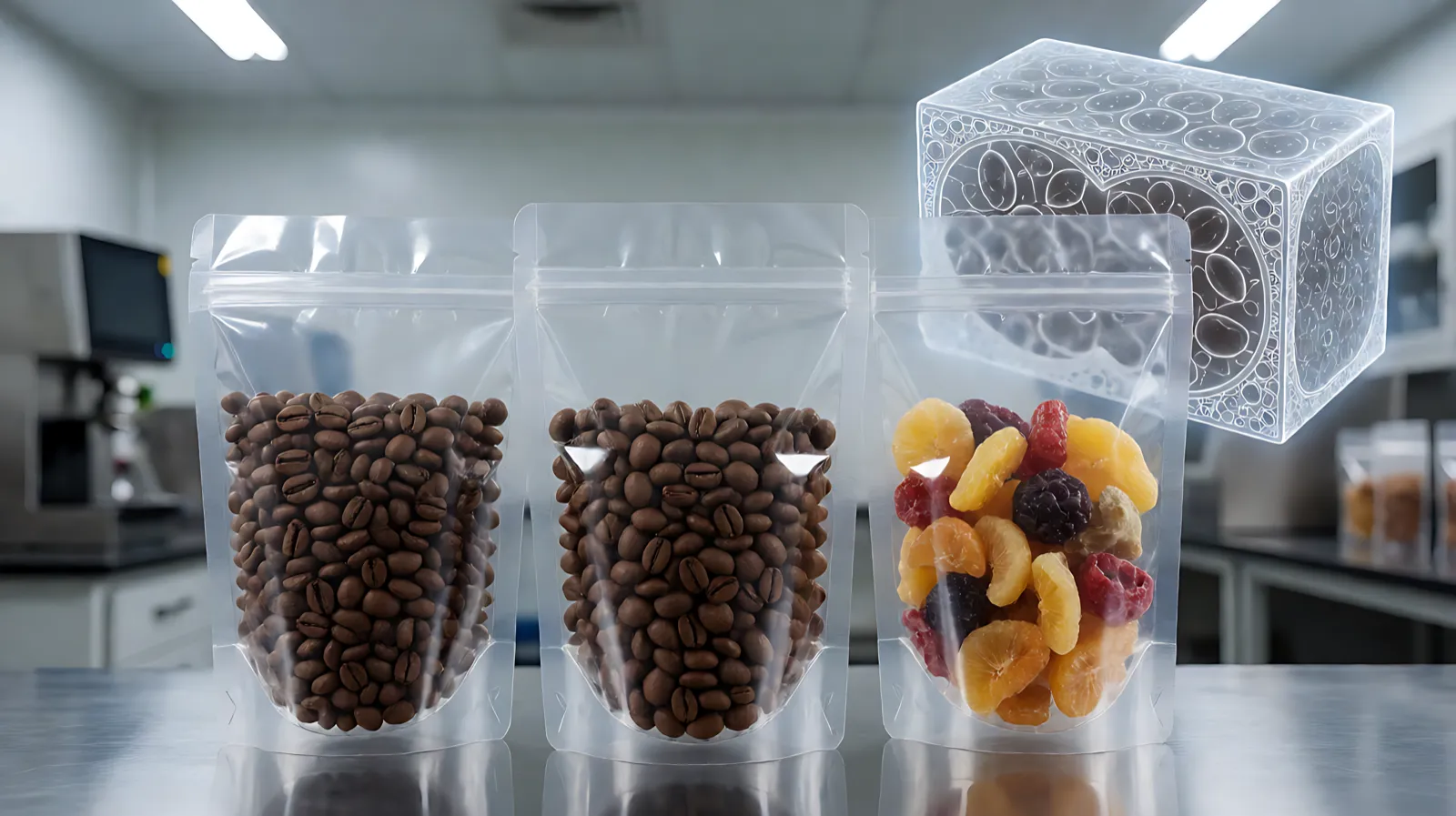
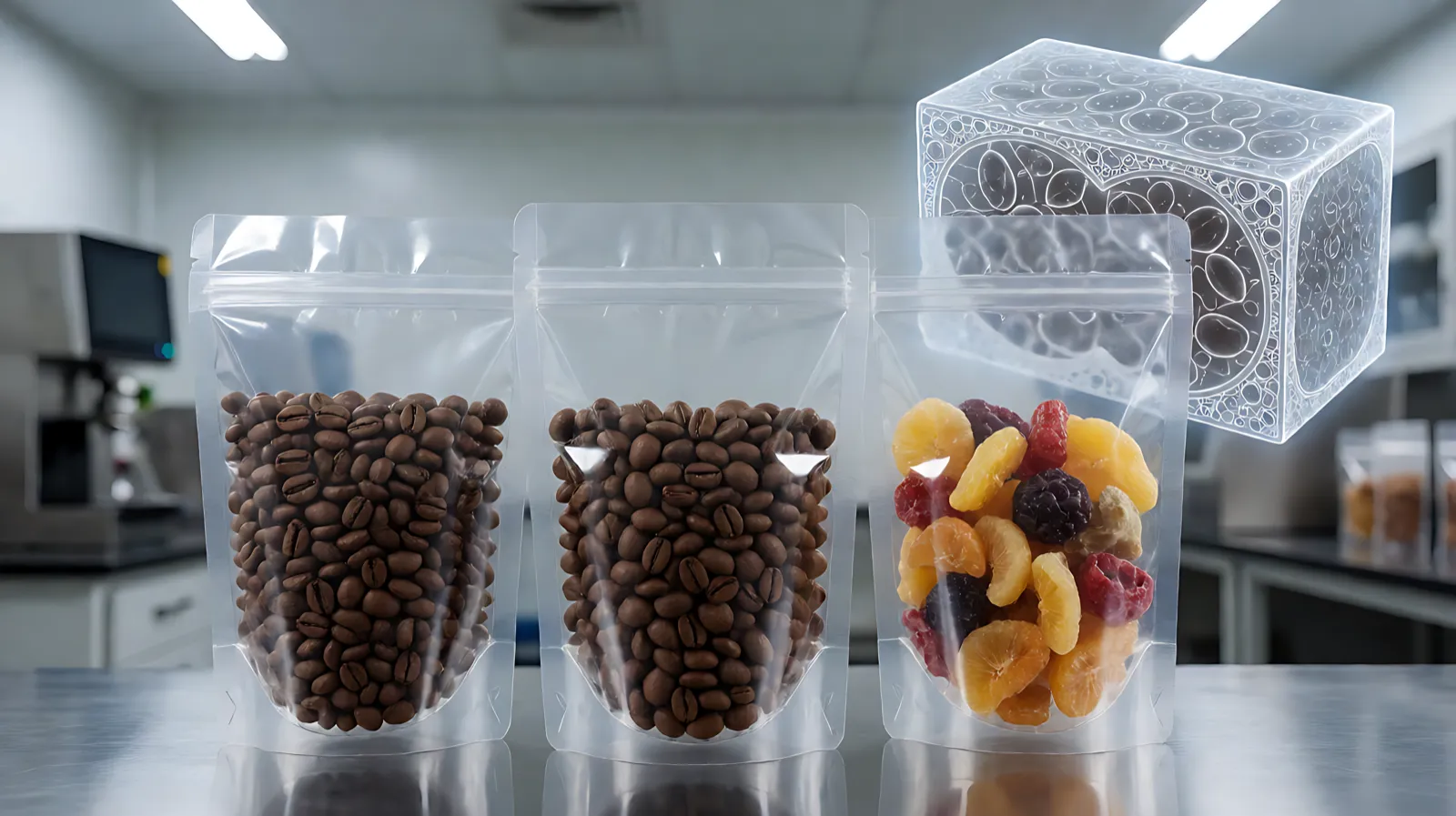
In retail flexible packaging, brands have historically faced a trade-off: achieve maximum gas and moisture protection using opaque aluminum foil (ALU) or metallized polyester (VMPET), or accept shortened shelf life by using transparent barrier polymers to let consumers inspect the product.
Vacuum-deposited ceramic nano-coatings—specifically Aluminum Oxide (AlOx) and Silicon Oxide (SiOx)—resolve this conflict. Applied as 10 to 50 nanometer-thin layers onto biaxially oriented PET (BOPET) or polypropylene (BOPP) carrier films, these transparent barrier coatings achieve barrier levels comparable to aluminum foil while remaining completely clear, microwave-safe, and detectable by online metal inspection systems.
However, AlOx and SiOx differ fundamentally in deposition chemistry, flex-crack resistance under Gelbo stress, retort survivability, and lamination handling. This technical guide evaluates both ceramic coatings to help packaging engineers and procurement managers specify the right transparent barrier substrate.
1. Engineering Benchmark Matrix: AlOx vs. SiOx vs. Foil & EVOH
| Engineering Metric | AlOx-Coated BOPET (12µm) | SiOx-Coated BOPET (12µm) | Metallized PET (VMPET 12µm) | Multi-layer EVOH Coex (15µm) |
|---|---|---|---|---|
| Deposition Technology | Reactive Physical Vapor Deposition (PVD) | Plasma-Enhanced Chemical Vapor Deposition (PECVD) | Physical Vapor Deposition (Al Metallization) | Blown / Cast Multi-layer Co-extrusion |
| Oxygen Transmission Rate (OTR) (cc/m²/day @ 23°C, 0% RH) |
0.5 to 1.5 | 0.3 to 1.0 | 0.5 to 1.5 | 0.8 to 2.0 |
| Water Vapor Transmission (WVTR) (g/m²/day @ 38°C, 90% RH) |
0.8 to 2.0 | 0.5 to 1.2 | 0.5 to 1.5 | 3.5 to 8.0 (High humidity sensitive) |
| Optical Clarity & Haze | Transparent (< 3.0% Haze) | High clarity (< 2.0% Haze, slight yellow tint) | Opaque metallic mirror | Transparent (< 4.5% Haze) |
| Microwave Transparency | 100% Microwave Safe | 100% Microwave Safe | Arcs / Incompatible | 100% Microwave Safe |
| In-Line Metal Detection | Passes without signal | Passes without signal | Blocks / Requires X-ray | Passes without signal |
| Gelbo Flex Crack Resistance (OTR degradation after 20 cycles) |
Moderate (Requires protective primer lacquer) | Superior (Flexible silica network resists micro-fracture) | High (Foil layers fracture under repeated folds) | Excellent (Ductile polymer bulk structure) |
| Retort Sterilization (121°C) | Requires specialized grade | High performance in retort | Not transparent | EVOH barrier degrades in high steam |
| Cost Index (vs Plain PET) | 1.8x to 2.2x | 2.3x to 2.8x | 1.4x to 1.7x | 1.9x to 2.4x |
Explore compatible barrier pouch structures across our Stand-Up Pouches Category and Flat Bottom Pouches Category.
2. Vacuum Deposition Chemistry & Microstructure
The microscopic architecture of ceramic barrier layers determines how gas molecules permeate through the polymer matrix.
┌────────────────────────────────────────────────────────────────────────┐
│             NANO-CERAMIC COATING ARCHITECTURE (AlOx vs SiOx)           │
├───────────────────────────────────┬────────────────────────────────────┤
│     ALUMINUM OXIDE (AlOx)         │       SILICON OXIDE (SiOx)         │
├───────────────────────────────────┼────────────────────────────────────┤
│  Topcoat Primer (Water-based PU)  │  Protective Topcoat / Adhesive     │
│  ═══════════════════════════════  │  ═════════════════════════════════ │
│  AlOx Nano-layer (15–30 nm)       │  SiOx Glass Network (20–40 nm)     │
│  ░░░░░░░░░░░░░░░░░░░░░░░░░░░░░░░  │  ▒▒▒▒▒▒▒▒▒▒▒▒▒▒▒▒▒▒▒▒▒▒▒▒▒▒▒▒▒▒▒▒▒  │
│  BOPET / BOPP Base Film (12µm)    │  BOPET Base Film (12µm)            │
│  ───────────────────────────────  │  ───────────────────────────────── │
│  • Reactive thermal evaporation   │  • PECVD plasma monomer deposition │
│  • Dense amorphous Al2O3 lattice  │  • Three-dimensional Si-O-Si grid  │
│  • Susceptible to mechanical snap │  • Higher elastic modulus & bend   │
│  • Cost-effective roll rollstock  │  • Excellent steam retort tolerance│
└───────────────────────────────────┴────────────────────────────────────┘
Aluminum Oxide (AlOx) Deposition
AlOx films are produced in continuous high-vacuum roll coaters. High-purity aluminum wire is fed onto heated ceramic evaporation boats at approximately 1,400°C. As the aluminum vaporizes, precise stoichiometric quantities of pure oxygen gas ($O_2$) are injected into the plasma zone.
The vapor condenses onto the corona-treated PET or PP web as a nanometer-thin amorphous $Al_2O_3$ ceramic lattice. Because pure aluminum oxide is crystalline and brittle in bulk, the vacuum chamber settings must maintain an amorphous glass phase to preserve flexibility.
Silicon Oxide (SiOx) Deposition
SiOx coatings are typically produced using Plasma-Enhanced Chemical Vapor Deposition (PECVD) or electron-beam physical evaporation. Volatile organosilicon monomers (such as hexamethyldisiloxane, HMDSO) are introduced into a low-temperature plasma field, where electrical discharges break molecular bonds and deposit an ultra-dense, glassy silicon dioxide ($SiO_x$, where $x \approx 1.5$ to $1.8$) network.
The resulting Si-O-Si molecular chains form a slightly more flexible amorphous grid than AlOx, giving SiOx superior flexural modulus and resistance to microscopic shear fractures during converting.
For recyclable monomaterial barrier alternatives, review our engineering guide on MDO-PE Recyclable Films.
3. Flex-Crack Durability & Converting Performance
The primary vulnerability of ceramic barrier coatings is micro-fracture under mechanical deformation. Unlike ductile polymeric barriers (such as nylon or EVOH), ceramic coatings are rigid. When a laminate is creased through pouch-forming formers or drop impacts, the coating can develop sub-micron fissures that cause OTR to spike.
ASTM F392 Gelbo Flex Testing Results
Under ASTM F392, film samples undergo rigorous twisting and crushing cycles. The table below illustrates the barrier retention profile after progressive Gelbo flexing:
OTR Retention Curve (cc/m²/day @ 23°C, 0% RH) Across Gelbo Cycles:
──────────────────────────────────────────────────────────────────────────
Substrate Film Structure     0 Cycles (Flat)    10 Cycles       20 Cycles
──────────────────────────────────────────────────────────────────────────
AlOx-PET (Unprotected)       0.8 cc             4.8 cc          18.2 cc
AlOx-PET + PU Topcoat Primer 0.8 cc             1.2 cc           2.5 cc
SiOx-PET (PECVD Standard)    0.6 cc             0.9 cc           1.6 cc
VMPET (Standard Metallized)  1.0 cc             3.5 cc           8.0 cc
Alufoil 7µm / PET / PE       0.01 cc            0.05 cc          0.8 cc
──────────────────────────────────────────────────────────────────────────
Critical Converting Guidelines:
- Always Specify a Protective Topcoat Primer: Never convert raw AlOx film without an in-line protective lacquer or water-based polyurethane topcoat. The lacquer absorbs shear stresses from nip rollers and pouch-forming ploughs.
- Solventless Lamination Considerations: When using two-component polyurethane adhesives in solventless lamination, ensure the adhesive formulation is certified for ceramic coatings to prevent micro-delamination. For chemistry details, see our guide on Solventless vs Solvent-Based Lamination.
- Web Tension Control: Keep converting line tension under 15 N/m to prevent plastic strain in the carrier PET web that stretches beyond the ceramic coating’s elastic elongation limit (typically ~1.5%).
4. Application Selection Matrix
┌─────────────────────────────────────────────────────────────────────────┐
│              DECISION TREE: ALOX VS SIOX FOR PACKAGING SITES            │
└─────────────────────────────────────────────────────────────────────────┘
                                     │
                  Are you packaging moist food requiring
                      autoclave retort at 121°C?
                                     │
                     ┌───────────────┴───────────────┐
                    YES                              NO
                     │                               │
             Do you need 100%                 Do you require
           optical transparency?             microwave heating?
                     │                               │
             ┌───────┴───────┐               ┌───────┴───────┐
            YES              NO             YES              NO
             │               │               │               │
       Specify SiOx     Use 4-Ply Foil  Choose AlOx-PET   Use Standard
      High-Retort PET   Retort Laminate  or SiOx-PET      VMPET Foil
Optimal Use Cases for AlOx:
- Dry Snacks, Nuts & Granola: Excellent oxygen barrier prevents polyunsaturated fat rancidity while providing a panoramic window display.
- Specialty Roasted Coffee: High aroma preservation without requiring foil, compatible with Custom Stand-Up Pouches.
- Microwaveable Ready-Meals: Allows consumers to microwave the sealed pouch without arcing.
Optimal Use Cases for SiOx:
- Retort Soups & Wet Pet Food: Withstands autoclave pressure balance fluctuations without micro-cracking. Pair with our Mono-PP High Barrier Retort Pouches.
- High-Acid Sauces & Liquid Condiments: Silicon dioxide is inert to volatile organic acids and essential oils that can attack aluminum-based lattices.
- Long-Shelf-Life Medical Devices: Provides transparent sterile barrier compliance without shedding particles.
5. Frequently Asked Questions (FAQ)
Can AlOx or SiOx pouches be recycled in standard plastic streams?
Yes. Because the ceramic coating thickness is less than 50 nanometers, it accounts for less than 0.1% of the total pouch weight. When laminated to compatible polyethylene or polypropylene films (e.g., AlOx-BOPP / PP sealant), the laminate qualifies as a recyclable mono-material structure under CEFLEX and Association of Plastic Recyclers (APR) protocols.
Why do some SiOx films look slightly yellowish?
The PECVD deposition of silicon oxide can yield sub-stoichiometric silica ($SiO_x$ with $x < 2.0$), leaving trace optical absorption bands in the ultraviolet and blue spectrum. Premium optical-grade SiOx films balance oxygen dosing during deposition to keep the yellowness index below 1.5.
How does cost compare between AlOx and SiOx?
AlOx is typically 15% to 25% less expensive per square meter than SiOx due to the high throughput of thermal evaporation roll coaters. SiOx PECVD systems operate at slower deposition rates, but offer superior thermal and flex crack resilience for retort applications.
For custom barrier film specifications, quotation requests, or barrier prototyping, contact our engineering team to test your product against our transparent barrier laminates.